
The Blood of Dawnwalker’s risky time mechanic pays off; new GOTY contender emerges


There’s an argument to be made that The Blood of Dawnwalker didn’t need to take any risks. A new AAA open-world RPG from the director of The Witcher 3: Wild Hunt would have been an easy sell without any new bells and whistles. But in today’s risk averse industry that favours reliable IP, remasters, remakes, and reboots, The Blood of Dawnwalker has torn up the rule book, choosing instead to concoct a risky new formula that, on paper, is a completionist’s worst nightmare - but my god, it’s a breath of fresh air. Rebel Wolves’ debut outing is a triumphant , confident, and bold new offering that replaces open-world checklists with an overwhelming sense of urgency in what is easily one of the year’s most dynamic titles.
The Blood of Dawnwalker centres around Coen who resides within Vale Sangora in the Carpathian Mountains, an area ruled by the vampiric Vrakhiri led by Brencis. Those within the region attend Blood Mass, sacrificing blood in exchange for protection. It’s during mass that an uprising occurs; Coen is attacked by Brencis but somehow survives, uniquely becoming a daywalker. Coen is a human by day, but vampire by night - and Brencis isn’t all that happy about his survival. When Coen’s family is kidnapped by Brencis, our protagonist has 30 days and 30 nights to retrieve them in what is a brilliant 50 to 70-hour dark fantasy open-world RPG.
The Blood of Dawnwalker’s risky time mechanic never allows dullness to set in
As wonderful as open-world games can be, so too can they be dull - especially if you fall into the trap of meandering round the map, partaking in repetitive side activities while ignoring an important quest that, truthfully, probably shouldn’t be delayed had these events been real. The Blood of Dawnwalker is perhaps one of the only open-world titles I’ve encountered that’s actually found a solution to that problem. As mentioned, as Coen, you have 30 days and 30 nights to retrieve your family, with each ‘day’ and ‘night’ segmented into eight blocks.
Generally exploring the game’s open-world will not have any impact on the passage of time. However, all quests - both main and side - will consume time. When you encounter a quest, it’ll indicate how many ‘blocks’ of time it’ll consume, with most taking up just one or two blocks. Fill eight blocks and day will turn to night, or vice versa, with The Blood of Dawnwalker’s endgame coming into effect when 30 days and 30 nights have expired.
Advert
You can, if you really want to, skip time. Heck, you can even do a dramatic skip of time and head straight to Brencis for the endgame, but I wouldn’t exactly recommend that … it won’t end well for Coen. As alluded to, this mechanic doesn’t exactly mean there’s a real-life limitation on time within The Blood of Dawnwalker with the average playthrough taking 50 to 70 hours, so you don’t need to worry about being rushed.
What this structure does enforce though is a keen sense of urgency; it’s nigh impossible to lose sight of Coen’s goal within The Blood of Dawnwalker. There are more quests than you have time blocks so how you prepare to approach Brencis is up to you, but you should you spend half of your time dilly-dallying and helping Vale Sangora’s residents with menial tasks, you’ll probably suffer later down the line when you’re not quite equipped to take the feared clan leader on.
The story never falters, especially as it feels like you’re writing it yourself
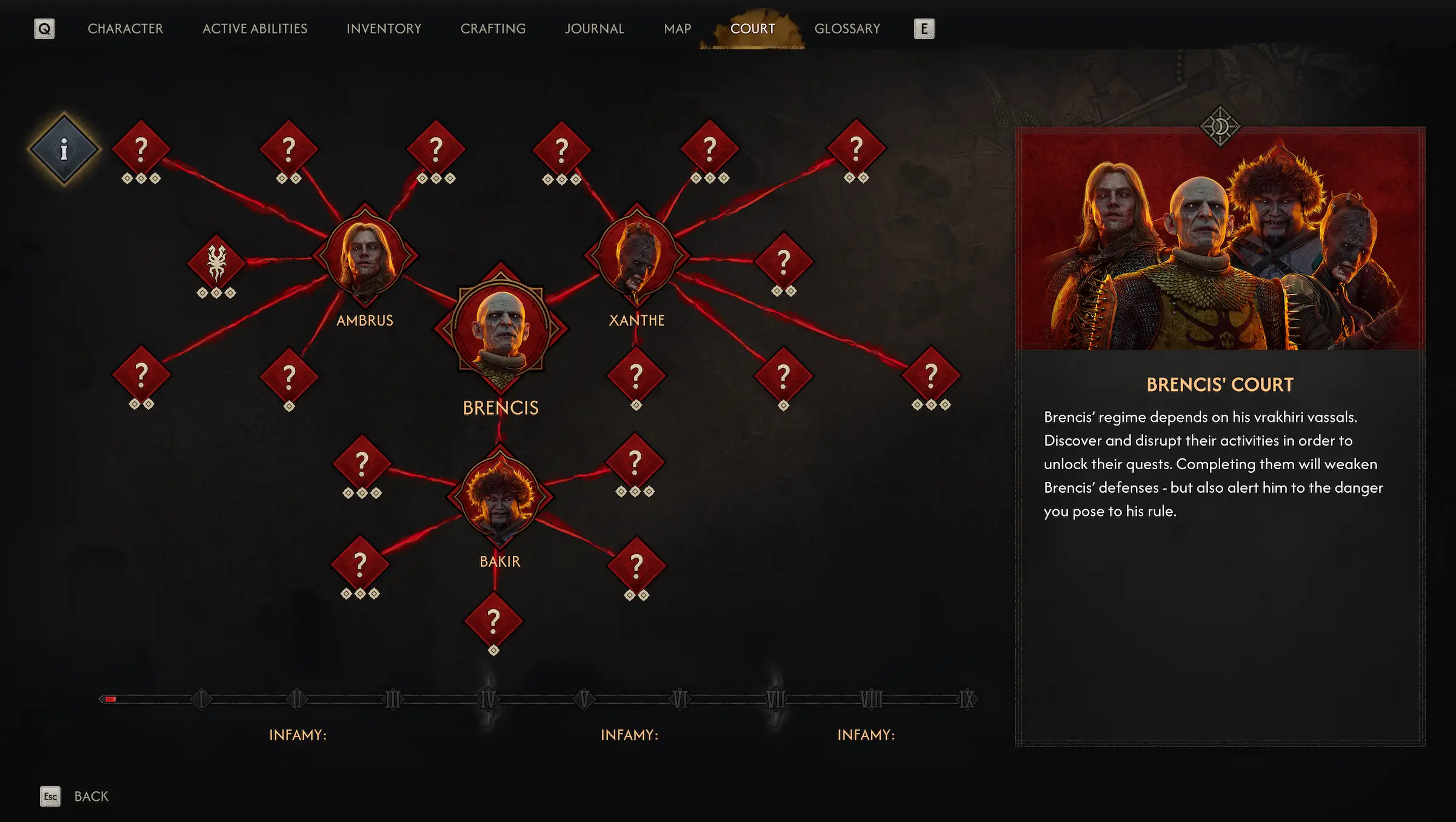
There’s a pervasive sense of consideration within Rebel Wolves’ debut title that’s so rare to find in open-world games. In the first act, I did perhaps tend to take on whichever quests I stumbled across, but it’s only really perhaps by doing that that you realise what’s important - and for me, that was focusing on eliminating Brencis’ court, comprising of Ambrus, Xanthe, and Bakir. I’m so used to approaching open-worlds with a checklist that to actually weigh up where it mattered to spend my time felt actually quite revolutionary.
It’s not just your own development that completing or not completing quests will impact. Every decision has some form of consequence in the open-world - although in many cases, you may not realise until an alternative playthrough what that consequence is. I’m loath to delve into the narrative, so I’ll highlight an early example from my hands-on preview. I assisted a woman from Coen’s village in finding a stolen banner she’d been tasked with preparing for Blood Mass. Together, we located the banner and all was well. A fellow journalist did not complete the quest and the woman, now deceased, was strung up from the ceiling of the church. It’s only when you’ve experienced both outcomes that you piece together the true impact of your actions, adding great replayability to The Blood of Dawnwalker.

I did say that because there are more quests than there is time, The Blood of Dawnwalker is a completionist’s worst nightmare, and that’s true. For me, however, it’s really what set the title apart and rid it of the problems that plague most open-world games. I can imagine, though, that for some, the idea of having to embark on a second lengthy playthrough just to see every possible quest option may not be entirely appealing. Perhaps the only pitfall that The Blood of Dawnwalker suffers is the odd dull conversation but even then, you may pay the price further down the line for skipping key intel you actually needed to remember … Rebel Wolves’ developers truly thought of everything.
Combat takes a while the master but feels great when the narrative hits its stride
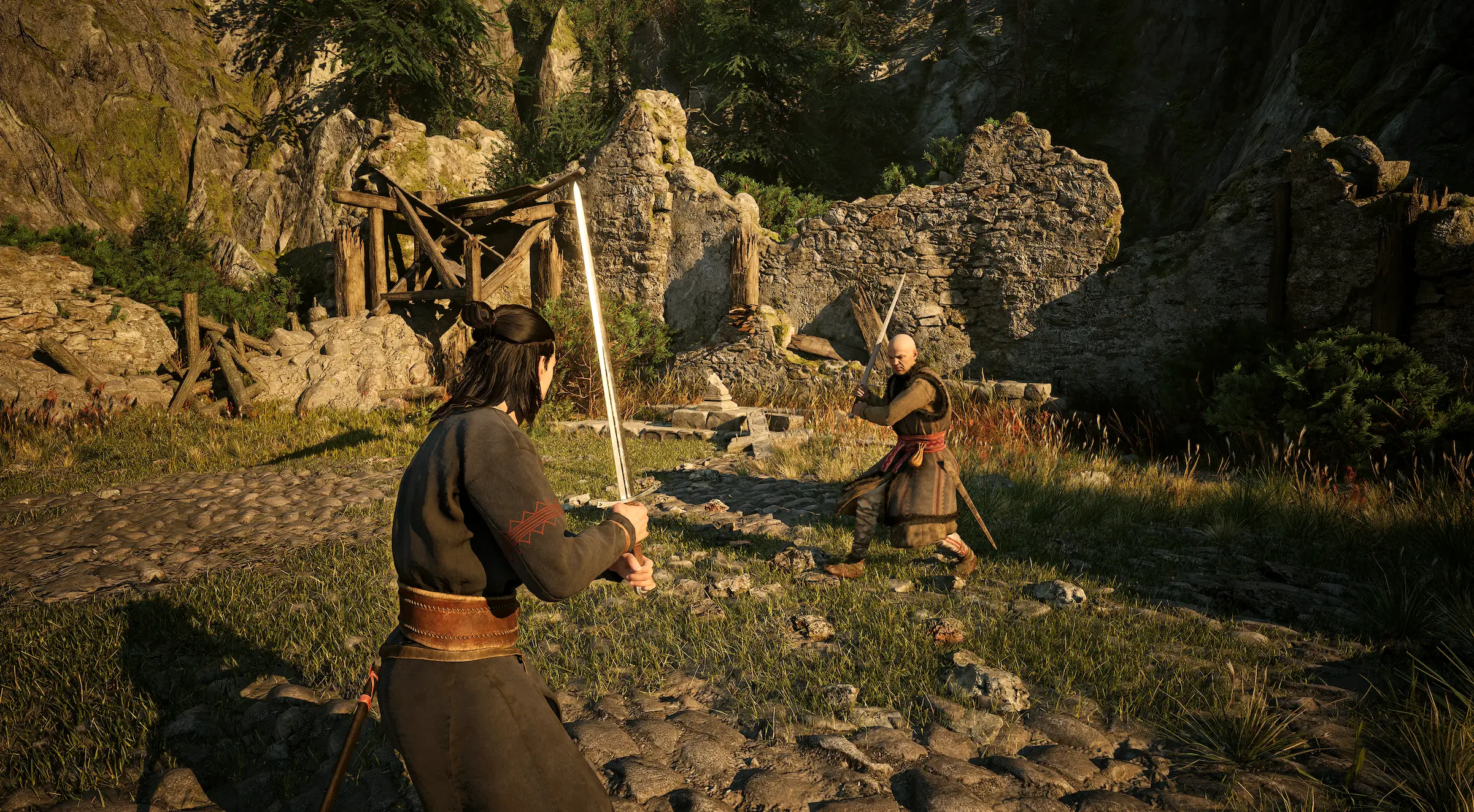
The Blood of Dawnwalker’s combat is perhaps a slow burner, but one that’s worth persevering with. It makes use of a directional system that’s a little tricky to master, especially when you’re facing off against several enemies. It works the same whether Coen is using a sword as a human or claws as a vampire. Essentially, Coen can use the D-pad to attack from four directions, with R1 tied to attacking on PlayStation 5. To block, it’s L1 plus the direction on the D-pad indicated on attacking enemies. It’s easy enough when you’re in a 1v1 duel, less so when there are five enemies and you’re unsure who to block.
It goes without saying that The Blood of Dawnwalker does have several difficulty modes, including a story mode, plus you can use omniattacks and omniblocks which randomise direction and are pulled off simply by hitting L1 or R1 without any input on the D-pad. These do drain Coen’s stamina quicker though. However, it is worth persevering with the directional system as the further you build out Coen’s move set, the more satisfying it is to use that directional system to swiftly put down your enemies.
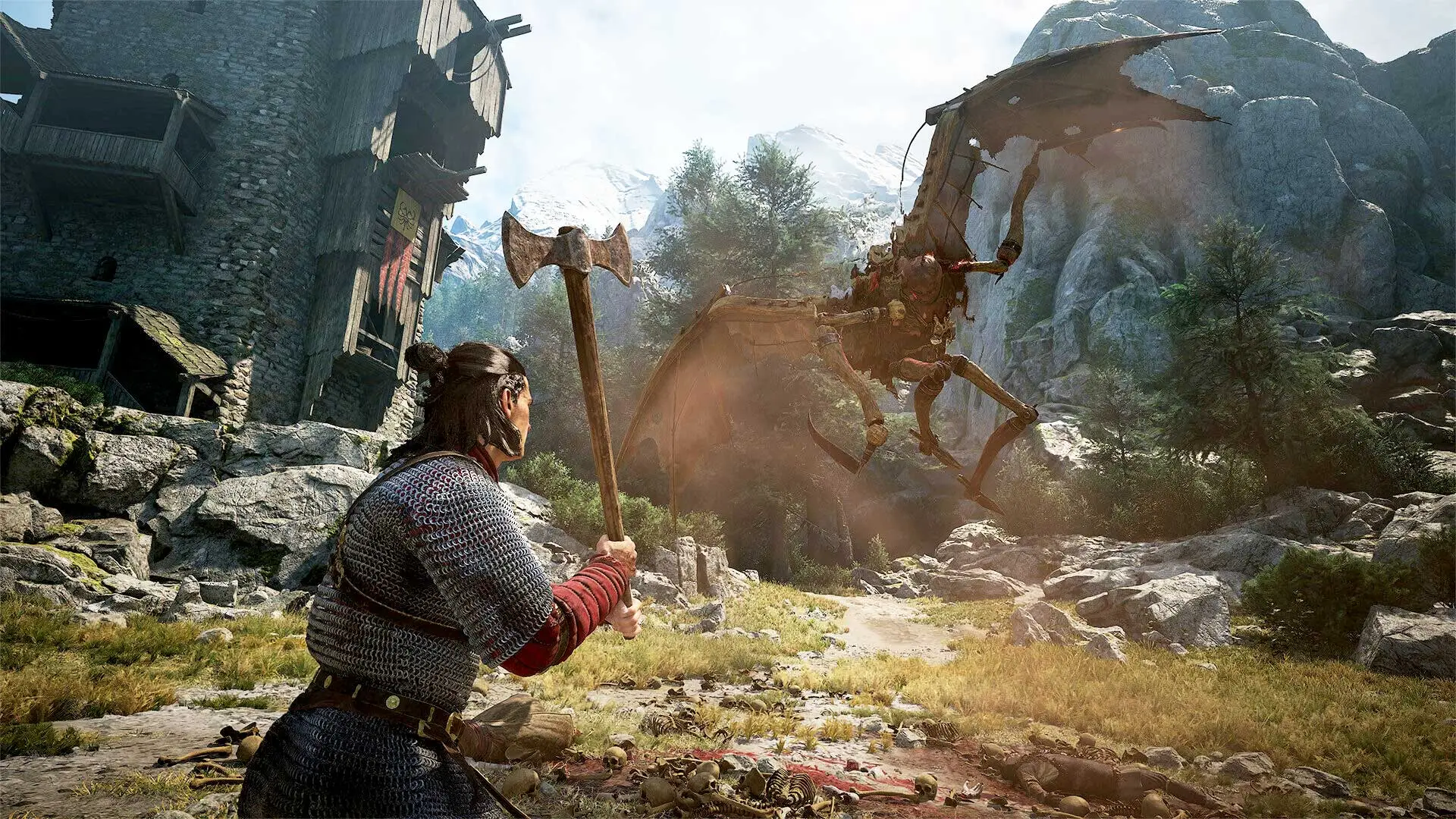
While it’s easy to get overwhelmed at first, there is a skill tree with players able to eventually equip unique attacks that work on somewhat of a cooldown system and fall into three categories: human, vampire, and witchcraft. Some skills work like finishers, others temporarily incapacitate one or several enemies, allowing you better to systematically take down a group. There are stealth attacks, plus others that simply boost stats like damage or defence.
The Blood of Dawnwalker’s skill tree really helps you tune combat to your tastes
After levelling up a few times, you’ll be able to equip at least a couple of skills and it’s here that I really started to feel at home within the game’s combat system. Saying that you can piece together a build perhaps feels a bit extreme, but you can shape Coen’s strategy to suit your own preferences. I also ended up being quite grateful that you are pretty much forced to rely only on the directional combat system in the very, very early hours. It sets you up nicely. The Blood of Dawnwalker excels when you pair the directional system with skills, rather than favouring one over the other.
It perhaps goes without saying that Coen can only use his human skills during the day and his vampiric skills at night. I, for the most part, preferred Coen’s vampiric combat build which actually introduces another unique consideration into the fold. You can approach most quests at day or at night and the nature of that quest changes depending on your choice. That adds more replayability to The Blood of Dawnwalker, but it’ll also make you stop and think about which set of skills might be more useful. In one instance, I entered a prison camp as a human visitor, instructed to leave my weapons at the door. A fight broke out and I ended up having to see off an endless stream of guards with just my knuckles, which was a nightmare. All I could think was that if I’d entered at night, I would have been able to use Coen’s claws and shadowstep ability. It’s not the only time I made the wrong call, but there’s such a thrill in being wrong and taking the harder path.
READ MORE: 5 gameplay quirks that set RPG The Blood of Dawnwalker apart from The Witcher 3
The Blood of Dawnwalker’s infamy system makes for a perfect open-world
As you travel around Vale Sangora, you’ll move through various regions controlled by Brencis’ court. It’s from the city of Svartrau that the Vrakhiri rule, but Abrus, Xanthe, and Bakir are given their own settlements and villages to reside over. Your best bet of taking out Brencis is by eliminating his cronies and that’s where the game’s infamy system comes into play. You’ll basically need to anger each vampire lord within their own region in order to p**s them off enough that they’ll come after you. You might destroy their blood supplies, for example, or eliminate their loyal soldiers.
Achieve enough infamy and you’ll unlock unique quests tied to each of the vampire lords. This was a significant focus of my own playthrough and, in fact, it’s quite wild to consider that this content is optional. It’s really testament to the breadth of offering that The Blood of Dawnwalker boasts; the game is really what you make of it and every outcome has its own thrills. I do recommend that you take on the vampire lords though, as gaining infamy also changes your experience within the open-world. For example, if you anger Bakir enough within his lands, he may instruct his soldiers to kill you on sight, just as one example of what can change. The Blood of Dawnwalker is about as immersive as an open-world can be with nothing done simply for the sake of it.
The Blood of Dawnwalker deserves to be a new AAA mainstay, and I’d gladly join Coen on future ventures. Rebel Wolves’ debut outing is everything you could want from the former director of The Witcher 3: Wild Hunt, but it’s also something entirely new. Its time mechanic is risky - and a nightmare for completionists - but it adds a brilliant sense of urgency into the open-world. The Blood of Dawnwalker is all about consequence. Which quests should you tackle? As a human or a vampire? It’s entirely what you make of it, offering up a bold and engaging formula that I’d be glad to see walk away with 2026’s GOTY trophy.
Pros: Engaging story, unique time mechanic adds welcomed agency, dual approach to missions is fun, well-crafted open world
Cons: The inability to complete all missions in one playthrough may not appeal to all
For fans of: The Witcher 3, Red Dead Redemption II, Ghost of Tsushima and other story-driven open-world titles
9/10: Exceptional
The Blood of Dawnwalker launches on September 3 on PlayStation 5 (version tested), Xbox Series X/S, and PC. A review code was provided by the publisher. Read a guide to our review scores here.
Topics: The Witcher, The Witcher 3, Bandai Namco, Reviews, The Blood of Dawnwalker