
The Witcher DNA runs strong in The Blood of Dawnwalker, but AAA RPG stands apart


Even if you’re a AAA studio, launching a new IP in today’s industry is a huge risk - especially if that new IP doubles as a debut title. Rebel Wolves need not look to September with any sense of fear though, as after almost five hours hands-on with the game, The Blood of Dawnwalker has already proven to me that it’s a surefire hit. I shouldn’t be too surprised, as this isn’t Rebel Wolves’ true first rodeo.
The studio was founded by former CD Projekt RED developer Konrad Tomaszkiewicz, who also serves as The Blood of Dawnwalker’s director, having previously directed the all-time great The Witcher 3: Wild Hunt. Konrad hasn’t come from CDPR alone. What most surprised me about The Blood of Dawnwalker, however, is that whilst the team clearly built upon its former fantasy RPG experience, this is an entirely original beast with unique narrative quirks and gameplay systems that set The Blood of Dawnwalker apart from just about anything else I’ve played.
Journey to the Carpathian Mountains in 14th-century Europe
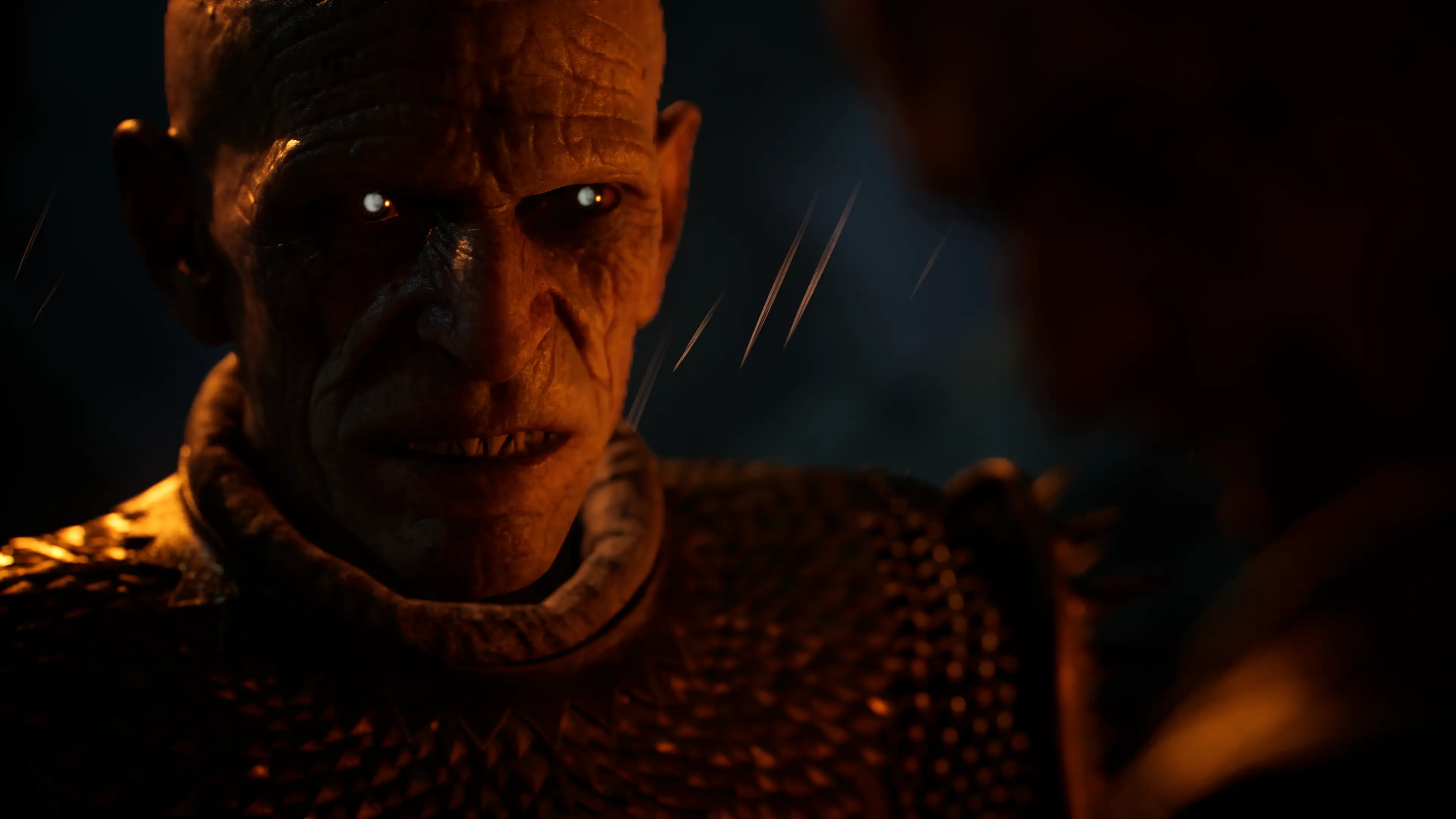
The Blood of Dawnwalker is set within 14th century Europe, with players stepping into the shoes of protagonist Coen. Amid the chaos of the black death sweeping through Europe, a group of vampires - led by Brencis - assumes control of the region of Vale Sangora in the Carpathian Mountains. Those who reside within the region are forced to attend Blood Mass, making a regular sacrifice in exchange for protection and trade.
Advert
During an attempted uprising which forms the climax of the game’s prologue, Coen is attacked by Brencis, uniquely surviving to become a daywalker, much to Brencis’ shock and dismay. Coen, unlike traditional vampires, can navigate the world as a human by day before making use of his vampiric powers by night. He then has 30 days and 30 nights to navigate through Vale Sangora in a desperate attempt to save his family, which Brencis has taken.
Players have just 30 ‘days’ to complete the game’s narrative
The Blood of Dawnwalker really hits the ground running in introducing you to its very unique systems, starting with that 30-day mechanic. There’s no clock ticking away within the game, but each day and night is broken up into a set number of chunks, eight to be precise. Completing quests, both main and side, will deplete chunks, with all the quests I encountered during those opening hours taking up either one or two chunks. When you reach the end of the eighth, you progress onto the next phase of the day.
The idea behind this is that Rebel Wolves, as Konrad told me, didn’t want The Blood of Dawnwalker’s players to lose sight of the game’s narrative. In many RPGs, you can ignore the main story for umpteen hours, engaging in pointless side activities like finding lost farm animals, slaying random monsters, and such like. There is side content here, too, that perhaps doesn’t hold quite as much importance as content elsewhere in the game, but the time mechanic adds weight to taking on those sorts of tasks. Is this really how you want to spend your time?
It adds a brilliant sense of both urgency and agency. It’s never a case of ‘this is the game’s next quest that I have to complete’. Instead, Rebel Wolves has created a sprawling sandbox where players really do hold all the power when it comes to how this story unfolds. You can skip time entirely if you want (although I’m not sure why you’d do that), and it’s very much possible to get so distracted with side quests that you actually run out of time to complete what the game indicates to be the key objectives.
You cannot complete every quest in one playthrough
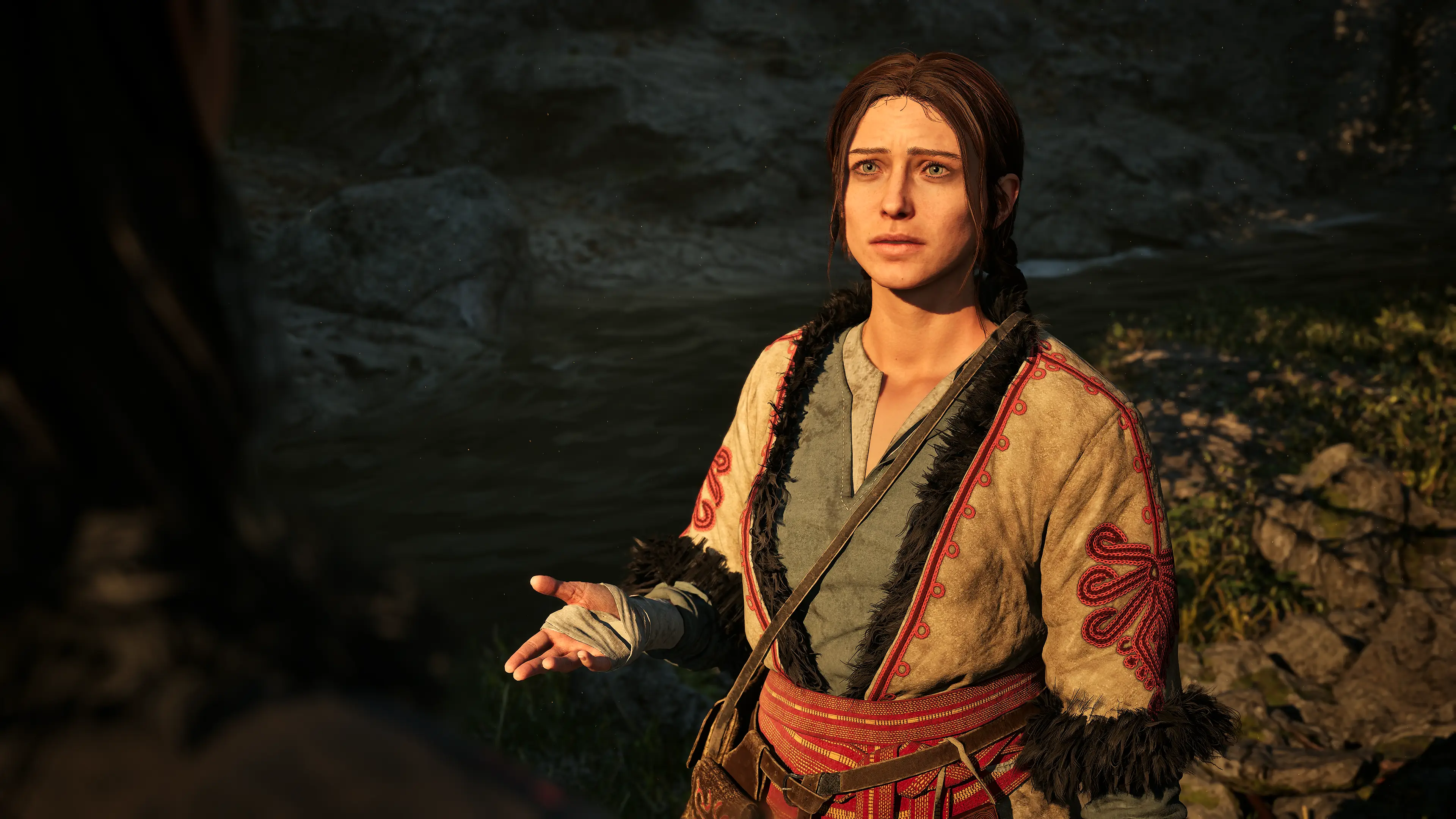
The game doesn’t end when those 30 days run out, but The Blood of Dawnwalker is most definitely a project where you cannot complete every quest the first time around. You simply don’t have time. In the game’s prologue, I was tasked with collecting herbs to calm and strengthen Coen’s mother ahead of Blood Mass in the hope that she wouldn’t be seen as any easy sacrifice. For the remaining daily slots before Blood Mass, I could help my fellow villagers, but there were far more requests for my aid than I had time for - and no, I couldn’t come back to them after Blood Mass.
Even the quests you ignore will impact The Blood of Dawnwalker’s story
That may seem frustrating to the completionists out there, but in practice, it’s a stroke of brilliance. It encourages replayability because even the most insignificant of decisions within The Blood of Dawnwalker can have a major impact on the story. I decided to help out a woman who’d lost a rather grisly new banner she’d been instructed to hang in the church hosting the Blood Mass. Someone had taken it. I rather mundanely scoured the village for clues before confronting the culprit and forcing them to hand it back. When Blood Mass came, there it was, hanging front and centre.
I spoke to another journalist who didn’t choose to complete this quest. After comparing anecdotes, it came to light that the poor woman in his playthrough was killed and strung up for all to see in the church. The journalist in question had no context for who this woman was or why she was dead; it was only because I’d done the quest in my playthrough that I put the puzzle pieces together. After all, she did warn me they’d kill her if the banner wasn’t found.
Konrad teased that this is far from the only example of this sort of thing, with Rebel Wolves hoping that, via replays and player discussion, all of the narrative’s differences and nuances eventually will come to light. Even within missions, things can go one of several ways. I’ll keep it spoiler-free, but there’s a conversation that takes place within the prologue that contains information that’s crucial in a later life-or-death situation. I stupidly breezed over the intel and paid the consequence further down the line. The Blood of Dawnwalker doesn’t invite you to sit back and relax; this is a wholly engrossing experience.
You can gather allies or go things alone. You can focus on your family or become consumed by your thirst for revenge against Brencis. Whether you take on quests during the day or at night also influences what unfolds. During the day, Coen is a competent swordsman with a few witchcraft spells up his sleeve. By night, he can use his vampiric claws, drain blood, and shadowstep to far-to-reach locations. Which side of Coen you’re playing as completely alters how quests unfold, once again tying into that replayability.
Directional combat sets The Blood of Dawnwalker apart from many RPGs
Both sides of Coen boast their own quirks, but they’re joined together by The Blood of Dawnwalker’s interesting directional combat system. Essentially, both you and enemies can strike from four different angles, indicated by an onscreen icon. That also means you can block from four different angles. On an Xbox controller, it was LB to block and RB to attack with the directional system requiring you to also point the left stick in the correct corresponding direction. If an attack was coming in from above, I’d press LB and aim the stick up, for example, to block. When it comes to attacking, you’re encouraged to switch up directions so as not to become predictable.
It is, I’ll admit, a little tricky to get a hang of - especially in group encounters when you could be facing several foes launching simultaneous attacks. That’s where simply dodging may come in handy. Before long, though, I hit my stride and came to appreciate the unusual challenge. You could also simply hold LB or RB to “omniblock” or “omniattack”. This would see Coen defend or attack automatically, but at the expense of a drain on stamina. If you do struggle, The Blood of Dawnwalker has a story mode that should make combat much, much easier (I tried it).
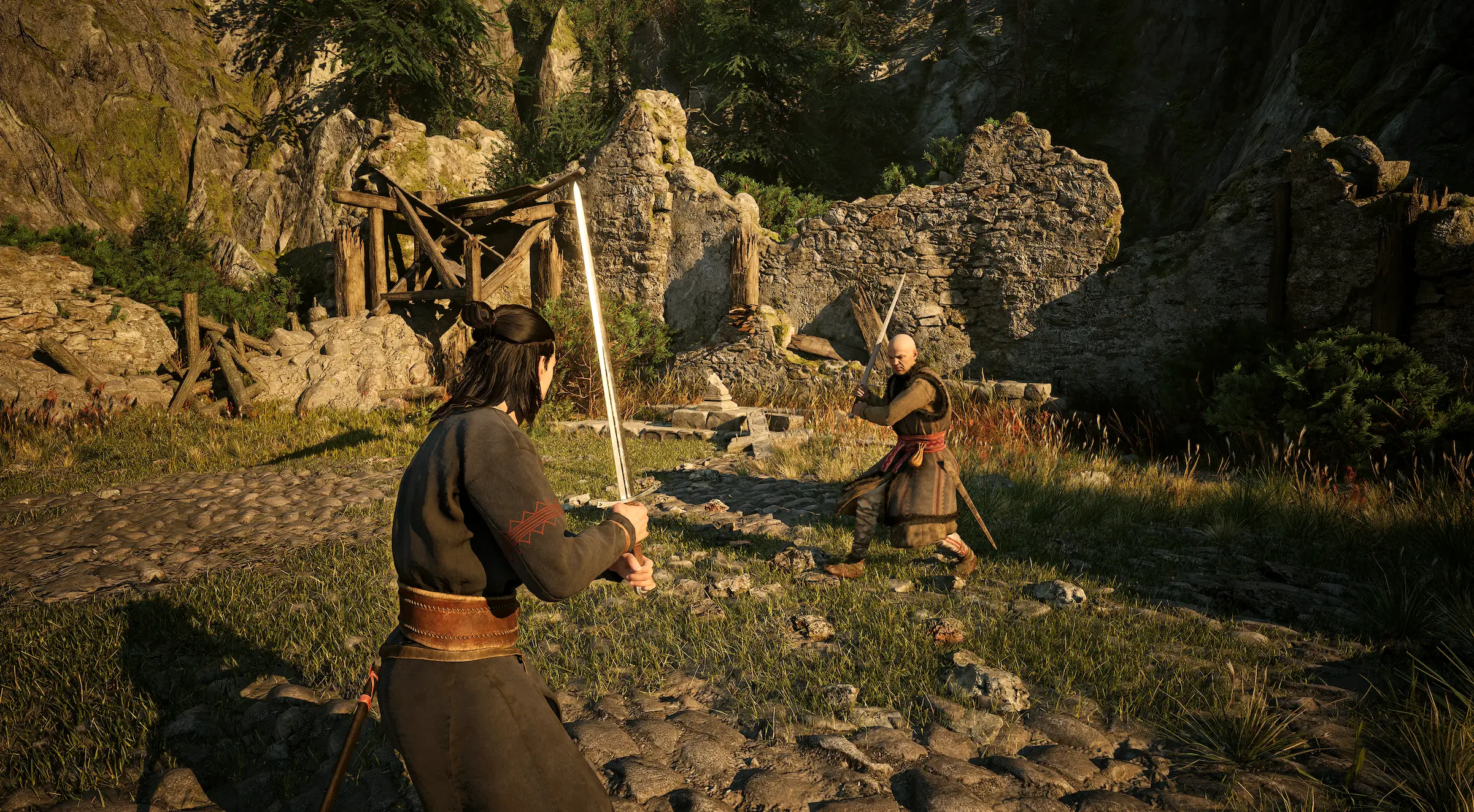
This system applies whether you’re using a human weapon or Coen’s vampiric claws. There are also skills you can equip which provide powerful attacks that operate on a charge system. During my time with the game, I could equip one human, one vampiric, and one witchcraft skill, but there were locked slots to equip more further down the line. Successfully landing shots will build up your ability charge to allow you to unleash said attacks.
As a human, I had the chance to try out a skill where Coen would throw dust, temporarily incapacitating an enemy in a multi-person skirmish. As a vampire, I could drain the remaining life force of an enemy, using the blood to replenish my own health. I unfortunately didn’t get a chance to try out any witchcraft in combat, only communicating with the dead via a compulsory story beat. While The Blood of Dawnwalker isn’t a stealth game, I did see a stealth attack hidden in the game’s skill tree.
The game’s director told me testers were averaging 50 to 70 hour playthroughs
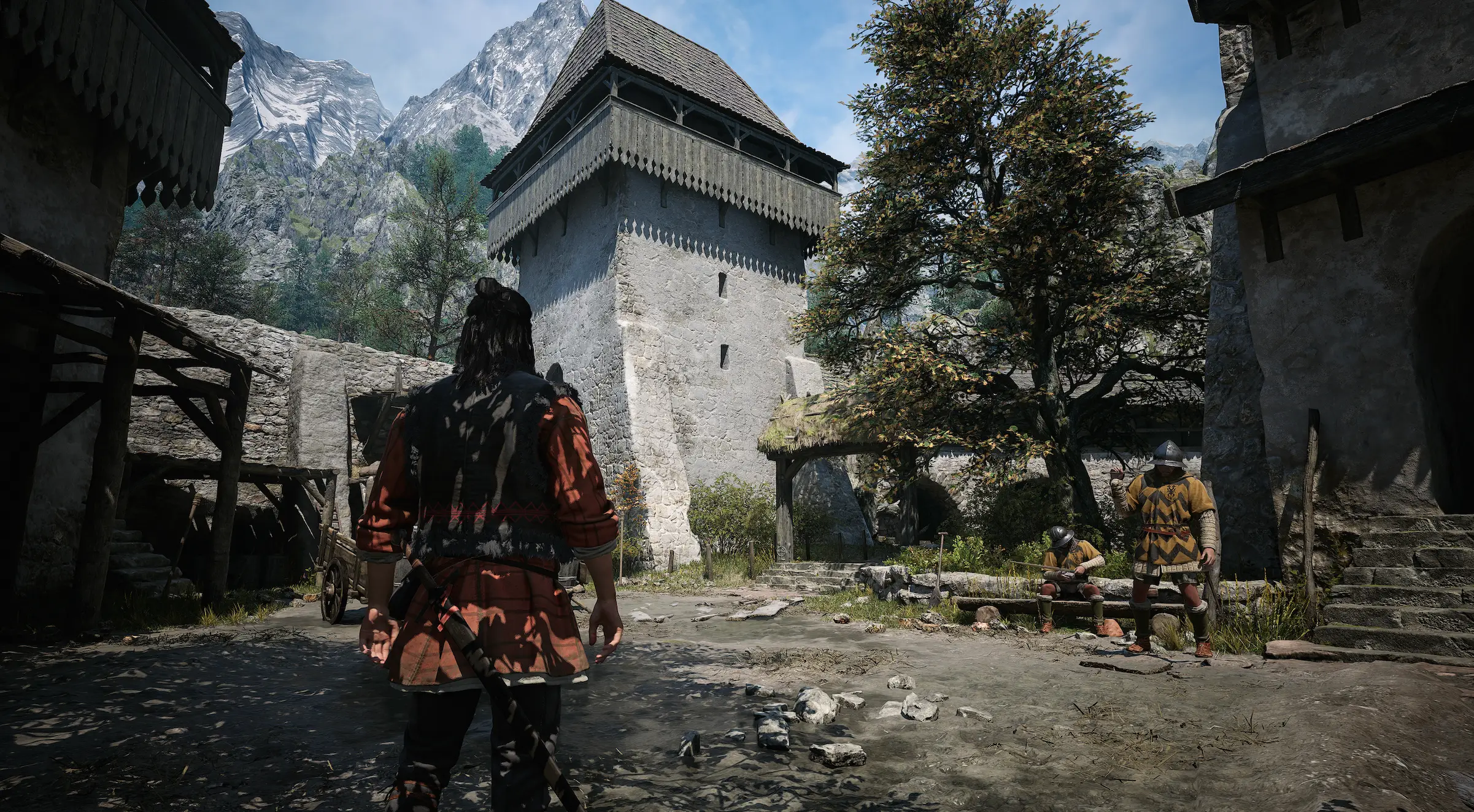
After surviving the chaos and immediate aftermath of the prologue’s Blood Mass, I had the opportunity to explore the opening area of The Blood of Dawnwalker’s open-world. While there’s always a key story objective highlighted, that sense of freedom remains. In fact, after the prologue, the next major objective was halfway across the other side of the map, so I’d say independence is actively encouraged. As a vampire, I was able to navigate to the top of a tower where Coen marked out a couple of key locations.
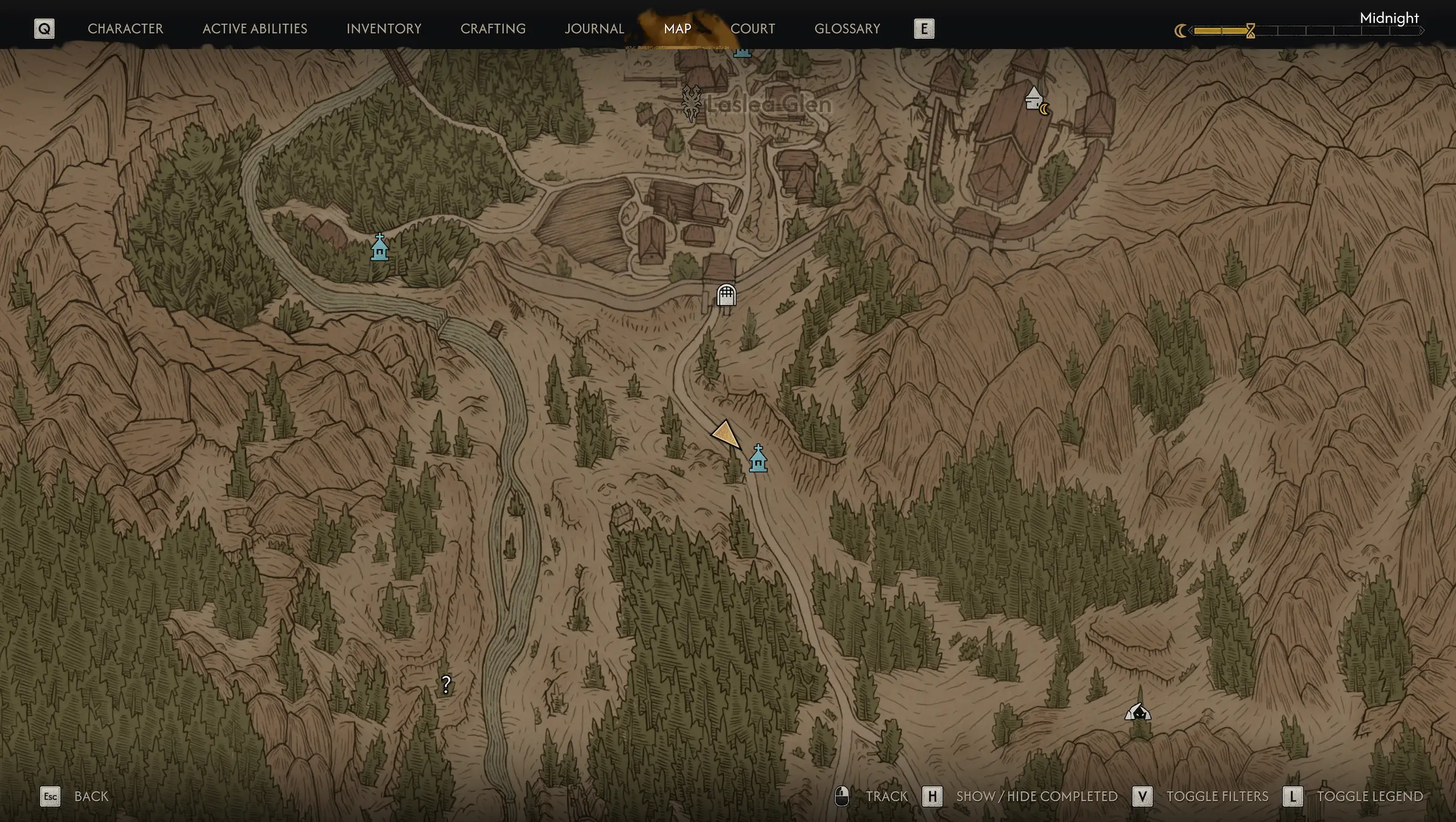
Within the open-world, there are plenty more side quests. I got caught up in trying to play the middleman in a prison camp. The leader asked me to beat up a guard. The guard got his cronies to jump me. It didn’t end well for me, I’ll admit. I found a magical location where witchcraft could be used to unleash a legendary monster, which, according to the game, posed a significant challenge. I wasn’t quite up to par to take it on, but there’s a great variety, I sense.
An infamy system adds a sense of consequence as you defeat more foes
What struck me about the open-world is the fact that it’s where the game’s infamy system comes into play - and this will perk up the ears of anyone mourning the underuse of the Nemesis System in gaming. Brencis is backed up by three key figures: Ambrus, Xanthe, and Bakir. They each submanage areas of the game’s open-world and doing anything to disrupt the power balance within those areas will increase the relevant anger level and increase your infamy level.
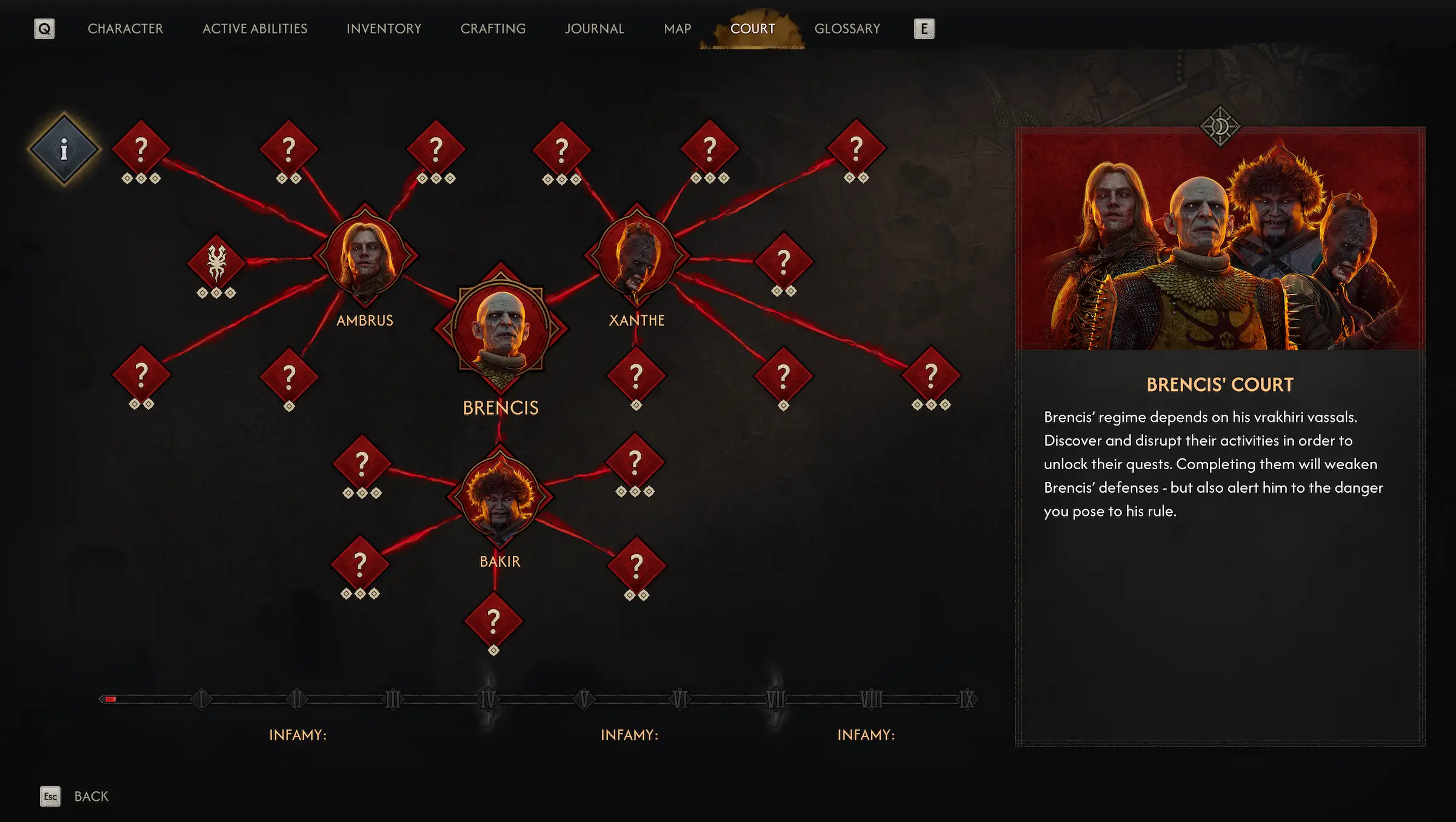
Quite early into exploring the game’s map, I was able to fight my way through a load of camps, which I believe belonged to Ambrus. Once I’d cleared the camp and wiped out his loyal soldiers, I could destroy large quantities of blood collected from those supposedly under Brencis’ protection. This raised Ambrus’ anger level, and once you’ve maxed that out further in the story, it unlocks a key unique quest. There’s then a general infamy level. I was warned that Brencis had heard about my actions, and the more I fought back against his crooks, the more difficult my life would be in the open-world.
The Blood of Dawnwalker didn’t leave me without questions. Outside of the prologue, I only really had the chance to dillydally in the game’s wider world, so I’m curious to see how the ante is upped further down the line, just how many quest options are offered, and how acquiring new skills deepens the complexity of the combat. I also found a cat I couldn’t pet, although Konrad assured me that wouldn’t be the case at launch.
As far as first impressions go, though, The Blood of Dawnwalker couldn’t have put on any more of a dazzling show. It’s a confident, well-crafted beast of a project that could easily become a new modern classic come its launch day on September 3, which I’ll now be counting down for.
The Blood of Dawnwalker launches on September 3 on PC, PlayStation 5, and Xbox Series X/S.
Topics: Preview, The Witcher, The Witcher 3, The Blood of Dawnwalker