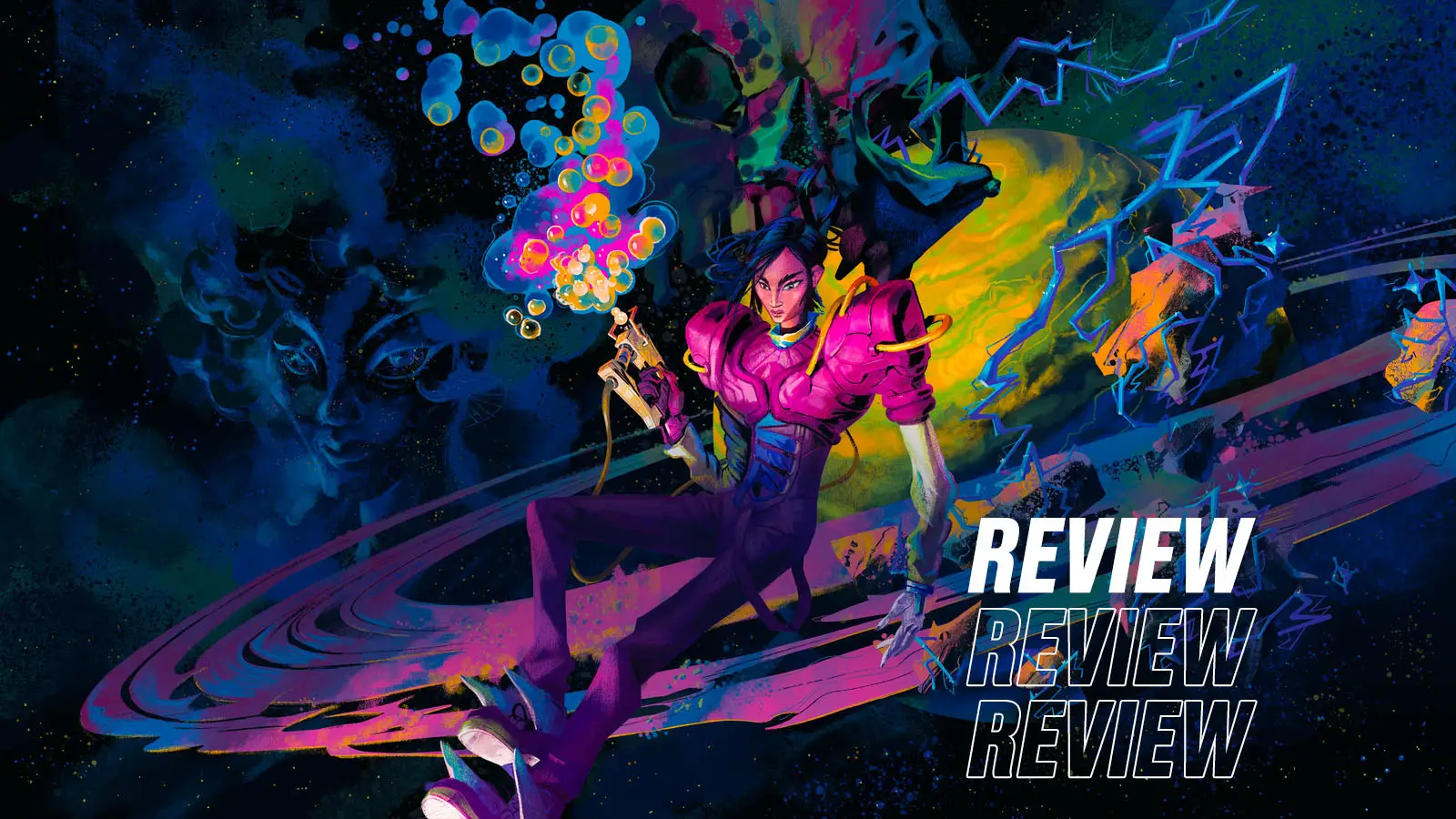
Bleak sci-fi FPS Ambrosia Sky's new free expansion provides a satisfying conclusion


Ambrosia Sky’s queer storytelling and fascinating perspective of death is what drew me into its world, so much so that I didn’t mind that Soft Rains released both halves of its story about nine months apart.
With the second act of the game out this week, I was keen to see how all of the elements set up in Ambrosia Sky’s first half would pay off, and most importantly, how Soft Rains would shake things up for the story’s conclusion.
Set a science colony aboard in deep space, you play as Dalia, a scientist who had previously left the colony behind, only to return years later after a disaster has wiped out the population, while a mysterious fungus grows across whatever remains. The colony had previously been researching the Ambrosia Project, an initiative to unlock the secret of human immortality.
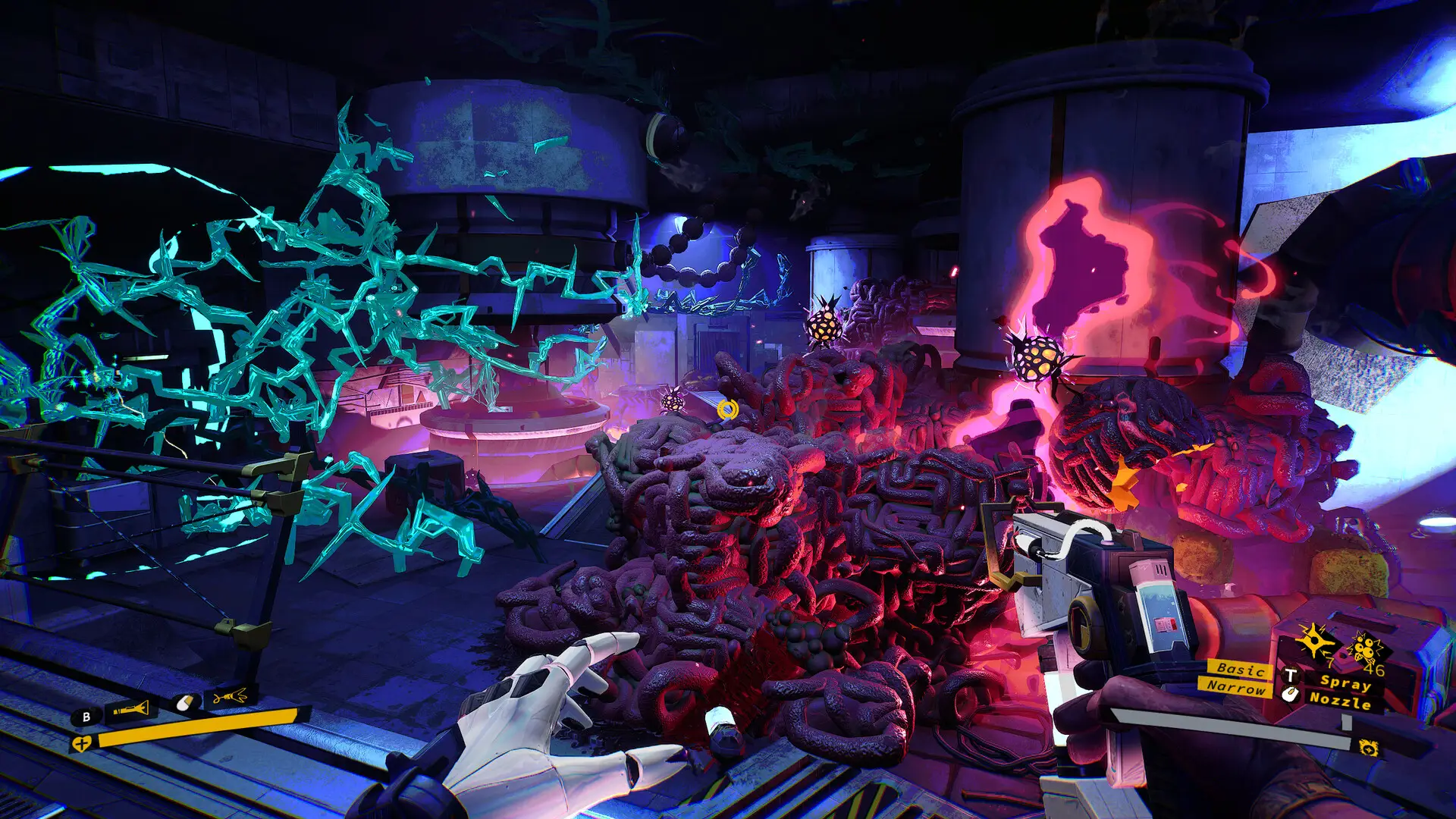
What follows is a series of stages where you explore the remnants of the colony, using a large power-washer tool to spray away different fungus types, all while using notes and environmental cues to learn more about what actually happened.
Advert
As well as this, you also search for the victims of the contamination who have perished as a result of the catastrophe, allowing Dalia to collect new information and further her understanding of the fungus from the people whose lives were destroyed by it.
It’s a story that feels so firmly rooted in what traditional queer storytelling has looked like in the past. It’s easy to point to the ‘bury your gays’ trope, which is still all too common in some modern media, as a reason to knock Ambrosia Sky down.
With that said, despite the game featuring queer characters who have died, its core story feels more like a subversion of the trope. One reason this works is through Dalia’s respect for the dead, a theme that the game’s narrative director, Kaitlin Tremblay, explored in a previous game they worked on, A Mortician’s Tale.
As with A Mortician’s Tale, the game charts how people’s identities are treated after they’ve died, exploring how it matters that that person’s body continues to be respected in death as in life. Through the death rituals that Dalia performs when she finds these bodies, this brings the game’s core theme of love and death full circle.
Might I say that it does all this while sporting an incredible visual style as well? It's something that I see so rarely in video games, but Ambrosia Sky's use of colour and staging is simply superb, where exploring each space feels like it's so busy but also signposts you perfectly to where you need to go. It's a cavalcade of senses, and something that shouldn't always work on paper, but does.
Ambrosia Sky is a unique entry to the immersive sim genre
Ambrosia Sky advertises itself as an immersive sim, a genre that is pretty hard to define on paper, though we do have a pretty robust explanation on our list of the best immersive sims you can play.
In terms of whether Ambrosia Sky qualifies as an immersive sim, that may depend on how loosely you want to play with the term. I’ve always found that the more rigid definition you have of a specific game genre, the fewer games you’ll actually be able to fit into that category. It’s why some ImSim fans only believe Deus Ex fits into that mould, despite there being countless games which also use ImSim-like mechanics in their gameplay. In the end, it feels like simple gatekeeping.
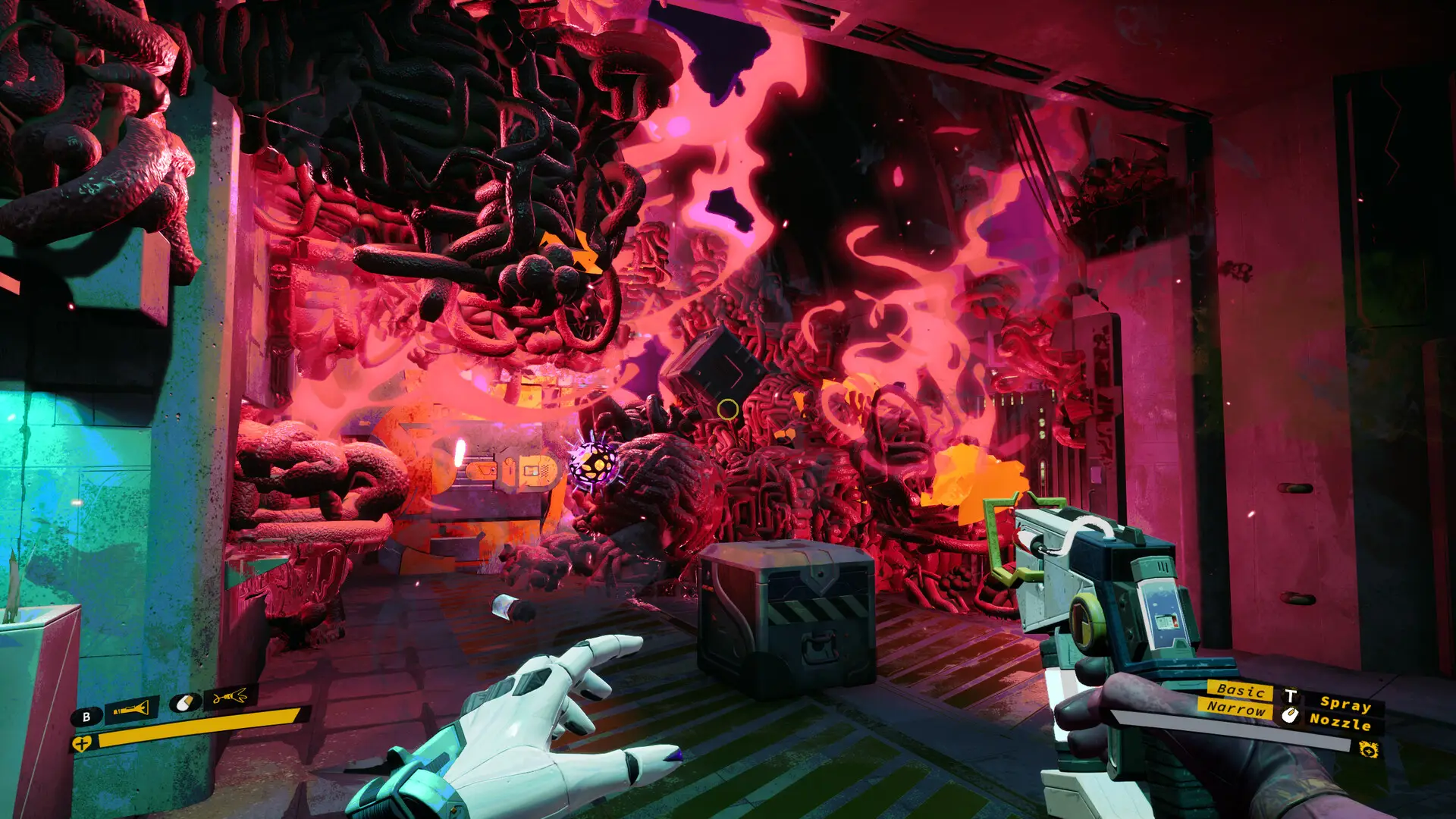
This is largely done through the ways you choose to engage with dealing with the fungus. Each level features several fungus types to remove using your powerwash tool, with unique types such as electrified fungus short-circuiting certain electrical units, which can lock down areas or create hazards which are difficult to pass. Similarly, fruit-based fungus blocks your path, causing you to need to clear it if you want to progress.
Ambrosia Sky definitely fits into the Immersive Sim genre, though you’d be forgiven for trying to define that based on Act One alone. A lot of levels tend to be pretty straightforward, and there aren’t enough opportunities for Soft Rains to flex its open level design.
One thing I do like about this though, is being able to use an electric spray to connect one power source to another, allowing you to activate power on certain doors or appliances without having to search for a manual override or new power source. It’s an incredibly fun feeling to be able to solve a problem in the “wrong way”, which is something the immersive sim genre excels at.
Once you get to Act Two though, the game introduces new gameplay elements and level design principles which give you a little more choice over how to approach every problem.
For example, a new type of fungus is introduced, known as the corruption. This fungus can corrupt other types of hostile fungi, giving them new properties that you’re unable to clear with your spray. Instead, you need to locate the source to get rid of it, which can sometimes be hidden out of the way.
This creates interesting problems where you’ve suddenly spent the last five hours of the game comfortably removing any problem with your power spray, only for a new obstacle to enter the fray, which encourages you to find alternative routes or solutions around this. Now you’ve got to look around for an air vent to crawl through, a secret door to open, or a zero-gravity mechanism to unlock, which will allow you to bypass this.
This new fungus type is only introduced at the beginning of Act Two, making it perhaps my biggest grievance because it feels like the second half of the game is much stronger than the first half.
If you're coming back for Act Two, you're getting a stronger half of the game
Playing both acts consecutively, the first half of the game comprises about five hours of playtime, while I was able to clear Act Two in about the same amount of time.
However, even after completing the game and viewing the credits, I found myself wanting to revisit a lot of the levels from Act Two moreso than Act One. I much preferred the stages in this half of the game, whether that be down to more intuitive puzzle design, a stronger narrative hook, or something else entirely.
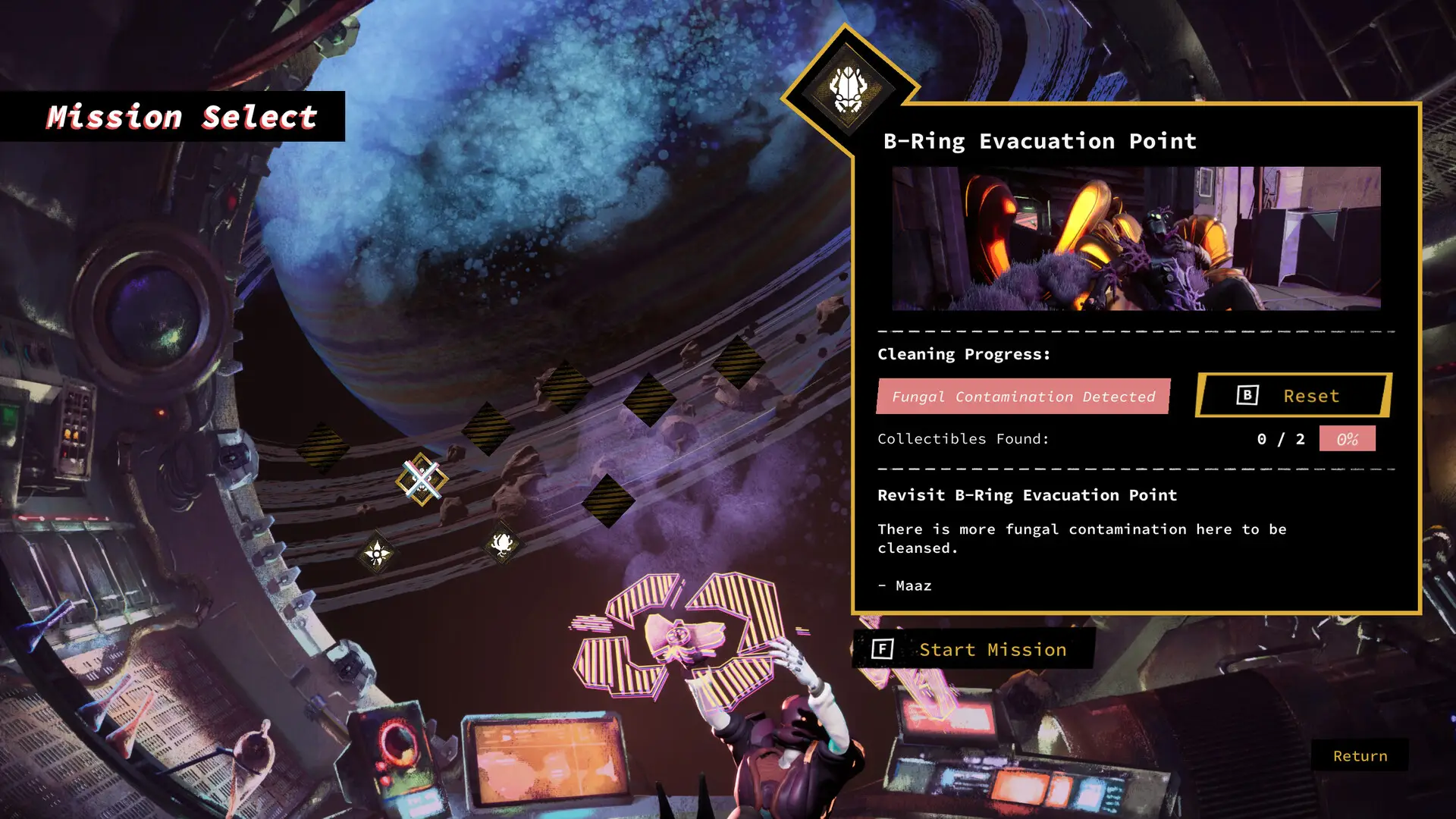
It was easy to understand why Ambrosia Sky’s claws only dig into you as you head into the second act, as this portion of the game came out around nine months after the first half.
Therefore, Soft Rains had nine additional months to work on this part of the game, taking internal and external feedback on board during this time, and being able to change its approach to design as a result of this feedback. By having more time to work on these new mechanics and create more interesting spaces to explore, it made sense to me that I’d end up enjoying Act Two more than Act One.
For returning players who rinsed through the first half of the game back in November, that’s an excellent hook to bring them back to see the story through to its conclusion. For new players, it’s a big ask to tell them that the game doesn’t really reach its fullest potential until you’ve played for around 5 or 6 hours. Not that the stages or narrative in Act One were bad, per se, but more that Ambrosia Sky doesn’t really start gripping you until you’re deep into the second act.
I guess that’s the problem with the episodic release format, even for one released in two halves. You release the first part, and it’s great, but then you have additional time to improve on some of the stuff that didn’t quite work for the second part, and that side of the story becomes the stronger half.
Pros: Incredible art style, great storytelling, fun gameplay loop
Cons: First half is slow, some performance hiccups
For fans of: Deus Ex, Prey, Observation
7/10: Very Good
Ambrosia Sky: Act Two is available now. It’s available for PC (version tested). Review code was provided by the publisher. Read a guide to our review scores here.
Topics: Indie Games, Reviews, PC