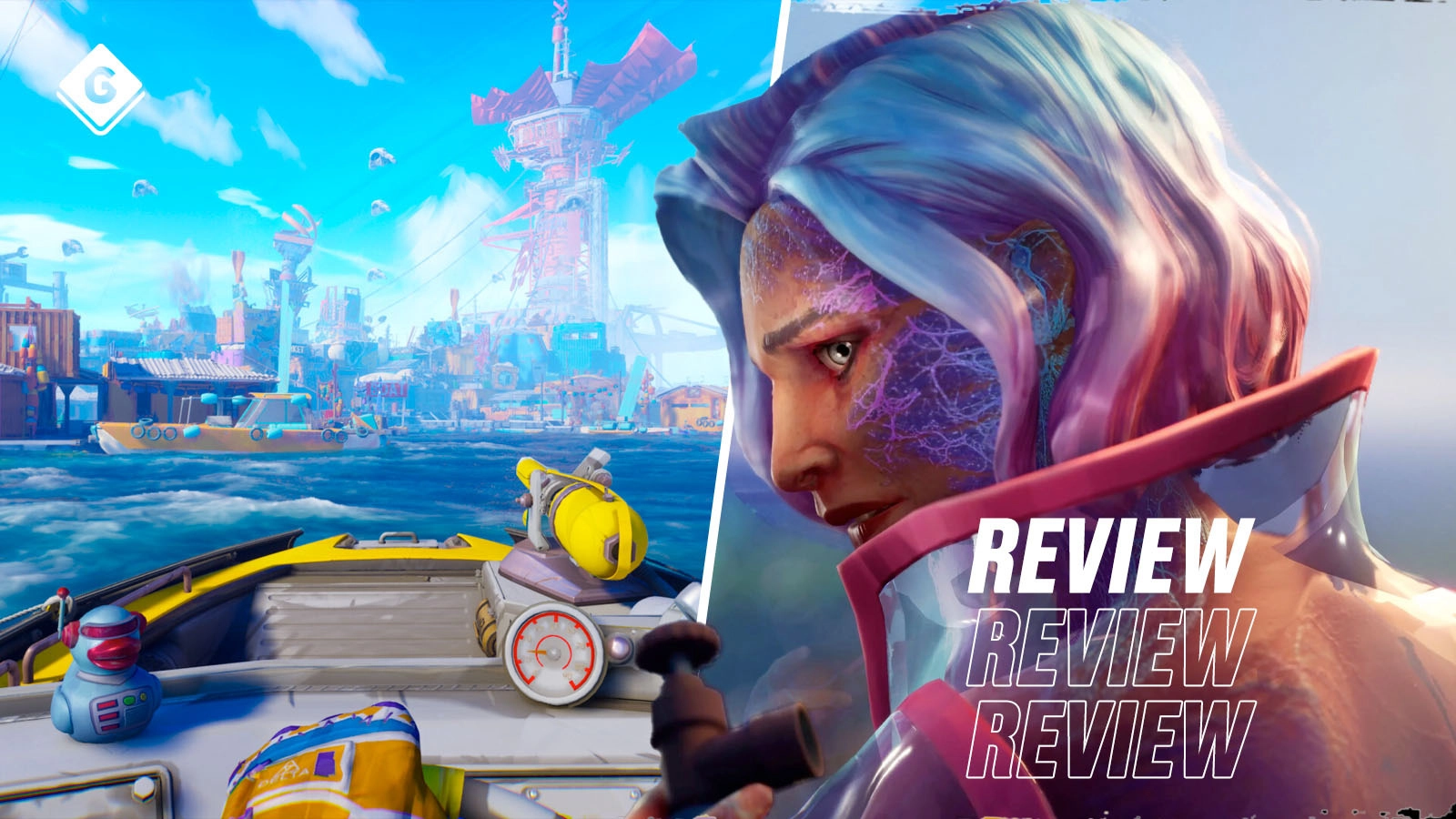
Tides of Tomorrow’s Strand-Type Narrative Delivers An Interesting Climate Change Allegory


Back in 2019, Hideo Kojima promised us that Death Stranding would do something that has never been done in a video game before, and would outright lead to an entirely new genre being created.
We ended up settling on calling this genre a “strand-type”, a genre where other people's decisions, even those made solely for their own purposes, affect how you play the game. And in turn, the decisions you make as a response to that will affect the players who follow you in your footsteps.
The idea behind this is to have a playthrough that has already been shaped by another player, where you will be doing the same for others without it feeling like a traditional multiplayer experience.
Games like Dark Souls and Journey had incorporated elements of strand-types prior to Kojima coming along, but Death Stranding was the first time this idea had felt fully realised.
Advert
With Death Stranding, this affected gameplay and level design. Players’ abandoned cargo would show up in your world, and you’d be able to pick them up and finish deliveries. Similarly, structures and world effects created by other players could show up in your world, too.
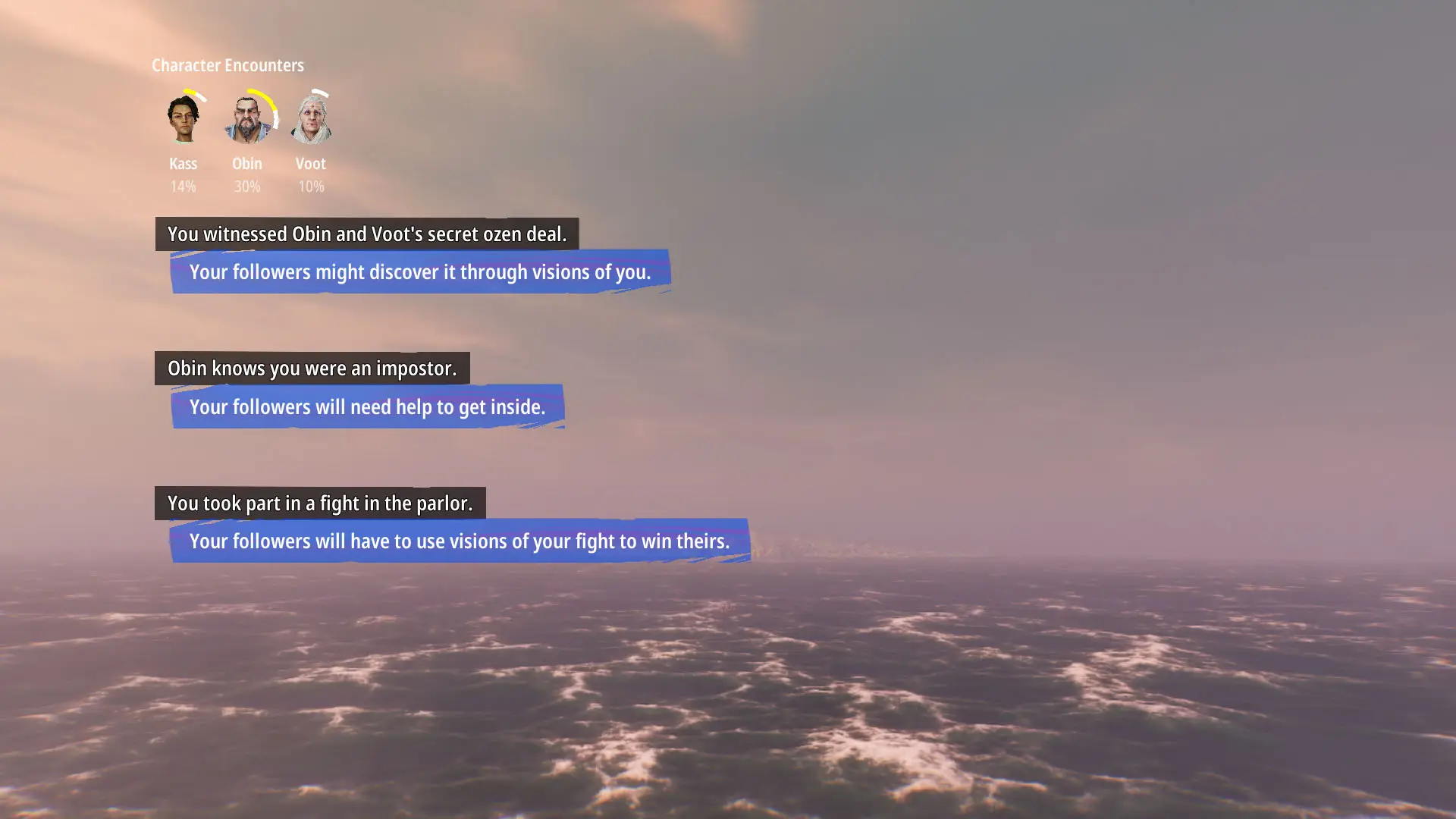
But in the case of Tides of Tomorrow, developer Digixart has placed the strand-type gameplay elements onto the narrative. It’s a game where other players’ narrative decisions affect your own story, and the choices you yourself make will affect those following you.
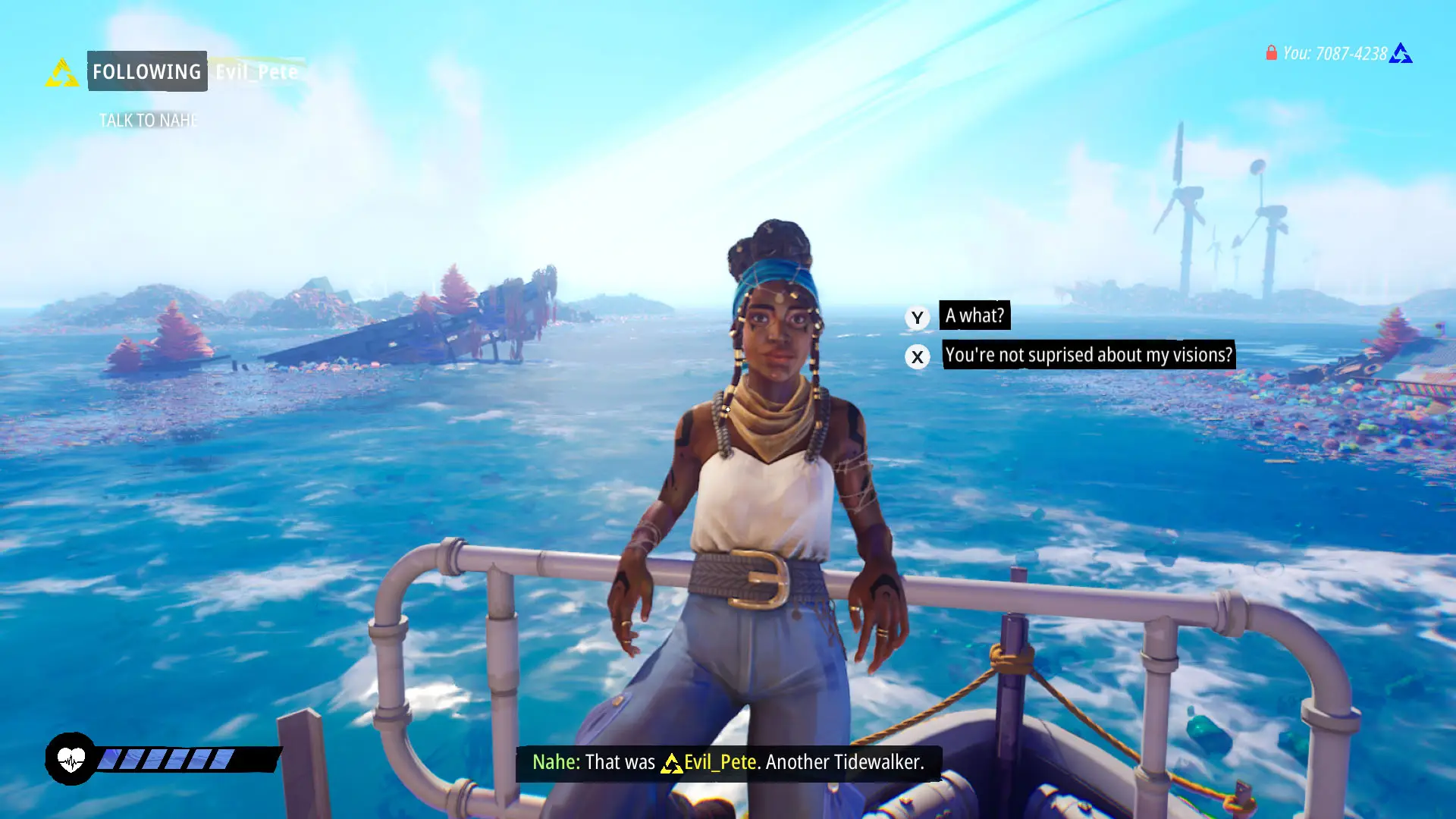
Tides of Tomorrow is set in the far future where the world has become a flooded dystopia, and humanity survives in cities built on the oceans. A disease known as plastemia which transforms its victims into solid plastic is spreading, and you are tasked with searching for a way to reverse its effects upon the world.
As you progress through the game, you’ll always be following another player. You’ll show up in a new area and see the effects of their actions. If they had agitated a particular colony, its inhabitants are going to be less welcoming towards you. But if they were friendly and helpful, NPCs are a lot happier to see you.
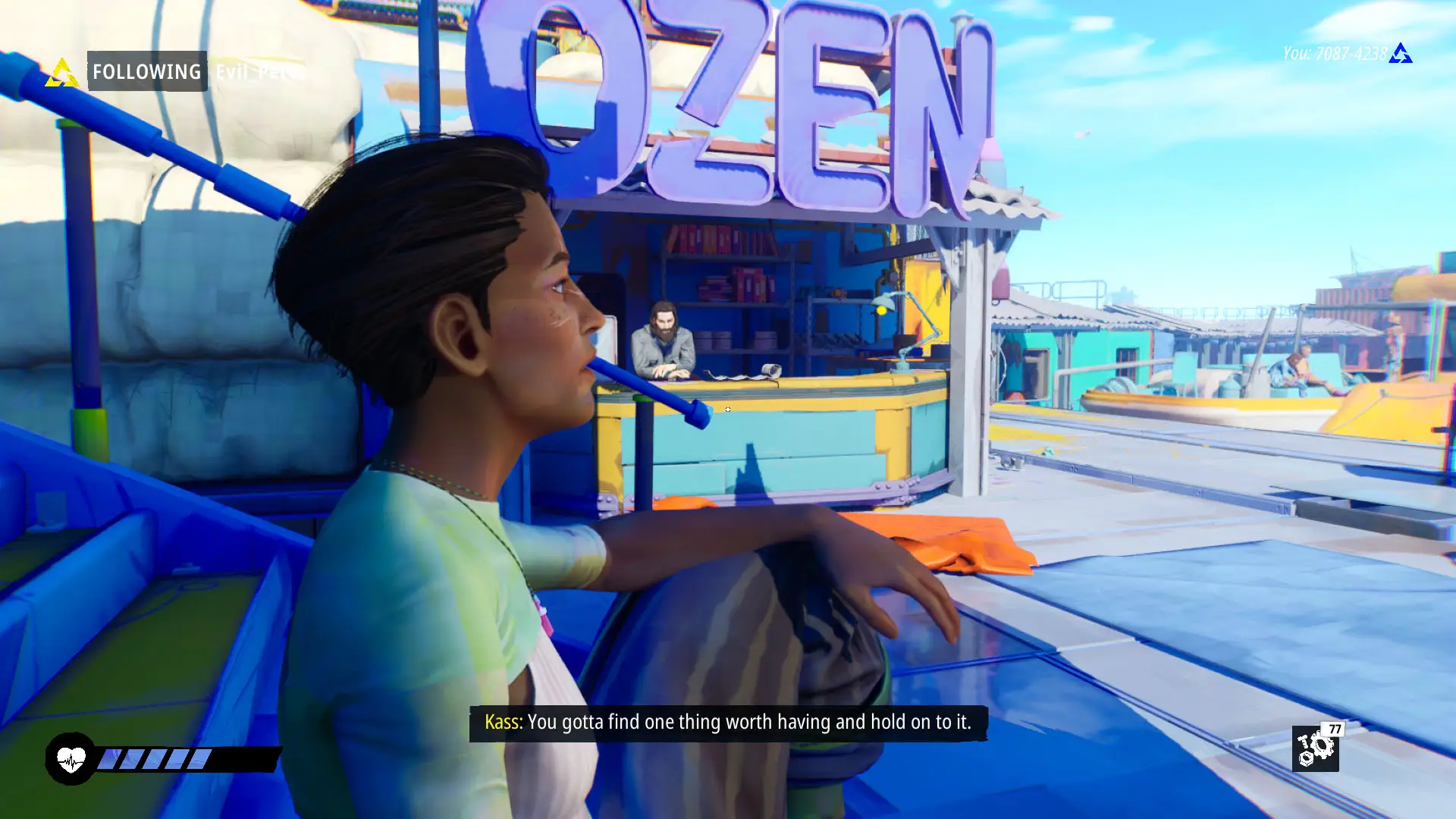
An early example of this feature in action involves you having to get into a secure area to grab some Ozen (a resource which keeps plastemia at bay, which you’ll be needing a lot of during your playthrough).
There’s a guard posted to watch over the Ozen, where you can either negotiate with him or resort to more dubious methods to get past him. Depending on the previous player’s actions, the guard may be more hesitant to let you in, or you may have an easier time finding the Ozen. And as you play out the sequence yourself, your own choices will affect anyone following in your path.
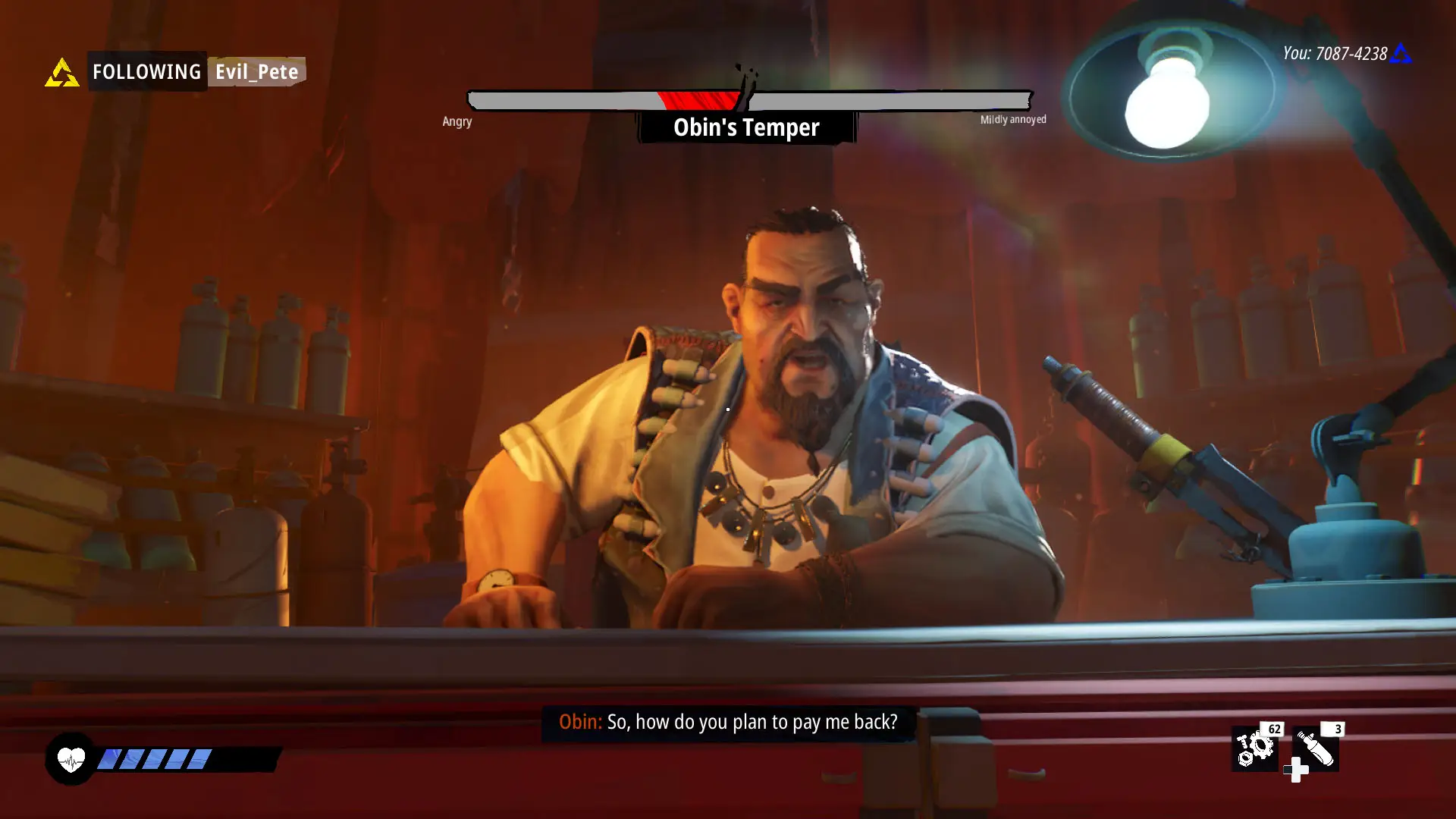
For another, more dramatic example, there’s a situation early on where you need to obtain some Ozen from a settlement ruled by a ruthless gangster named Obin. When I first showed up, the place was on high alert due to my predecessor having stolen the Ozen when they were here. That resulted in the place being locked down and guards patrolling the area. However, I was able to convince Obin to stop looking for the thief, at which point I was informed that my actions have led to my followers being welcomed to the settlement without any major guard attention.
It’s a pretty genius gameplay feature, essentially creating two or more versions of each level that players will experience differently to your own. And it’s one that never truly overstates its welcome. The game has five acts, with a handful of levels in each one, and it never stops being interesting to see how each story beat changes depending on the actions of the player you’re following.
That doesn’t mean it’s without flaws though. Later on, there are some choices that occur which are said to only happen in your playthrough. These are typically rather pivotal moments in the story, such as a character’s death or a major development where it wouldn’t make narrative sense for the player you’re following to have already experienced that.
Obviously, these kinds of plot beats have occurred in other players’ games, but in this case, it’s used to justify giving yourself agency over your own playthrough. The connection that you feel between yourself and other players is severed ever so slightly, with the narrative reminding you some plot beats are actually only affected by yourself, and that the player following you may actually make a different decision. All of a sudden, one character who dies in your playthrough may live in your followers’, and that can make it feel a little more disconnected.
Still, the overall sense of connection feels perfectly at home in Tides of Tomorrow. It’s a game about forging strong relationships with your fellow people, bringing humanity together to overcome an apocalyptic threat, even in the face of people serving their own self interests or being in straight-up denial about the reality with which they’re faced.
The game wears its parallels to climate change and the COVID-19 pandemic on its sleeves, a decision I would have called “too on the nose” just a few years ago. But after seeing this type of rejection of moral virtues spread in real life, it’s got me thinking that narrative parallels to real life should be incredibly transparent, as it feels like the only way to communicate those ideas now.
This all culminates in an experience that does an effective job at emphasising the connection between people, achieved in a way that feels particularly clever and responsive to how your own actions affect others, as theirs do unto you. Tides of Tomorrow delivers on making you feel like you’re part of a greater whole, while also providing a story that is wholly individual and intimate.
Pros: Innovative story link feature, interesting story, fun characters
Cons: Some choices fall short of feeling meaningful, uneven pacing in the middle
For fans of: Death Stranding, Road 96, Telltale Games
8/10: Excellent
Tides of Tomorrow launches on 22 April on PC (version tested). A review code was provided by the publisher. Read a guide to our review scores here.
Topics: Indie Games, PC, Reviews, Steam