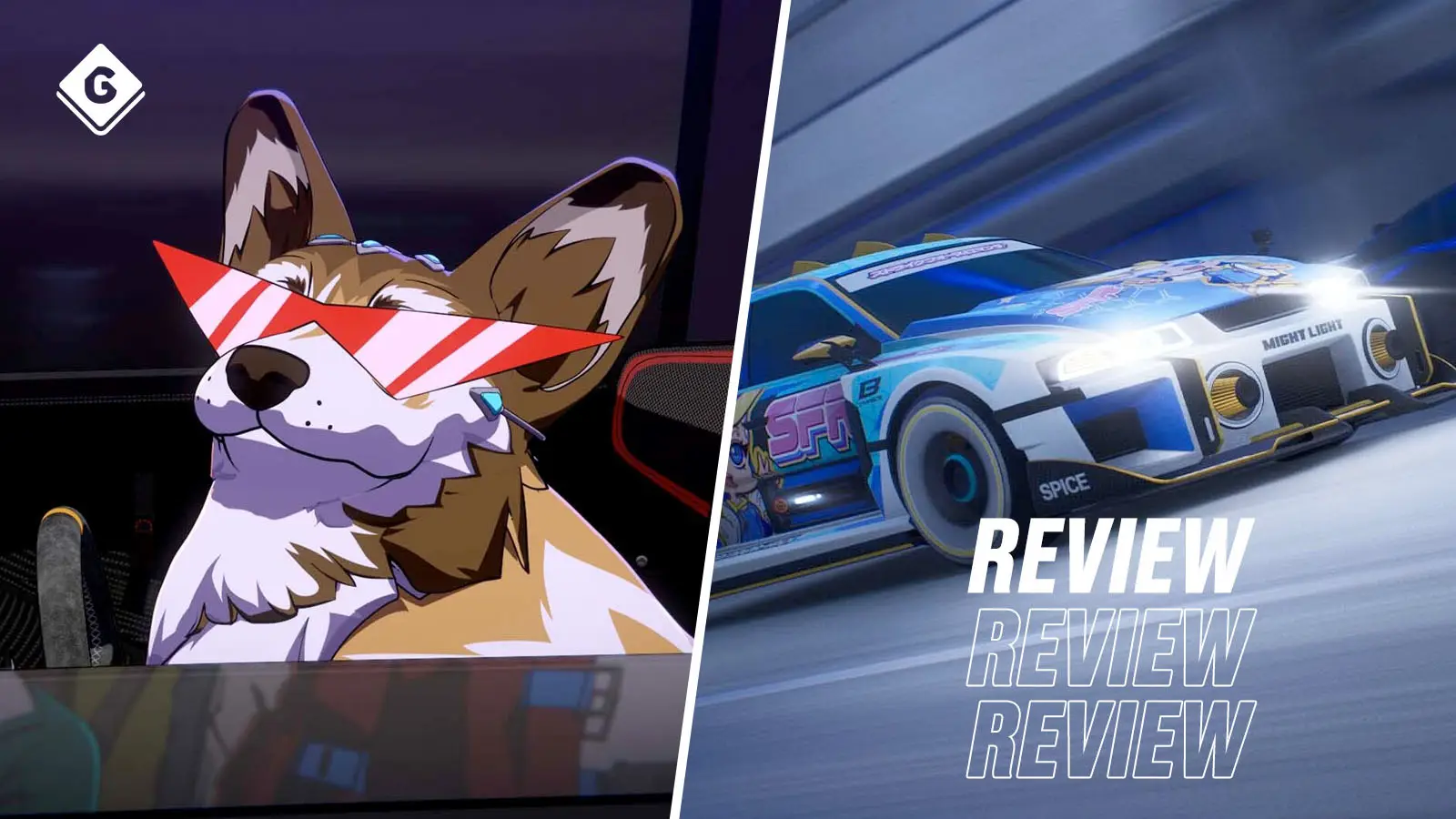
Screamer Is An Excellent Ridge Racer Throwback, Even If I’m Bad At It


If you enjoyed arcade racing games of the 1980s and 1990s like Ridge Racer, Virtua Racing, or Out Run, the classic Screamer series is something you may have also been aware of.
After being absent for over two decades, Screamer has come back with a vengeance in the form of a new reboot aimed at capturing that classic retro feel while also modernising it for the current generation.
Screamer (2026) is set in a futuristic cyberpunk-esque world where racers from all around the planet compete in a deadly racing championship—the titular Screamer tournament—in the name of fame, glory, and riches.
The game’s campaign story introduces us to five teams, each one composed of three members, who all join the tournament for their own shot at stardom. Each with their own stories, you flip between different perspectives across the campaign’s four chapters.
Advert
Screamer’s story is pretty serviceable, its anime aesthetics and storytelling methods fit with the ‘90s cyberpunk vibe, though it’s here where I had a really important realisation: I suck at this game.
Don’t get me wrong, I love a good arcade racing game. Some of my favourites include Ridge Racer, Blur, and Burnout. I’m even pretty good at some of them, too, despite what internet grifters may have led you to believe about games journalists’ skill with challenging games.

Still, I’m not beating the allegations here. Screamer is a pretty challenging game, and it all began in the story mode. Within the first hour, there are levels which require you to come in first place, or complete a certain number of driving techniques within a short time limit, and I quickly came to realise that this game throws you in at the deep end really quickly.
But hey, I’m not actually calling this a bad thing. I think we all need to play something that kicks our arse from time-to-time. It’s what keeps us humble. If you can’t laugh at yourself, what can you laugh at.
Constantly winning against easy-to-beat opponents gets tiresome after a while, and makes me more likely to bounce off certain games a lot faster than something that is actually pretty challenging. So, it was nice to play something that took me a long while to become accustomed to.
All of this is to say that I think Screamer does an excellent job at presenting itself as a difficult arcade racer. You’re not always going to win, and you probably won’t even be good at it for a long time. With more practice, I started getting better. I learned the tracks, discovered the best times to utilise my boosts, and was gradually able to overcome many of these hurdles.
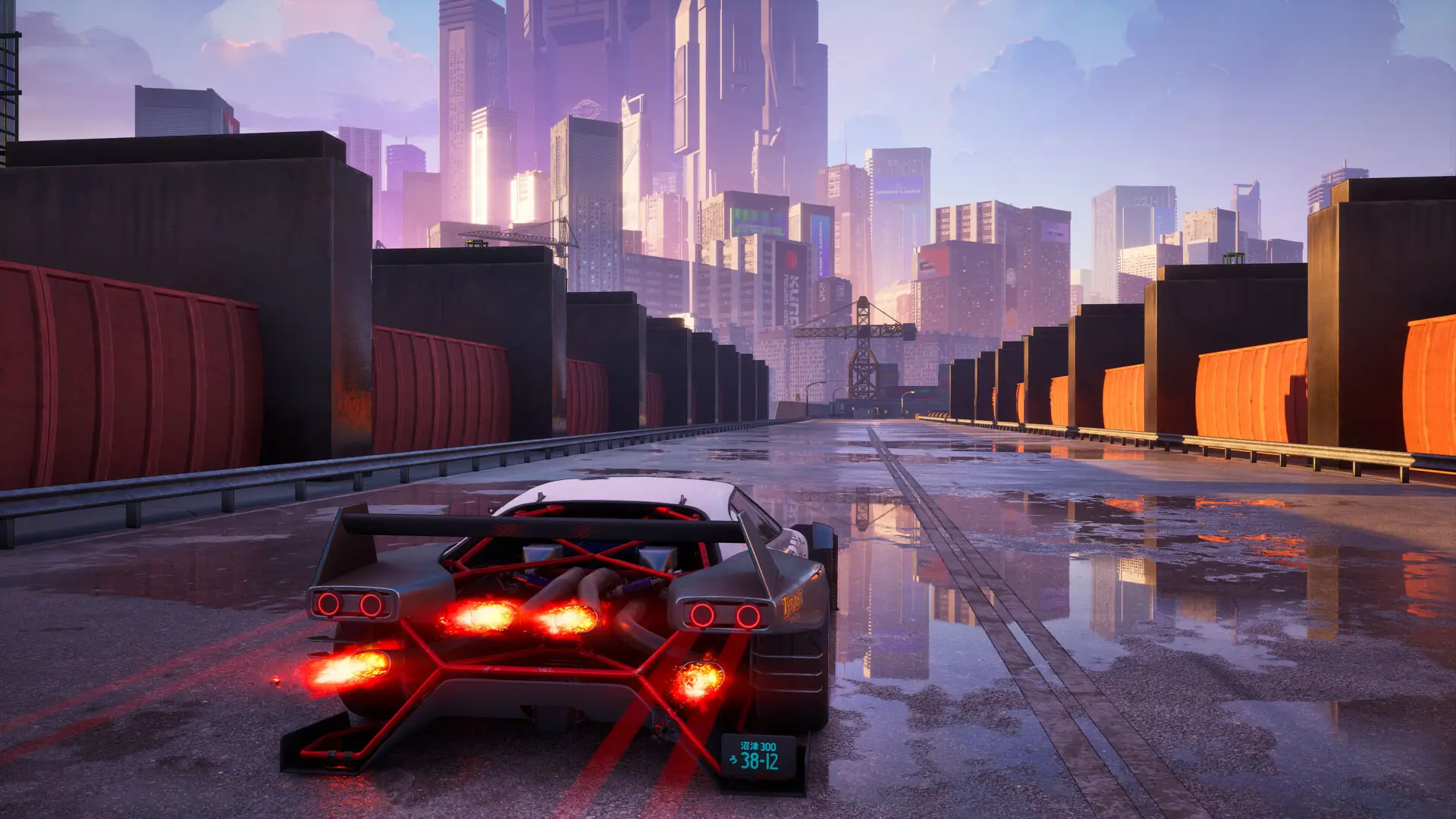
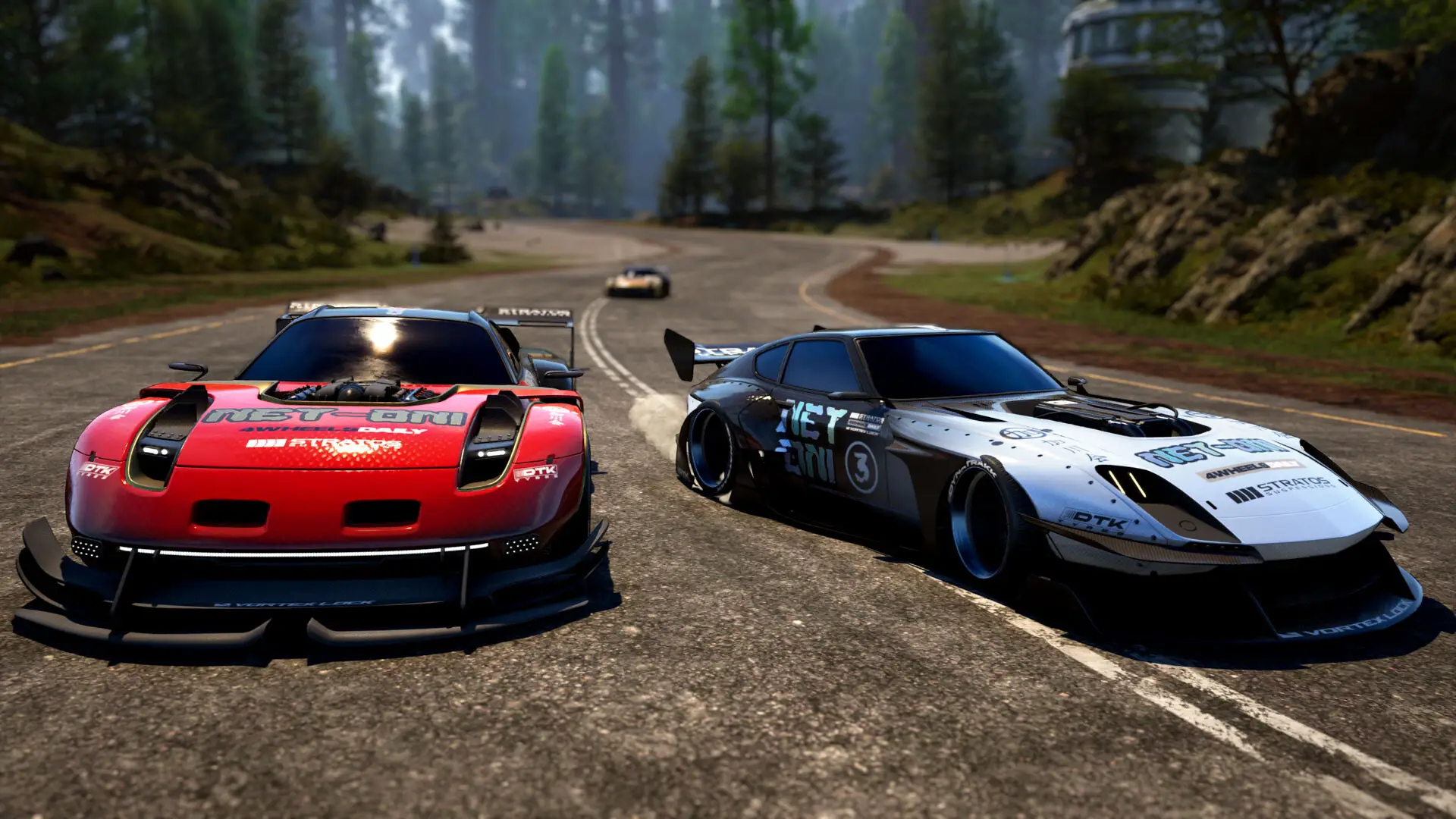
While the campaign can be fun, it’s the arcade mode where the game truly shines, offering a variety of different race types. You can race solo against AI drivers (or real players, if using multiplayer), enter in a team race where your points are shared between the drivers on your team, or enter in one of the various checkpoint, score or time attack challenges which has a more traditional feel.
What sets arcade mode apart is that it allows you to unlock new tracks, racers, and cosmetics at a much faster rate than the story mode. From the beginning, you’re stuck with just a handful of races and drivers to choose from, but completing new races eventually allows you to unlock new content to try out. I like that progression isn’t strictly tied to the story mode, where you run the risk of hitting a roadblock when up against a pretty tough set of opponents.
You also get immediate access to the various powers your drivers have control of, known as the Echo System. Pressing one button on the controller initiates a Boost, giving you a quick dose of speed in exchange for control over your vehicle’s handling. Another ability activates an attack called a Strike, which will destroy opponents vehicles if you manage to come into contact with them.
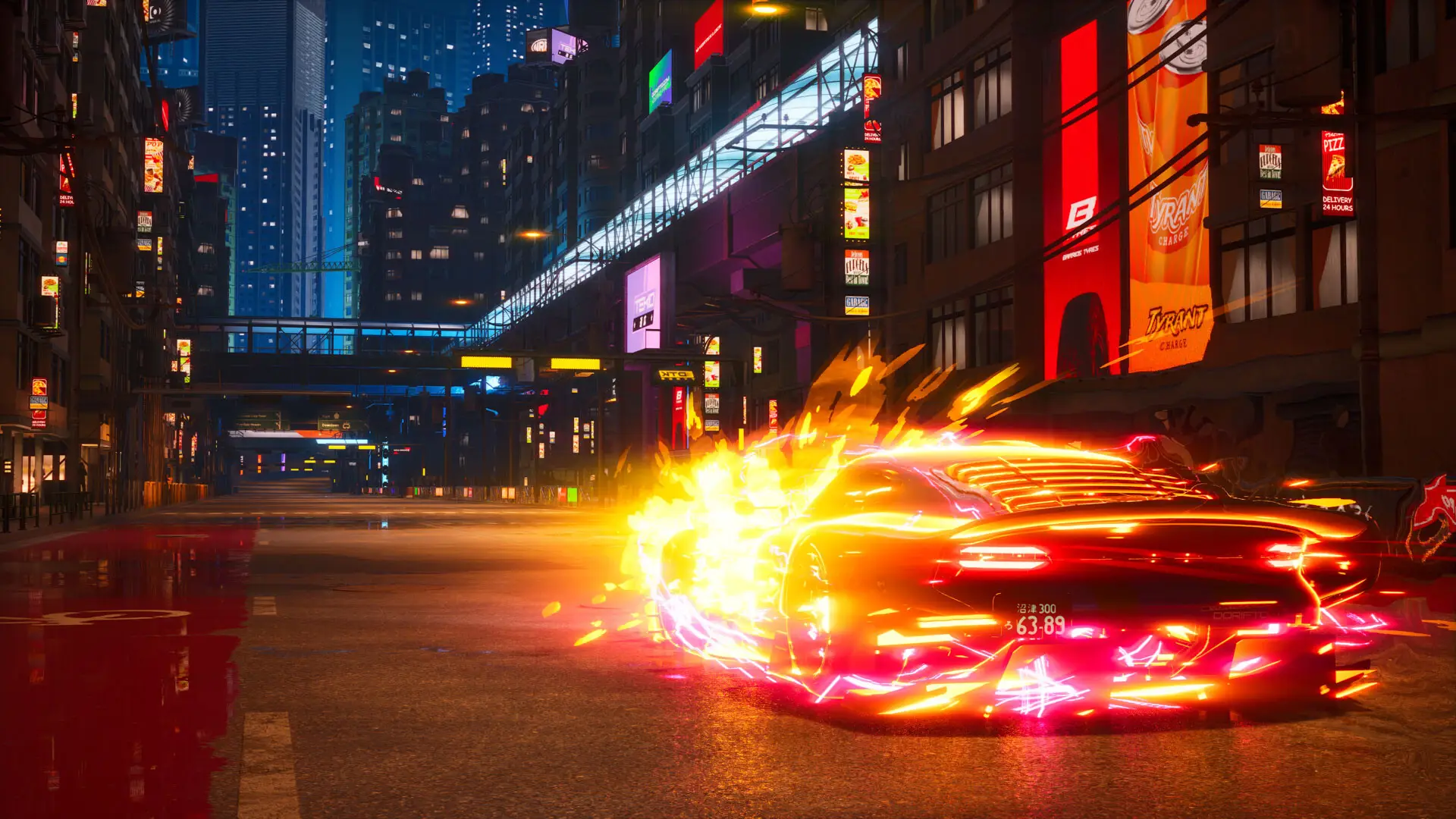
Building up enough Sync and Entropy, the two resources you use to activate these abilities, will also enable Overdrive, a special ability which gives you both a powerful boost and attack at the same time, allowing you to mow down other racers on the track with little resistance. I found that this ability is incredibly overpowered in its current state, where I was able to complete almost an entire lap in this state without any other driver being able to do anything about it.
Altogether, this system is fine, but I would have enjoyed a little more variety in the types of attacks you can do. Using different characters can result in slightly different ways of using these abilities, but they all ultimately feel rather samey at the end of the day. I understand that this was probably done for balance purposes, but it still feels a little undercooked when Milestone could have designed different types of attacks for each driver.
Meanwhile, Screamer also uses a twin-stick system for controlling your vehicle. Left stick steers, while right stick drifts.
Using one or both will allow you to control the level of intensity at which you approach each turn, and it ultimately becomes a lesson in discovering how best to approach every corner on a given track. However, I would have liked a little more ease on the steering, as it feels like there are moments where cars in Screamer are often understeering to a point where a drift wouldn’t really work.
After many hours playing Screamer’s arcade mode, I still feel like I’ve only scratched the surface of what this game offers. It’s challenging, fast-paced, and leaves no room for error, but it’s incredibly appealing to those who enjoy a good throwback to the arcade racers of the 1990s, even if a little flawed in some departments.
Pros: Challenging difficulty, fun arcade mode, interesting setting and story
Cons: Steep difficulty curve in story mode, flawed combat system, controls a bit clunky
For fans of: Ridge Racer, Blur, Burnout
8/10: Excellent
Screamer launches on 23 March on PC (version tested), PlayStation 5, and Xbox Series X/S. A review code was provided by the publisher. Read a guide to our review scores here.
Topics: PlayStation 5, Reviews, PC, Steam, Xbox, Xbox Series S, Xbox Series X