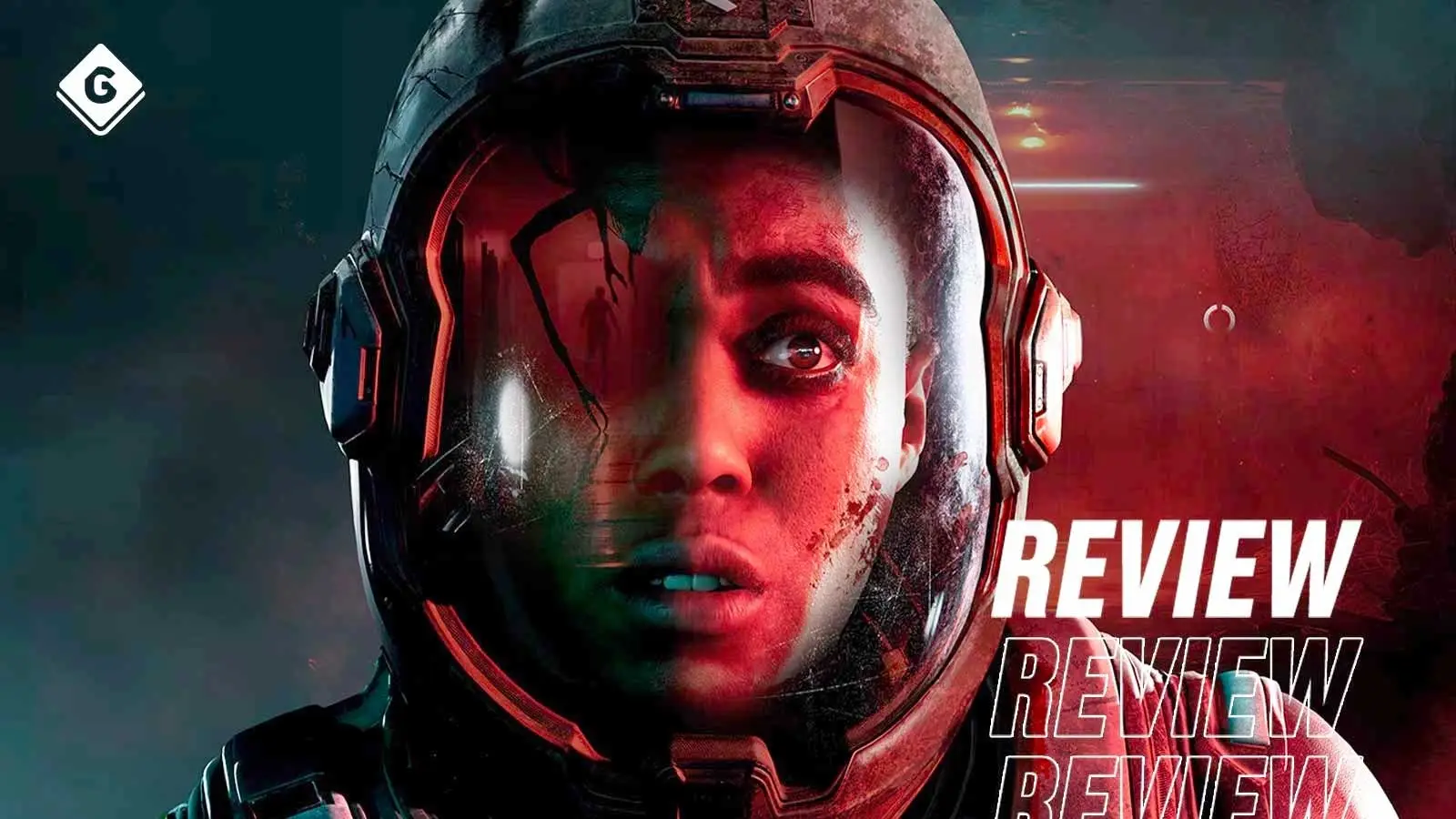
New Survival Horror Is a 9/10 Until Dawn Successor, Coming to PS5, Xbox, and PC


The most unnerving brand of horror is that which feels tangible, and cosmic horror so perfectly meets that criteria. Fears pertaining to mankind’s insignificance plague us all, and that fear is so brilliantly tapped into by Supermassive Games’ latest title, Directive 8020.
This isn’t your average entry in The Dark Pictures series; you won’t be hit by a constant stream of jump scares or befall the wrath of a supernatural being. There are, admittedly, still remnants of those classic franchise elements, but Directive 8020 is characterised by a prevailing tension rooted within the claustrophobia of space, mankind’s final unexplored frontier.
The game diversifies the franchise’s formula while rooting life-or-death decisions within its branching narrative in incomprehensible cosmic scenarios, resulting in an experience that only ramps up the impenetrable tension from chapter to chapter.
With Earth dying, Directive 8020 charts the expedition of the Cassiopeia, a ship sent 12 light-years away from Earth to survey Tau Ceti f from orbit. It’s up to the crew to determine whether Tau Ceti f could suitably function as a substitute for Earth, but they’re woken up from hypersleep too early after a meteorite crashes into the ship. The Cassiopeia’s sleep technicians are nowhere to be found, but it soon becomes clear that the crew of the Cassiopeia aren’t alone.
Stealth Diversifies Gameplay, Increasing Tension Even If Not Revolutionary
Directive 8020 is quite clearly built upon the tried and tested foundations of Supermassive Games’ typical formula. Players will switch between exploration, story beats, and branching decisions, but it also adds some new tricks into the mix. Exploration chapters are heavily dictated by the introduction of stealth as the game’s characters attempt to evade beings on the ship they cannot overpower. It’s certainly not a revolutionary take on stealth, but it adds urgency to Supermassive Games’ typical ‘playable film’ formula.
Advert
In early chapters, it’s easy to assume that you can just study an enemy’s predictable path in order to sneak by, and that is, for some encounters, true - something that characterised the game’s mixed pre-launch previews. As you progress, though, enemies will alter their patrol routes without a word of warning, so don’t make the mistake of always assuming predictability.
In fact, just when I thought the game’s stealth had stagnated, Directive 8020 introduced an enemy that could disappear and spawn anywhere within the room, forcing me to regain cover and establish a new plan at the drop of a hat. That certainly ramped up the tension, sneaking around an empty room knowing the being could spawn in front of me at any moment.

As I said, however, stealth isn’t revolutionary despite the fact that it manages to evolve adequately throughout the game. It’s tense moreso than scary - and that’s coming from someone who’s a certified scaredy cat. On occasion, you have just seconds to dash between cover, which’ll leave you tightening every muscle in your body … although getting caught does dispel some of that tension.
It turns out that you’re given a chance to escape your captor using your Wedge Tool during a QTE (Quick Time Event). You can die during multiple stealth sequences, but I admit I was surprised that Directive 8020 had added this safety blanket of a QTE. It didn’t bother me given that there are so many other ways to perish, but it may feel too safe to other players.
The Branching Narrative Offers Some Incredibly Hard Decisions You Can’t Outsmart
The branching narrative system has undergone some perhaps more revolutionary upgrades.
As always, players will make a wide array of choices that’ll determine how the story plays out, including who lives and who dies. There are 44 different ways to die throughout the game’s eight chapters, so you never really have a chance to rest on your laurels. A whopping 23 of those all fall within the game’s final bloodbath of a chapter which is among one of the most tense gaming experiences I’ve had as I so desperately attempted to complete the game with some of my crew alive.
I really cannot fault Directive 8020’s narrative. It doesn’t just simply deal with the isolation of space and the threat of extraterrestrial life. As you progress, and I can’t say much, the story examines the very worst traits of humanity itself with several unexpected twists and turns. Because our characters find themselves within such incomprehensible circumstances, it leads to some incredibly difficult decisions that you simply cannot outsmart.
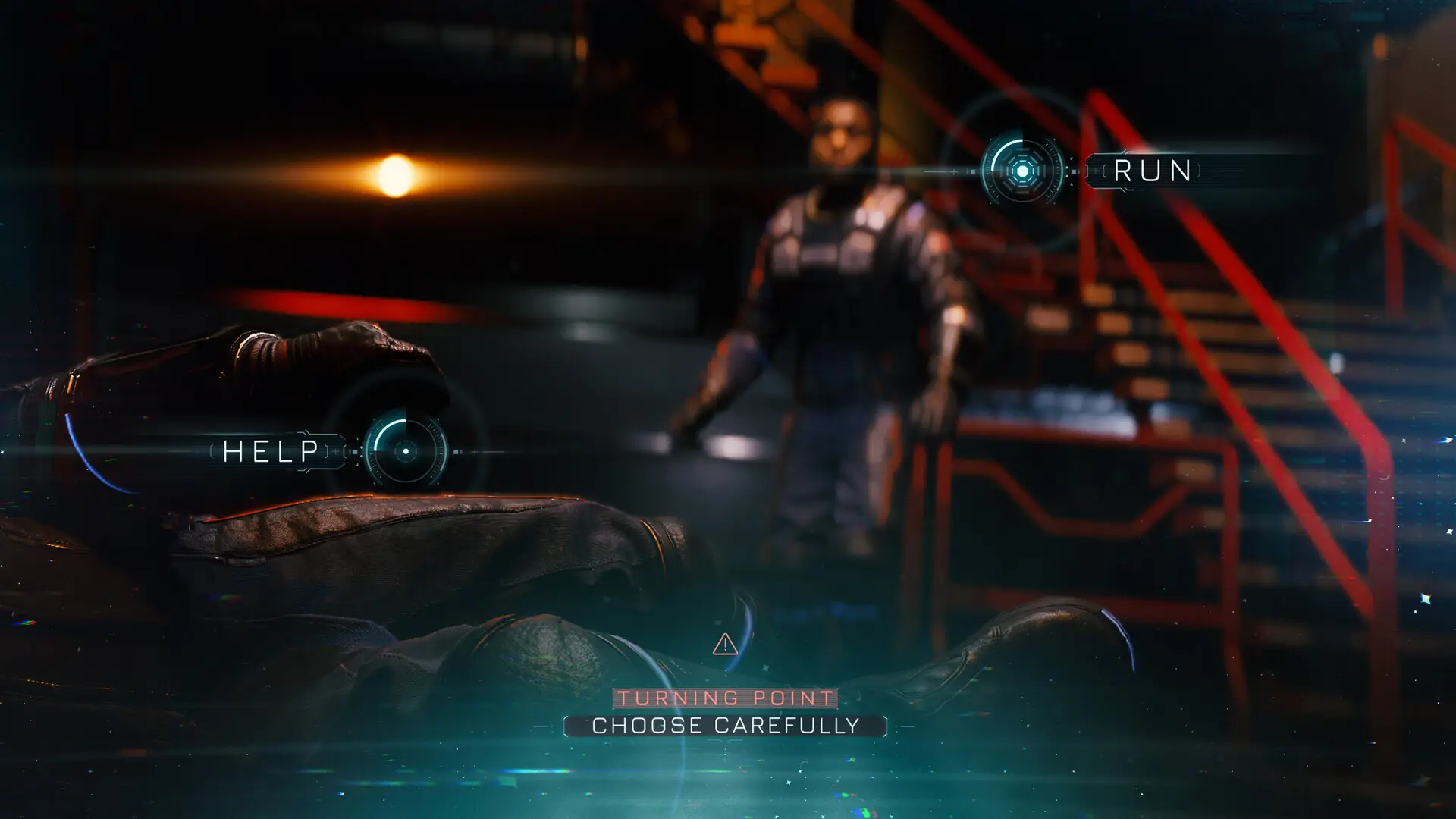
There are several instances in the game in which you’ll make a decision early on and if you’re clever enough to recall what you chose, it can assist you in saving someone’s life later on.
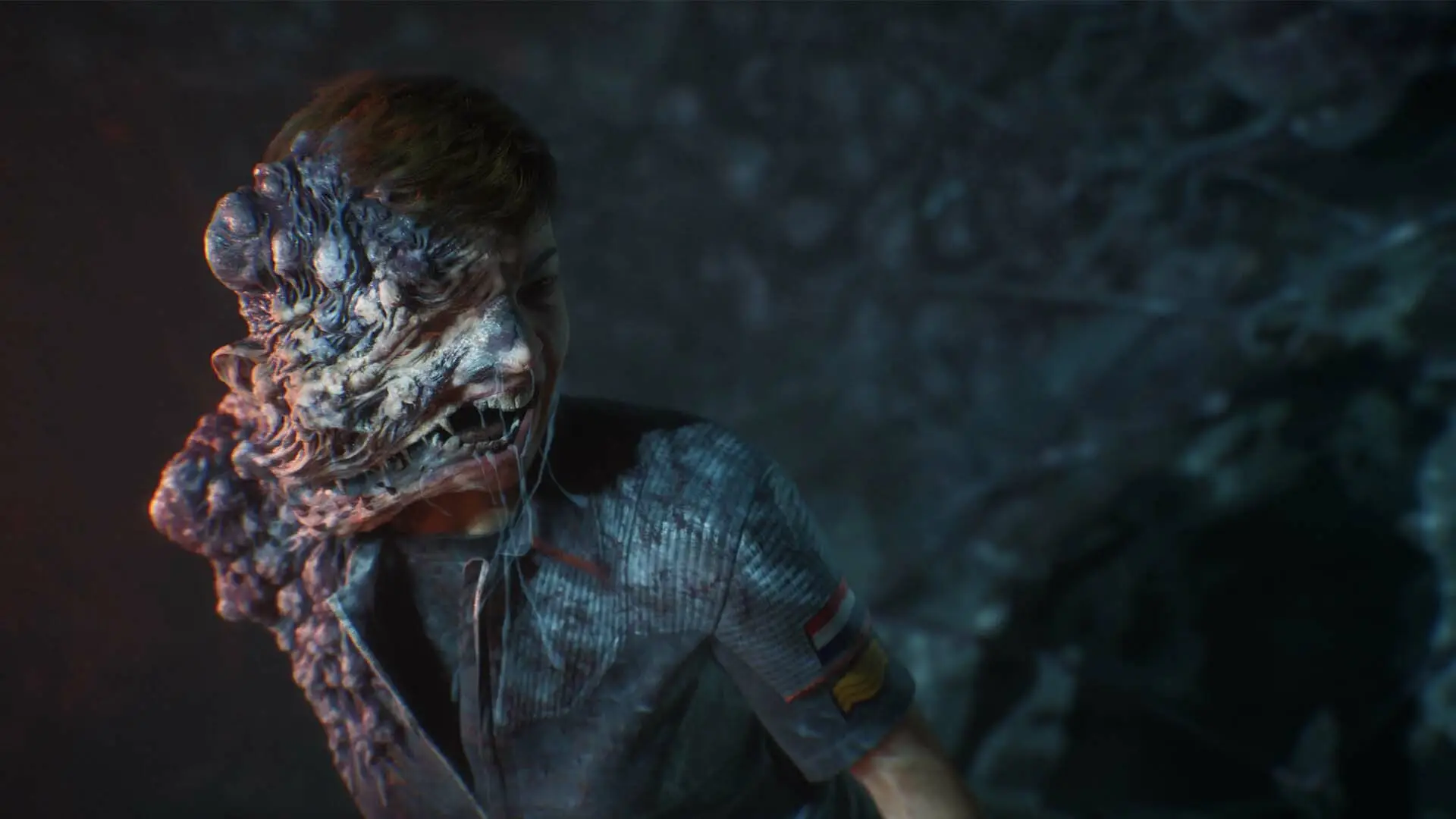
These types of choices, though, are outnumbered by far more devilish scenarios. The Cassiopeia becomes plagued by mimics, with the invading alien life form able to, well, mimic all members of the crew.
In some instances, you’ll have a gun pointed at two iterations of the same character, forced to determine who is real and who isn’t. It leads to some devastating repercussions if you make the wrong decision. In fact, the scariest aspect of the game becomes, ‘Who can I trust?’
Players Can Influence Character Traits, Which Also Lock You Into A Story Path
You’re constantly making decisions too, without perhaps realising. In many scenes, players will pick dialogue options that sway the speaking character’s personality traits. That’s always been a feature in Supermassive Games’ titles, but here, it doesn’t just determine how characters react with one another as it previously has.
You’ll ultimately, without realising, build up one trait more than the other, locking you into a narrative path that’ll have repercussions much later on down the line. For instance, I made one of the crew far more pragmatic than reckless. It seemed the safe thing to do, but it didn’t exactly play out well when life-or-death circumstances called for recklessness.
Players can hop into the game’s ‘Turning Points’ menu to see the vast number of alternative scenes and scenarios there are, so there’s definitely great replayability in Directive 8020. You can reverse any decision from that menu which is what ‘Turning Points’ refers to. They work similarly to Rewinds from The Quarry, although here, they’re instantly available from your very first playthrough.
Personally, I think the fun in playing a Supermassive Games title is, at first, living with the consequences of your actions, but this should make it easier to see all options on a second playthrough.
The Utility Strap Messaging Feature Adds Welcomed Interactivity And Depth
I did appreciate the in-universe messaging system introduced in Directive 8020 which allows all of the playable characters to interact via their Utility Strap. You can load up the device at any time and send pre-defined messages to other characters; on occasion, you’ll get to choose between two responses, again shaping your relationships. It allowed for further insight into the various relationships in the game but Utility Strap communication also increased the tension. Early in the game, you'll search for sleep technician Simms, who appears to have gone off the rails, suspected of murdering - at least in my playthrough - another crewmate. I’d text Simms from the Utility Strap, begging her to turn herself in as I surveyed the maintenance layers of the ship she was hiding out in. “See you soon,” she chillingly replied. Shivers.
Later in the game, I was looking for the crewmate Anders, who described her location to me via a message on the Utility Strap. A message followed from an unknown sender claiming to be Anders, advising me not to listen to the imposter, adding yet another layer to the elements of the game that would determine my choices. Loading up the Utility Strap is optional but I recommend you do so in every chapter.
The Game Is Perfectly Paced Although Puzzles Are Perhaps Underutilised
There are a couple of puzzles throughout the experience, too, which add a nice sense of engagement in moments where there is less all-out drama. That’s pretty rare, though, with early chapters of the game built in a way that you jump between the past and the present. It’s very well done and results in perfect pacing as you switch from life-or-death action to a calmer build of the story.
It’s a fulfilling experience when, in later chapters, the timelines catch up and you know it's full steam ahead until the credits roll. This is also easily Supermassive Games’ best-looking game with some of my favourite visuals of this generation.
Directive 8020 is a near-perfect advancement of Supermassive Games’ tried and tested formula, with added stealth, puzzling, and adventure elements really boosting player agency. Outside of a couple of jump scares, the game’s narrative relies on tension and dread compared to The Dark Pictures franchise’s typical brand of horror, but the game is all the richer for this, rooting itself in tangibility and fears that plague us all. Decisions are difficult to make with thrilling consequences that are both a joy and devastating to watch play out. Add in great performances from the cast and impressive visuals, and it’s hard to see Directive 8020 as anything other than a hit.
Pros: Impeccably presented, difficult narrative choices, compelling story, great replayability, and varied gameplay keep the player engaged
Cons: A more profound take on horror that might disappoint those who want scares galore
For fans of: Until Dawn, The Quarry, Mass Effect, The Last of Us
9/10: Exceptional
Directive 8020 launches on 12 May on PlayStation 5 (version tested), Xbox Series X/S, and PC. A review code was provided by the publisher. Read a guide to our review scores here.
Topics: Reviews, PlayStation, Xbox, PC