
Zombie survival sim peaks on Steam 15 years after launch, and it's easy to see why everyone's talking about it


Zombie survival sim Project Zomboid is hitting peak numbers on Steam following the release of its latest update, and it’s easy to see why interest in the game has been reignited after 15 years.
The Indie Stone released the first stable version of Build 42 for Project Zomboid last month, an update for the game which has been in the works for five years.
Although the game remains in Steam Early Access, Build 42 is one huge step closer to the full release, with the map receiving a huge glow-up, improvements made to progression, and a big overhaul of many other gameplay mechanics like combat and inventory management.
Build 42 has been received well by players, with those who only play on stable releases finally happy to get some new content to see after waiting five years. It’s also caused a massive spike in Steam numbers, with the player count hitting its all-time peak in the last few days.
Advert
Project Zomboid hit its all-time player count peak on Sunday evening, with 120,957 people playing the game concurrently. At the time of writing today, the game has 50,000 people playing, with a 24-hour peak of nearly 99,000 players.
Project Zomboid has been a thing you can buy since 2011 (I should know, I bought it that Christmas), but its mainstream release came in 2013 when it was added to Steam Early Access.
In the years since then, the game averaged only around a few thousand concurrent players until Build 41 released in 2021 with a retooled multiplayer, at which point the player count started rising massively.
Read More: Brand new $10 PC bundle gives you over 100 games to play
Project Zomboid is like your dream zombie survival sim, and it's absolutely worth losing all your free time to
With the game being more popular than ever, it’s really easy to see why Project Zomboid has become as big as it is.
The idea of a “perfect zombie survival sim” has been attempted before to varying results. Games like DayZ and State of Decay went hard on the survival aspects, but were a little lacking on the simulation side. Many, many other Steam Early Access games have tried and failed at the concept, brought down by their own ambitious ideas.
It became clear from these titles that players didn’t just want a game that introduced tough difficulty zombie hordes to an open-world, but they also wanted the procedural everyday life of a zombie apocalypse survivor to be simulated within these systems, no matter how mundane it may be.
That’s the idea that The Indie Stone went with, and it seems to be a gamble that turned out for the better. Project Zomboid’s zombie horde combat is simply one facet of the game, a system layered upon many other systems for the player to engage with.
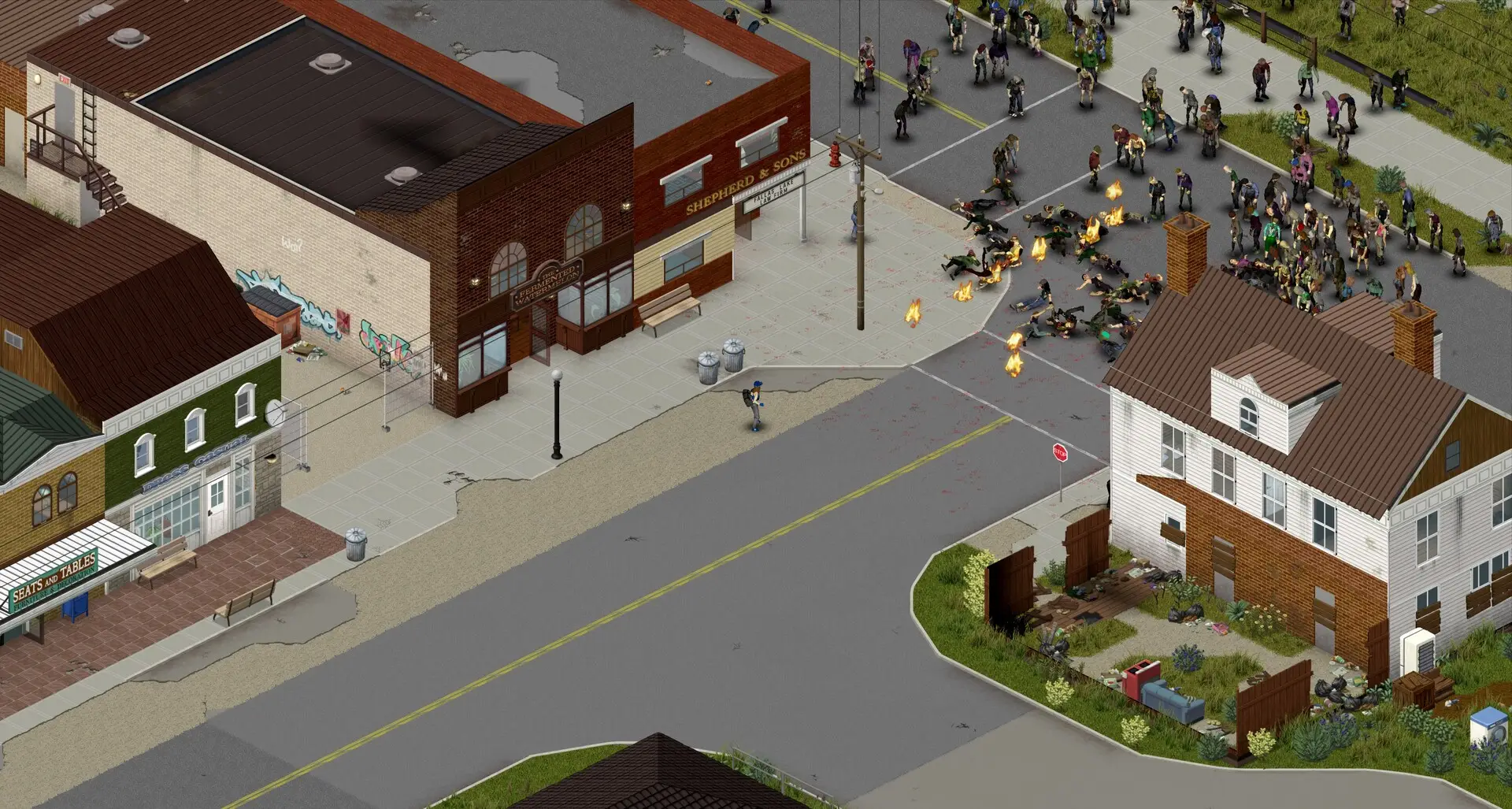
The game’s hunger system is a good example of this. You need to scavenge and eat food over time to survive, but you also need to go through all the normal processes of preparing and eating food to take full advantage of it.
That means refrigerating it to keep the food fresh, discovering recipes to make more complex dishes, and keeping track of how balanced your character’s diet is to ensure they remain fit and healthy. That’s right, the game tracks things like calories, carbs, and proteins, if you didn’t already know.
This kind of thinking extends to so many other aspects of the game, to the point where doing a full overview of every mechanic would take me so long to write about. Books can keep your character from getting bored, while also building their skills. Securing a working generator will power your base. Exercising and eating well will keep them healthy. It’s essentially a life simulator in itself, before you even add the zombies on top of that.
Considering the game also has multiplayer co-op on top of this, as well as NPCs planned for a future update, it’s pretty incredible to see how far this little game has come.
Topics: Steam, Indie Games, PC