Hogwarts Legacy drops surprise free update amid the long wait for a sequel


Hogwarts Legacy is yet to officially unveil a sequel, despite the fact that job adverts have most definitely confirmed one is on the way.
An announcement is expected in the near future with Warner Bros. previously having teased that its biggest gaming franchises will be making a return in 2027 and 2028 - and Hogwarts Legacy is currently the biggest of the bunch.
In the meantime, however, players have been treated to a surprise update for the Wizarding World title, albeit one that only certain PC players will really appreciate.
From today, November 5, Hogwarts Legacy officially supports NVIDIA’S DLSS 5 technology, allowing for improved graphics and lighting.
Advert
DLSS 5 isn’t all that popular with everyone. It uses 3D-Guided Neural Rendering combined with AI upscaling to create more lifelike visuals.
While some find the results impressive, others feel the results are a little too uncanny valley, stripping a game of its original design and feel all in the name of photorealism.
It’s a very valid debate, but if you are someone with the hardware required to experiment with DLSS 5, at least you now can within Hogwarts Legacy - especially as NVIDIA and Warner Bros. have heard your concerns.
A launch trailer has been released in celebration of DLSS 5’s arrival in Hogwarts Legacy
In an announcement, NVIDIA said: “On Thursday, November 5, in collaboration with Warner Bros. Games and Avalanche Software, Hogwarts Legacy is updating the game to integrate DLSS 5 technology to enhance the lighting and materials, and use DLSS 5’s model controls to boost environmental uplift while preserving character identity.”
Yes, DLSS 5’s availability within Hogwarts Legacy has been carefully fine-tuned by developers so that it doesn’t make the game feel like uncanny AI slop.
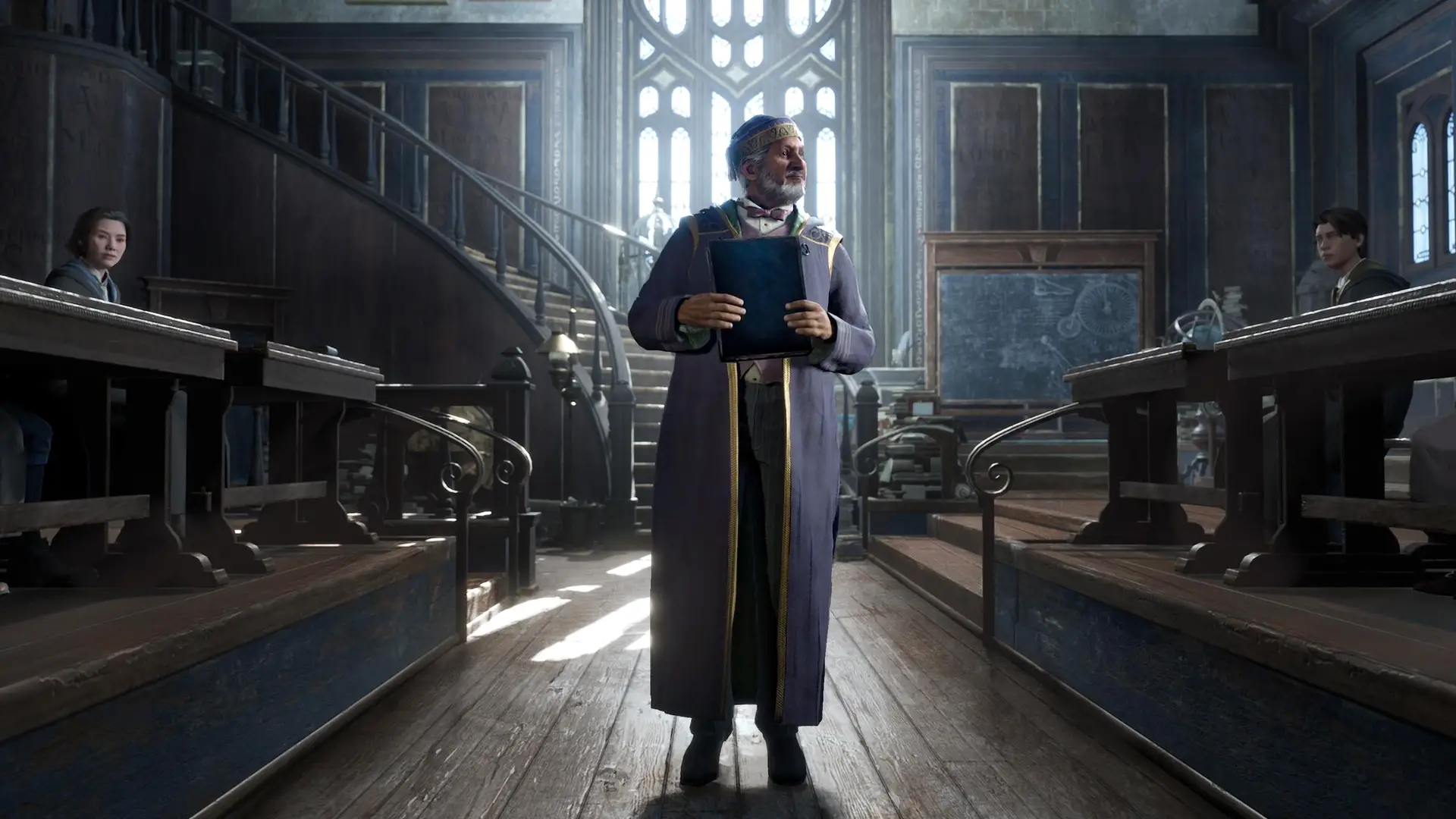
That’s proven by a new launch trailer for the technology which, admittedly, does nicely enhance the visuals of Hogwarts Legacy.
Details within the game’s environments feel more defined, textures feel more visible, and Hogwarts Castle’s glossy floors sure do look shiny.
Funnily enough, the early reception to the tech is that now it’s almost too subtle after it was originally said to be too much prior to the fine-tuning.
“I know the first version we saw was really in your face, but maybe this is too subtle,” said one trailer viewer.
“People complained too much that they just completely nerfed it. Now we just have FPS loss with basically little difference in image quality,” added another.
One comment read: “Backlash so hard, NVIDIA got scared.”
If you do, however, want to make use of NVIDIA’s DLSS 5 within Hogwarts Legacy, there are a couple of ways in which you can do so.
It’s PC only but available to anyone with a GeForce RTX 50 Series GPU, GeForce RTX laptop, or RTX Spark PC, or to those with a GeForce NOW Ultimate subscription. The latter subscription service can be subscribed to by anyone.
READ MORE: Hogwarts Legacy school system add-on is in the works, and it's precisely what a sequel needs
How to use and optimise DLSS 5 in Hogwarts Legacy
For the optimal experience, NVIDIA recommends that players enable the following features:
- DLSS Super Resolution which you’ll find under ‘Upscale Type’
- DLSS Multi Frame Generation, found under ‘Frame Generation’
- NVIDIA Reflex, found under ‘Low Latency Mode’
- DLSS Ray Reconstruction
If you do enable all of these options, Hogwarts Legacy can run at a whopping 4K in 300fps on the GeForce RTX 5090.
For those not interested or those on console, hopefully a sequel tease lands sooner rather than later.
We’re three years on, approaching four, from Hogwarts Legacy’s launch - and Avalanche must be hard at work to have cancelled Hogwarts Legacy’s planned DLC and director’s cut.
If Warner Bros. has already teased that a sequel is due in 2027 or 2028, perhaps we can hope for a first trailer at next month’s The Game Awards.
Topics: Hogwarts Legacy, Warner Bros, Harry Potter, PC