Age Of Empires 2's New DLC Proves There's Life In The Old Girl Yet


There comes a point, usually in your thirties, where you start holding on to the media you grew up with a lot tighter than you might have done previously. Call it a pre-mid-life crisis or whatever, but this is something I’ve been doing a lot lately.
This must be why I’ve been spending a lot of time lately watching stuff that I liked as a teenager like The X-Files, Gilmore Girls, and Malcolm in the Middle.
And just like pretty much everyone reading this website, I also spent a huge chunk of my childhood playing video games. Particularly Age of Empires II: The Age of Kings, the 1999 real-time strategy game from Ensemble Studios.
I’ve been playing Age of Empires II’s modern remaster (titled Definitive Edition) on-and-off since its release for the game’s 20th anniversary, and it’s still one of the best strategy games I can recommend today. On the whole, it’s an incredibly faithful re-release, with beautifully recreated 4K art assets and strong updates to AI and scenario functionality.
Advert
But there’s one thing about it that always keeps bringing me back no matter what: the new DLC.
By the time of Age of Empires II: Definitive Edition’s release in 2019, the game had already received a few additional expansions from previous versions of the game, and new content has come at a rate of about one per year since then.
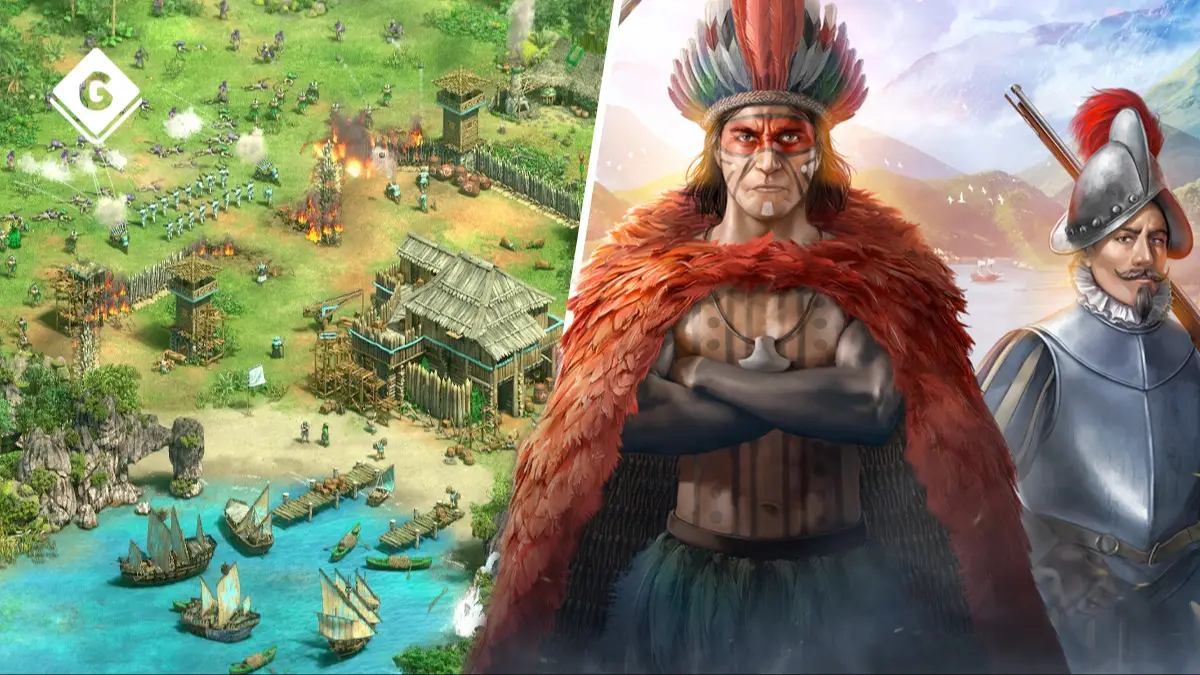
The Last Chieftains is Age of Empires II’s latest DLC offering, introducing three new 15th century South American civilizations to the game: the Mapuche, Muisca, and Tupi.
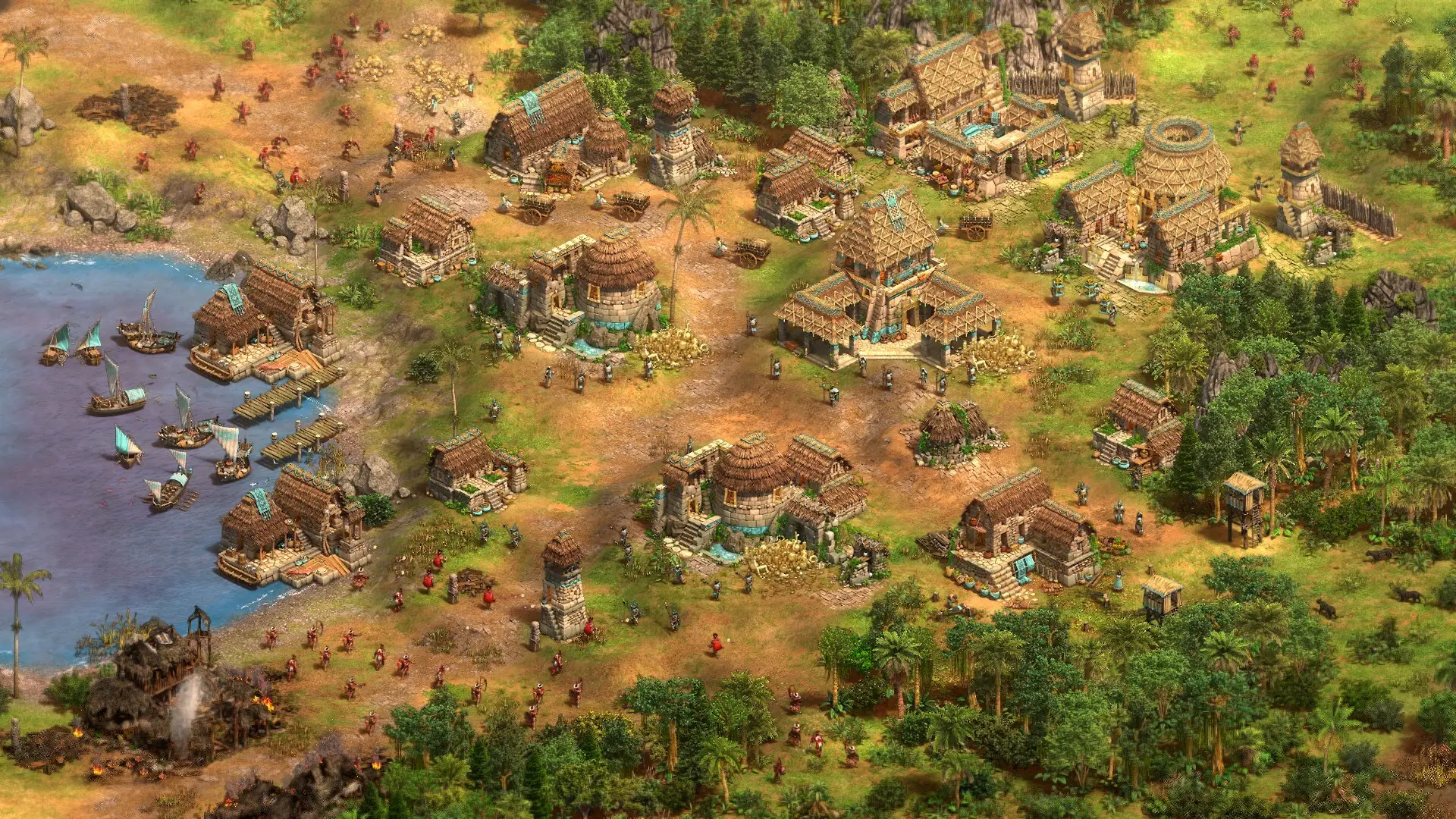
Let’s start with what unites each of these civilisations. For starters, World’s Edge has added a new Champi Scout unit to act out various purposes. They can be used as both a scout and a military unit, making them useful for exploring the map while also engaging in battles against another team. They can also build outposts, so it’s handy to send a few around the map to get a line of sight on certain areas.
From some initial testing, it seems like these units are incredibly overpowered right now. At least, in the early stages. I’m not fully against the idea of combining scout and military units, but in practice their starter stats are already quite high, making them a huge menace in the early stages of the game.
Meanwhile, the new civs also get the Settlement building, replacing the Mill, Lumber Camp, and Mining Camp and acting as a one-for-all stop for villagers to drop off their resources.
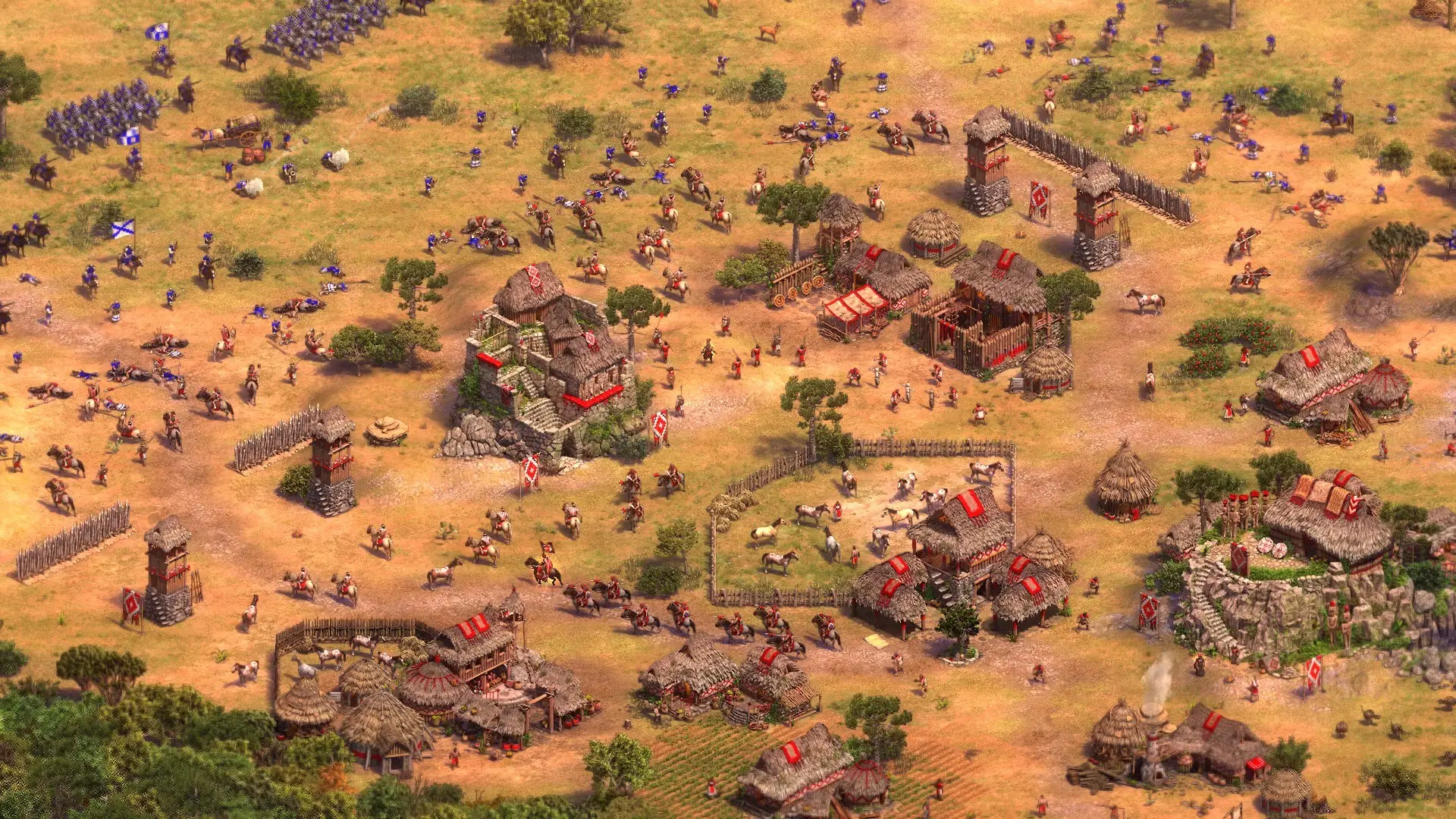
The Settlement has a few advantages over the buildings it replaces, for example allowing you to track your resource upgrades universally using one structure, rather than splitting it across the three other buildings. It also uses a 3x3 grid, meaning farms can now be placed perfectly. On the other hand, this larger grid size does interfere with strategies that involve squeezing these buildings into narrow spaces, such as on legacy Black Forest maps where there are a lot of bottlenecks and narrow passages to funnel your villagers.
The DLC also makes a lot of changes to the Incas, which were introduced way back in the 2013 expansion pack The Forgotten. The Incas get some of the features available to The Last Chieftains’ civs, like the Settlement and the Champi Scout.
Another aspect of The Last Chieftains that I want to shout out, which is probably only interesting to me and only me, are the new capybara herdables. These animals appear on maps specific to the South America factions, and just have the most adorable animations I’ve ever seen. There aren't really any more points I want to make about this, but I’ll drop an image of them below for you to appreciate.
I’ve never really bothered with the multiplayer in Age of Empires II. I know that for many players, the PvP gameplay is the lifeblood of the series, but considering the sweaty strategies and rushed gameplay, I’ve always preferred sitting away from that and playing at a slower pace.
So, that’s where the campaigns come in. I’ve only had access to the DLC since Tuesday, so I haven’t managed to make a huge dent in the campaigns when I’ve been so busy plucking away at Random Maps. But from what I’ve played, the single-player missions are quite enjoyable.
There are three campaigns included in the expansion, each one having five levels each, and focus on different historical figures that were significant between 15th and 16th century South America.
The campaign I’ve sunk the most time into, Lautaro, focuses on the 16th century revolutionary who led the indigenous resistance against Spanish conquest in Chile. The first few missions are an excellent example of how best to balance unit management with overwhelming enemy aggression.
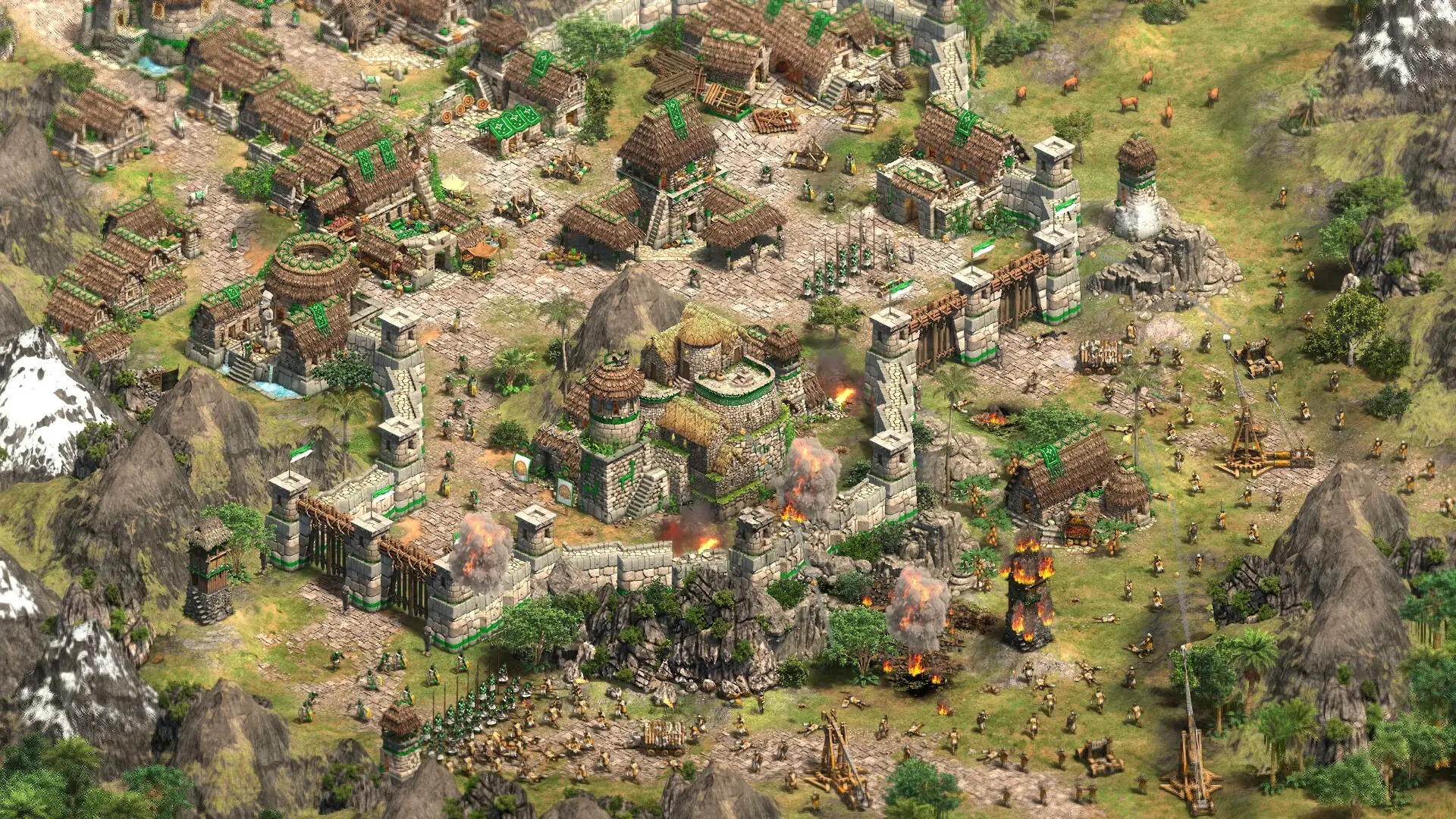
It’s also clear that World’s Edge has taken some of the lessons it learned from developing the Chronicles DLCs to inform how it approaches these campaign mission designs, with a bigger emphasis on the individual figures featured in these chronicles, rather than just focusing on the events themselves. Age of Empires II has come a long way in terms of storytelling since those European campaigns in the original 1999 version, and that’s demonstrated here.
Overall, I’m really happy with how Age of Empires II has turned out nearly thirty years after originally playing it as a child on the family computer. Despite possessing gameplay that is very much a product of its time, World’s Edge manages to continue innovating and perfecting the formula, and these recent expansions serve as an excellent way to build on that with new content.