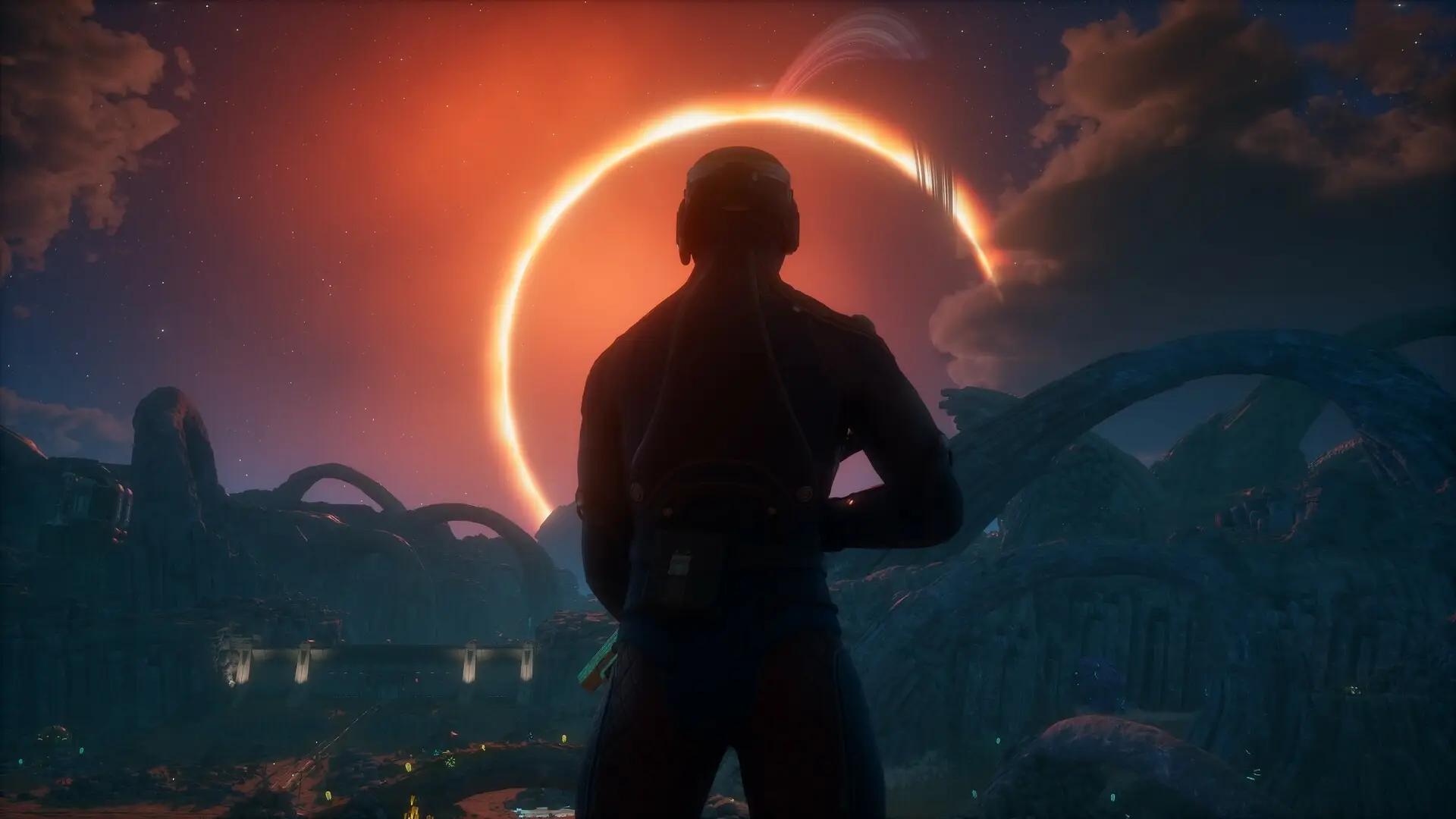
The Outer Worlds 2 Defines What Makes Obsidian RPGs So Great


The Outer Worlds 2 has been out for a little while now, and it’s had some time to percolate amongst fans and critics alike. I reviewed the game here at GAMINGBible, and I thought it was a really impressive evolution and sequel that did a lot to move the still relatively youthful IP forward.
Since then, I’ve spent considerably more time exploring its darker little corners and I’ve come to a bit of a realisation. Whilst The Outer Worlds 2 might not be everyone’s absolute favourite RPG that Obsidian Entertainment has ever produced, it might be the most accomplished example of what has defined the studio’s greatest successes over all these years.
So what exactly do I mean? Well, in my scrambled mind at least, there are several key areas that define the success of many RPGs, but which are basically necessities if I’m sitting down to experience an Obsidian genre release.
The most obvious is world building. If the world I’m inhabiting isn’t equal parts immersive and enthralling, it’s going to become boring a lot more quickly. The characters also need to be memorable and the game needs an inimitable style that makes each next phase of exploration more exciting than the last.
Advert
Far more often than not, Obsidian has managed to deliver on all of the above, and The Outer Worlds 2 really isn’t an exception to that rule. Indeed, it’s a noticeable improvement on almost every count, so I spoke to Art Director Daniel Alpert to get some clarity on how exactly it’s able to hit the heights that it really does pretty consistently.
A World of Complex Depth
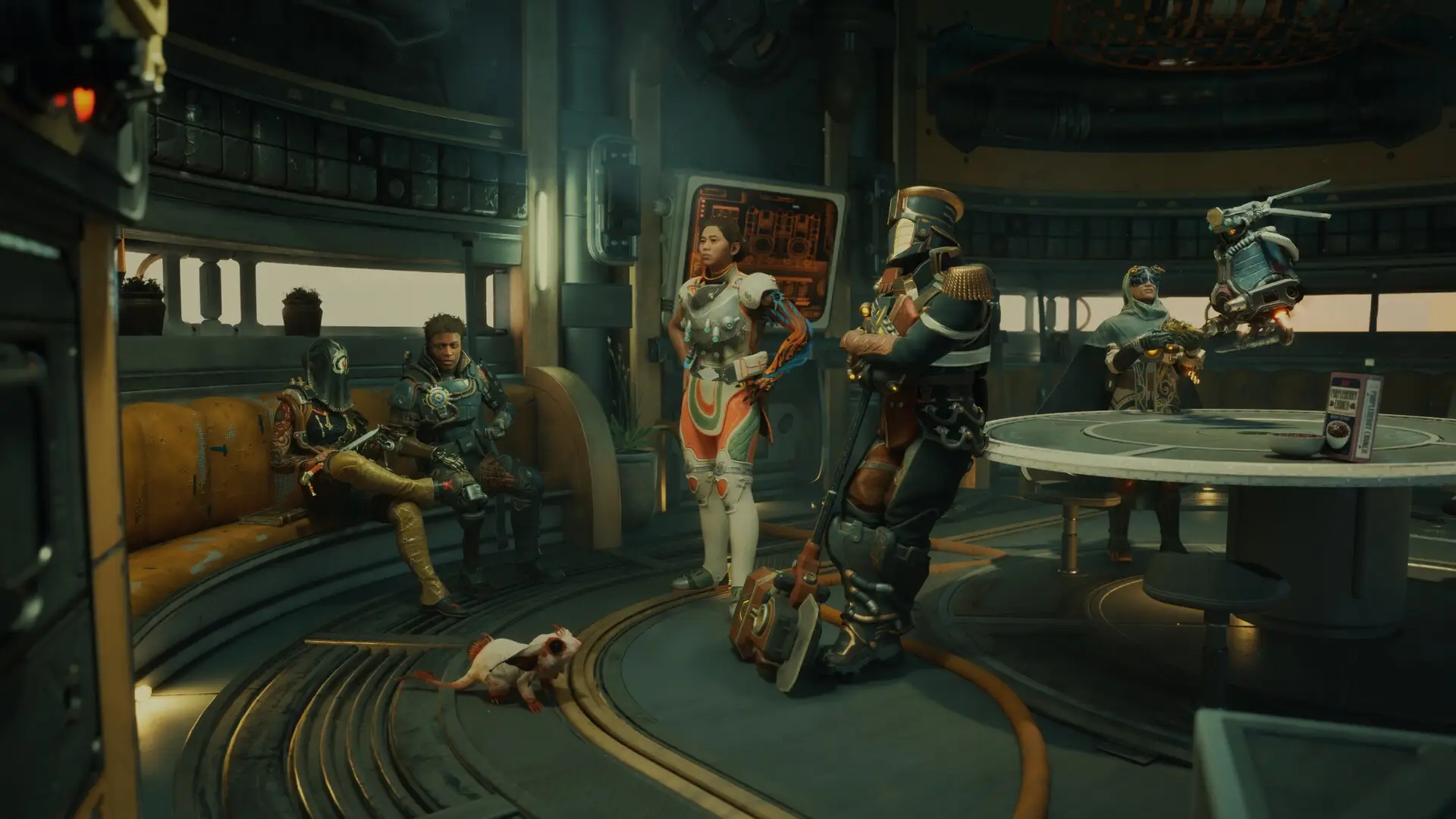
A big part of what makes The Outer Worlds 2 so special is the complex tapestry of organisations, corporations, religions and everything in between, all of which combine to make the world feel like a living, breathing entity. As Alpert explains, the sequel is a lot deeper than simply ‘corporation bad’.
“Right away, we always imagine when dealing with the Outer Worlds that any further iteration would be a new colony so, right off the bat, that was always kind of the plan. That being the case, it's the same galaxy. It has the same issues and it has the same dark humorous satirical undertones from the first game, but with more depth,” he said.
“One of the big linkages is that we still have the corporatists from the first game, this time being clearly Auntie’s Choice (the result of a merger between Auntie Cleo and Spacer's Choice from the first game), but we've also taken a look at ‘What if Auntie's Choice had other opposition, such as the governmental structures of the Protectorate or the religious structures of the Order of the Ascendant.”
“We’re taking a look, not just at what corporatism run amok looks like, but what does government run amok look like and what does religion run amok look like? Seeing those three vie for power and how the people under them are all treated is how we took the tones of the first game narratively and expanded them this time around.”
It’s certainly true that you feel like a smaller cog in many of the situations that the game puts you in. Though that can sound a bit miserable, it makes absolute thematic sense to have it that way, and it makes it all the more rewarding when you do manage to do something of genuine consequence.
Freedom of Choice, But Not Consequence
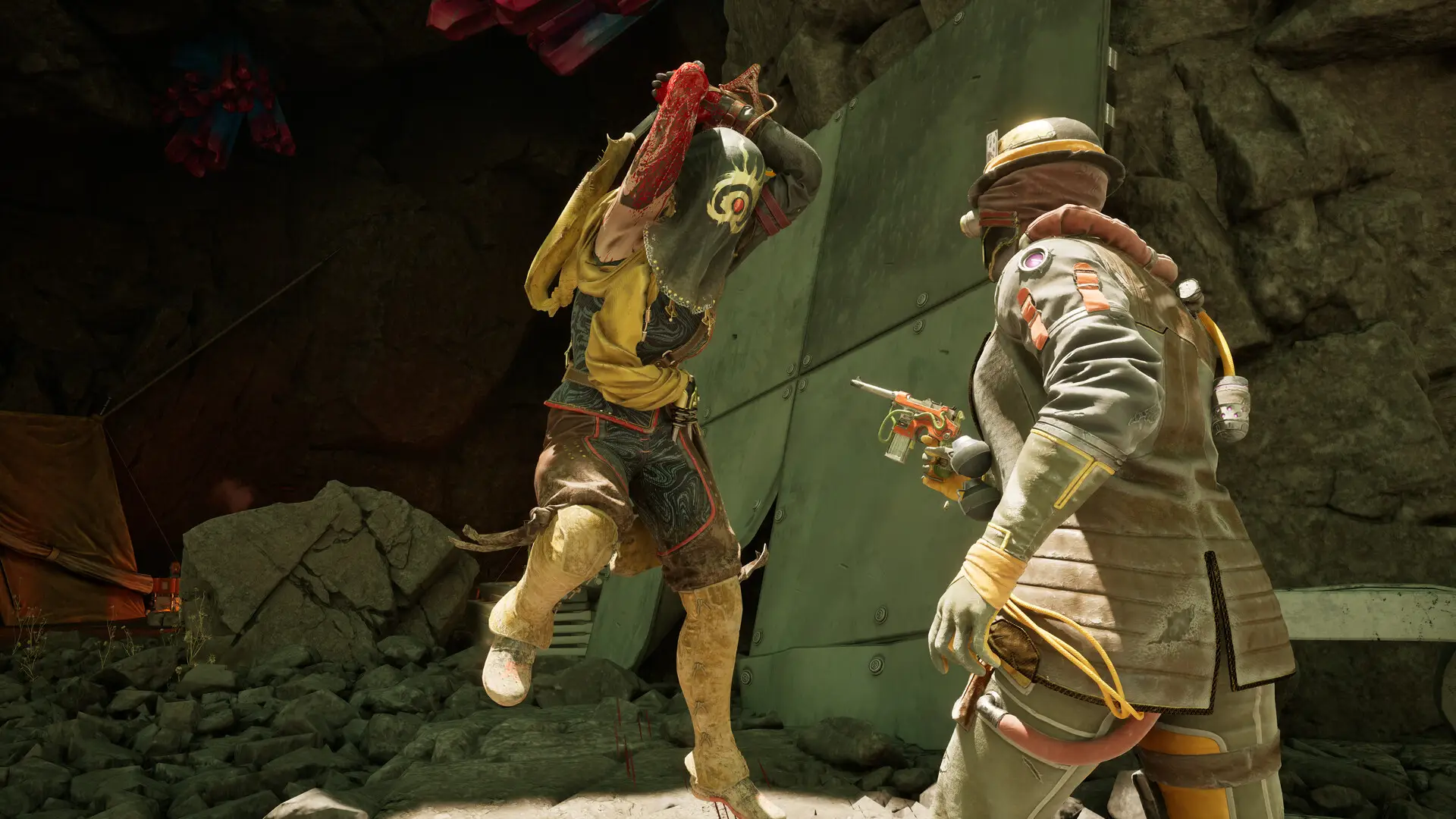
Arguably the area that has drawn Obsidian Entertainment the most plaudits over their long history, giving players meaningful choices is one of the areas where they have consistently performed the strongest.
The first game arguably felt a little lacking in this area, particularly when you consider the influence we could have over events in games like Fallout: New Vegas. Not so here, with even the choices you make before you load into the game for the first time becoming relevant much sooner than you think.
“Player choice in itself has more consequences all around. This time we see it right away. You'll see during character customization that you have player backgrounds which may seem like just ‘I want to play this style. I want to play this character’, but you'll see choices from the narrative standpoint right away.”
“Because I chose this background, I'm now getting some of these responses. And those are what makes some of our RPGs really great. That idea of choice and consequence. You chose this and here's the consequences of those choices. It's definitely expanded on from the first game,” Alpert confirmed.
“We really pressed on flaws and how they can be expanded upon in the second game. You choose a flaw and you get these negatives, but at the same time most flaws also help with how you've been playing the game already. You go on your path. You choose, ‘I'm going to be a stealthy person.’ You'll get a flaw that might help you with those tough mechanics, but hurt you in other ways.”
Having now come to the end of the main story and plenty of other threads around it, the choices really are as numerous as they are consequential. Conversations have that distinct Obsidian feel, and the humour doesn't override the narrative stakes at key moments. Emotional points are handled with grace and dialogue feels natural, with plot points delivered to the player in all sorts of ways.
There are stories in Obsidian's catalogue that may grab your attention more quickly, but give this one time to cook and it becomes apparent there's a lot more going on than first appears.
A Beautiful Setting
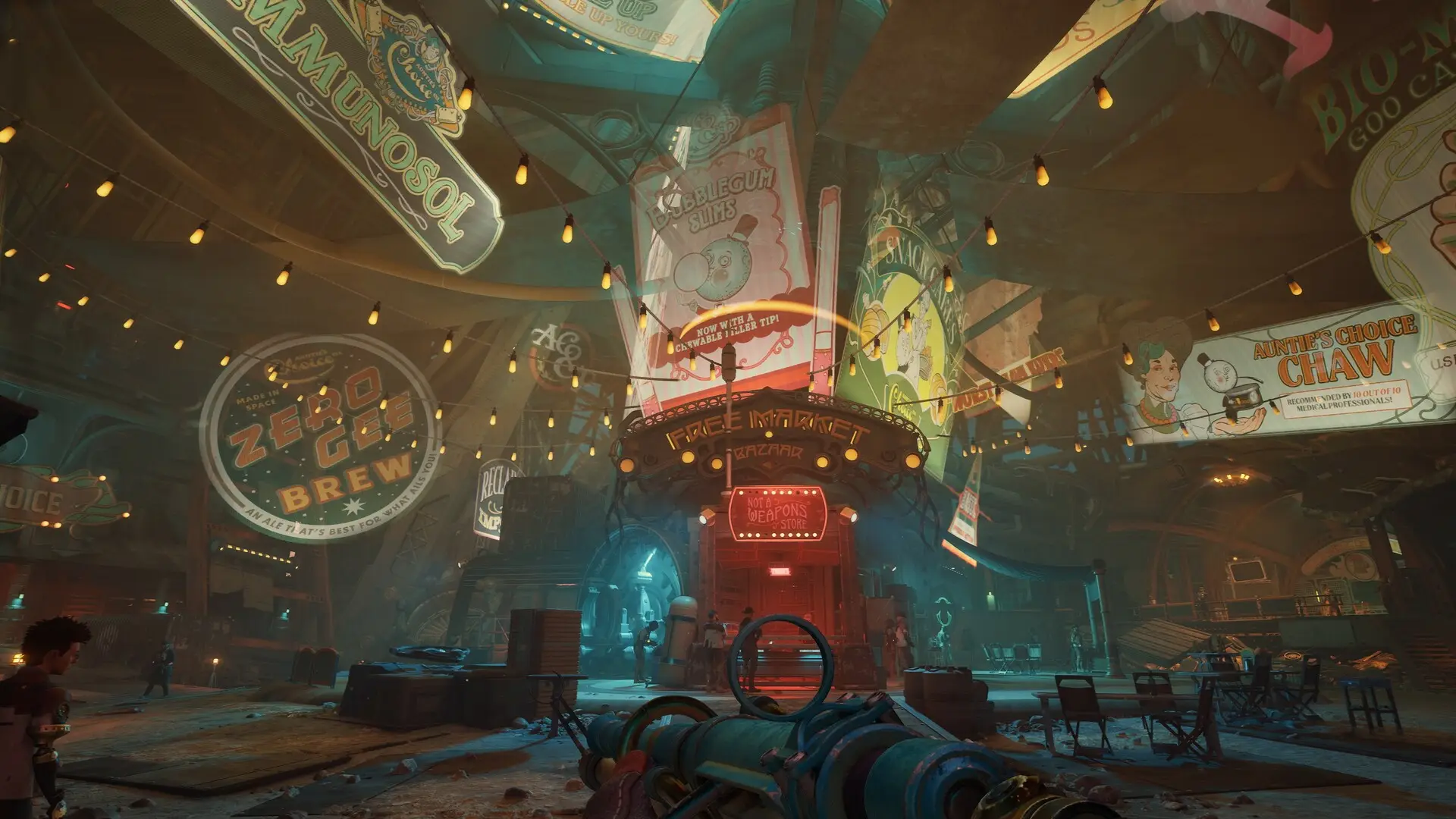
One of the overriding things that players will immediately think of when The Outer Worlds as a franchise is brought up, is the unique and well-realised art style that it brings to the table.
As this was Alpert's realm, it's better that he does the explaining, but it's safe to say that the influences were coming from absolutely all over the place.
“The retro aesthetic is still the same from the first game. You have these frontier colonies that evoke an American Old West style feeling. Not shanty towns because that was more game one, because the colony was falling apart. In game two, Arcadia has the resources to have a more thriving colony, so you don't really get the shanty tale, but you get the idea that it's still a frontier town on the edge of the galaxy somewhere.”
“That said, we also have the same art nouveau decorative touches, and thematically our retrofuturism has these points in history that is like the beginning of the 20th century to a World War One-era style.”
“When it comes to sci-fi, I can probably list so many films, from Voyage to the Moon, the old black and white film, which was a heavy inspiration for the Moon Man himself to Old Buck Rogers, a lot of pulpy sci-fi and Flash Gordon.”
“Our science fiction feels very analogue and mechanical, so even Star Wars is a great representation of sci-fi that feels very high tech. Futurism science fiction that we kind of stay away from in our universe.”
If there's one area of the game that really stands out above the rest, it's most probably the art direction and overal aesthetic, from the environments, to the object and item designs, to the clothes the NPCs are wearing.
Everything feels unique and part of the a wider overall tapestry, becoming greatly varied and yet remarkably cohesive at the same time. It's not an inconsiderable achievement to lock everything in so tightly, and it's arguably only possible at this scale with modern hardware and techniques.
Improved Gameplay Throughout
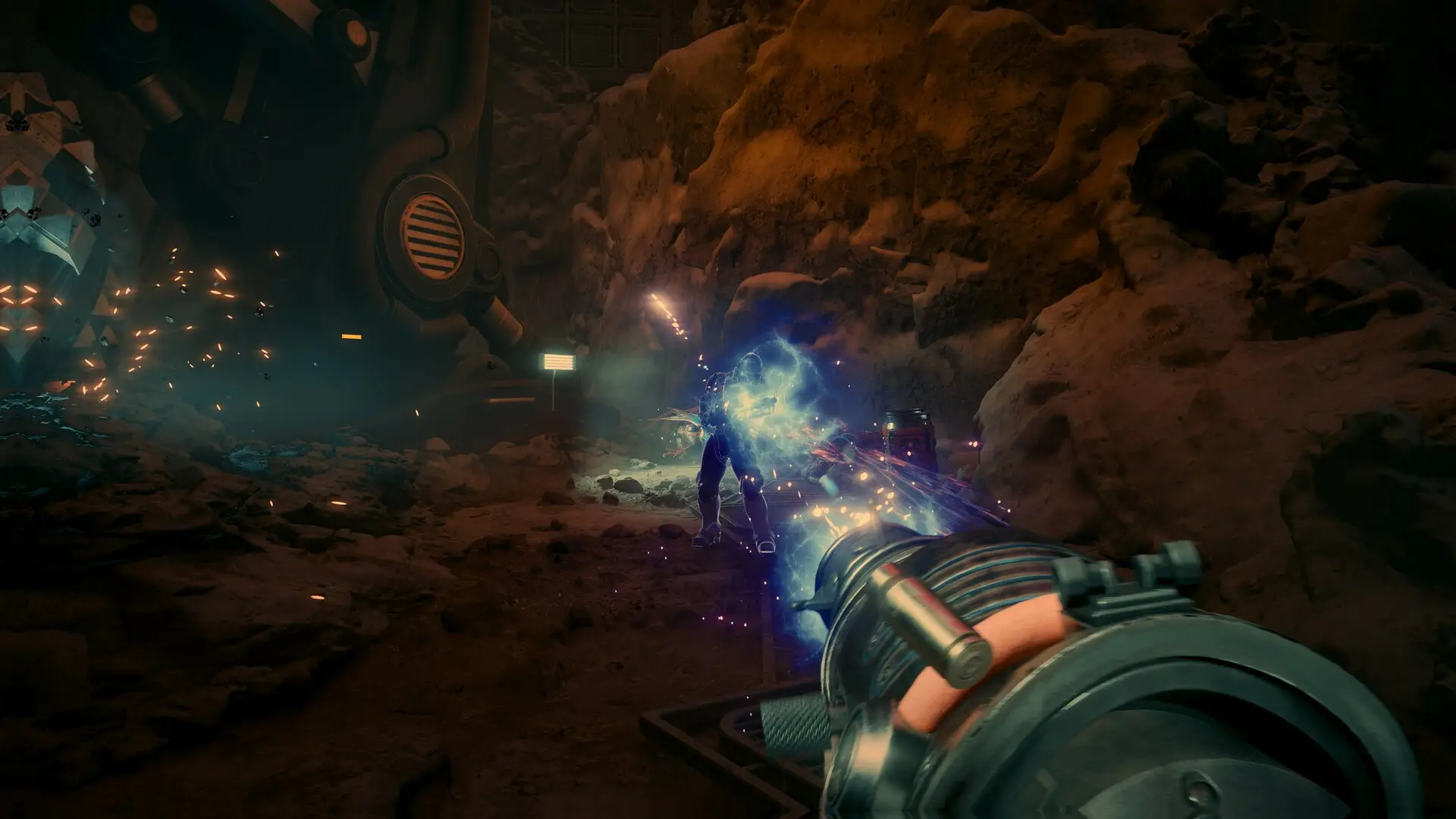
There are other core gameplay elements that were noticeably better this time around, most obviously the gunplay. I spoke at length about how much better the sequel feels compared to the original in this regard, and that absolutely wasn't an accident, as Alpert explains.
Now, obviously every developer who is about to start work on a sequel will take the feedback from the first game. That's a given. But not every team is able to iterate in quite as precise a manner as Oblivion did with their guns this time around.
That leaves The Outer Worlds 2 as a much better game for it, and one that you can play through without feeling like certain gameplay elements are acting as a road block to you getting your enjoyment out of the story.
“From the perspective of game director Brandon Adler, this was one of his high tier goals. Combat gunplay should feel more engaging and more immersive. Players see that right away even from the prologue and starting with your standard pistol,” Alpert explains.
“From a visual standpoint, even how we built the guns and made them feel more authentic, more time period associated and also the animations themselves. Loading feels weightier and more tactile. In all aspects, we tried to make the guns feel way better.”
As I said earlier, you may prefer one of Oblivion's many, many other RPG efforts, this latest release hasn't managed to dethrone New Vegas for me, but few have been able to distill the company's essence quite as effectively as The Outer Worlds 2. The greater capabilities of the hardware we're playing on really has let the development team leave everything out there on the proverbial field.
If you weren't particularly into the first game, don't let that put you off. This one has a tighter story, better minute-to-minute gameplay and improved visuals, all of which turn it into one of the most compelling overall packages of the last year.
Topics: Obsidian Entertainment