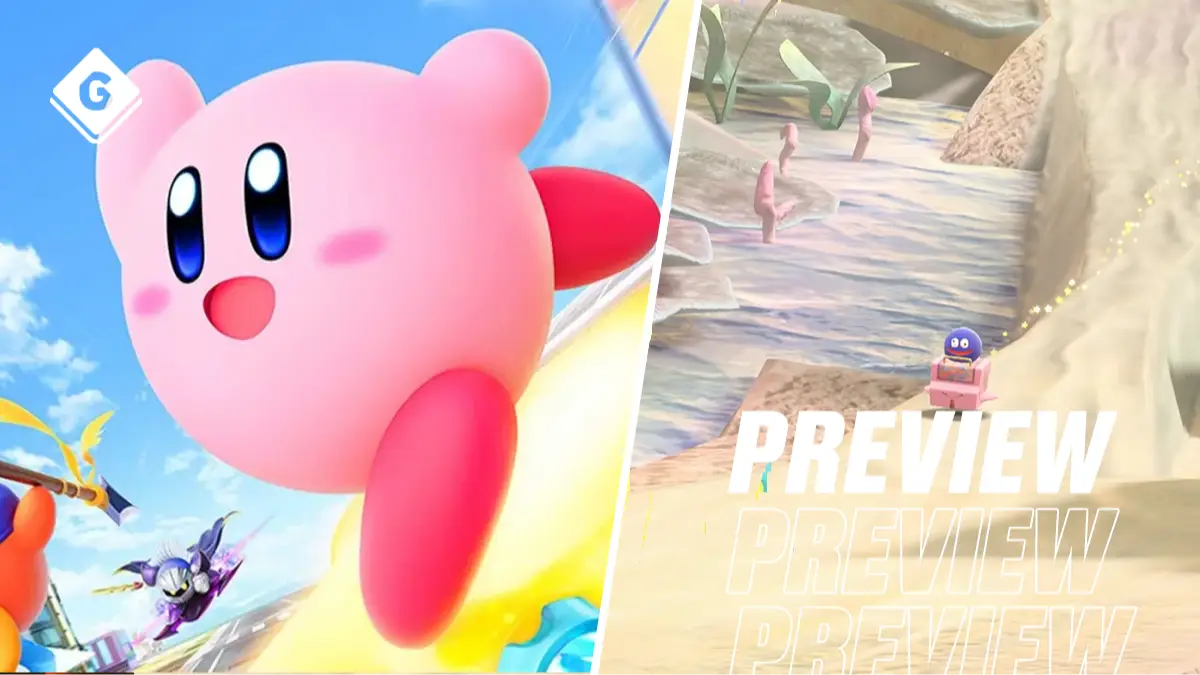
Kirby Air Riders Preview: Kirby My Enthusiasm


Of all the Nintendo characters in all the virtual world, Kirby is probably the one that immediately evokes that warming, child-like whimsy that got us into video games in the first place. Though the character is seen all over the place across the company’s portfolio of releases, it’s not every day that the sweet little pink circle gets to head up its own game, outside of its own irregular main series.
Enter Kirby Air Riders, a follow-up to the 2003 racing GameCube release Kirby Air Ride. It’s been a long time coming, and the landscape is very different to what it was more than two decades ago, so has it got the sauce that it needs to make a real go of things? With a few tweaks, there’s the makings of something pretty great here, in what is one of the maddest games you’ll play all year.
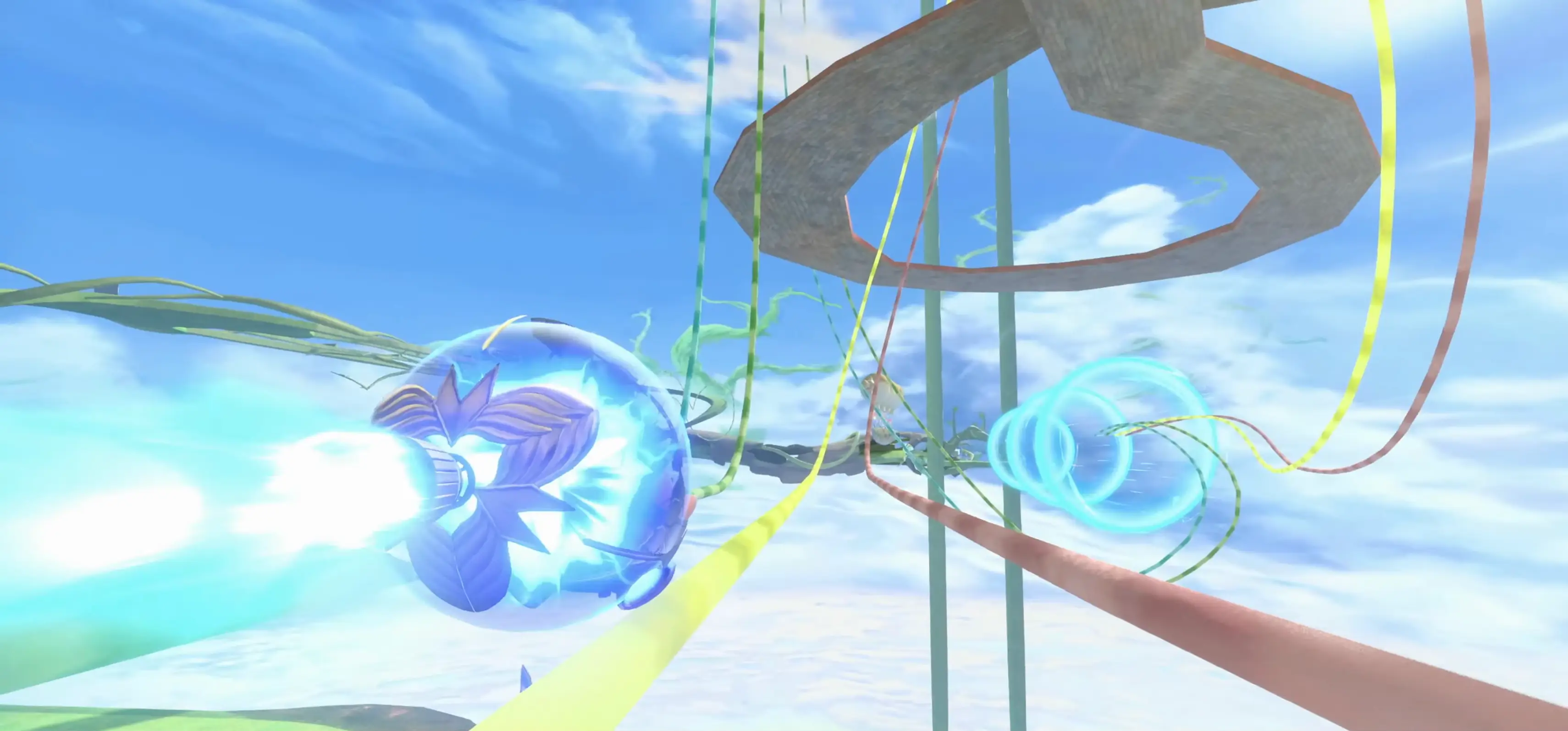
There are several modes available in this edition of the game that all serve as unique experiences within the wider release. Air Ride is your quintessential racing experience, as you take on AI or other players to be the first to cross the finish line. Whilst it might seem difficult to not draw comparisons with the ever present Mario Kart here, they do feel noticeably different to play. Mario Kart has an intensity to it that isn’t present here, but the lower stakes actually feel a lot more at home in this Kirby setting.
Advert
Sure, you can easily still draw on a murderous rage when something out of your control stops you from winning at the last second, but Air Riders just doesn’t prod that inner beast in quite the same way.
The other mode that I got to sample in the relatively short preview was City Trial, and it was there that the game really started to shine. Before each round, you’ll have five minutes to drive around and upgrade your vehicle, all while the other players do the same. To do this, you need to drive through floating icons that upgrade things like your speed, health, armour and a myriad of other tangible gameplay stats.
After that, you’ll be taken to a voting screen where you and other players can decide what you want to do in a one round shootout. This can be anything from driving through squares marked by points, with the person who scores the most winning the round, to zooming around seeing who can collect as much food as possible in a limited time. These pretty bonkers games have the game feeling like something between a traditional Nintendo racer, and the more recent glut of party royale releases.
From a practical perspective, the controls are relatively simple if a little tricky to get used to. Essentially, you accelerate and maintain a constant speed automatically, with the speed able to be increased by using abilities, hitting the floor boosters (a la Mario Kart) or coming out the back end of a drift.
The latter is one of the biggest skills you’ll have to learn and learn well if you want to remain competitive against better players. Knowing when to initiate the drift and the ideal time to come out of it, so you’ve been in long enough to get the boost but you aren’t wasting time by losing speed, is crucial in any given race. This is simply done by holding the B button, and you can actually bring yourself to a total stop before rocketing off in a different direction using the boost.
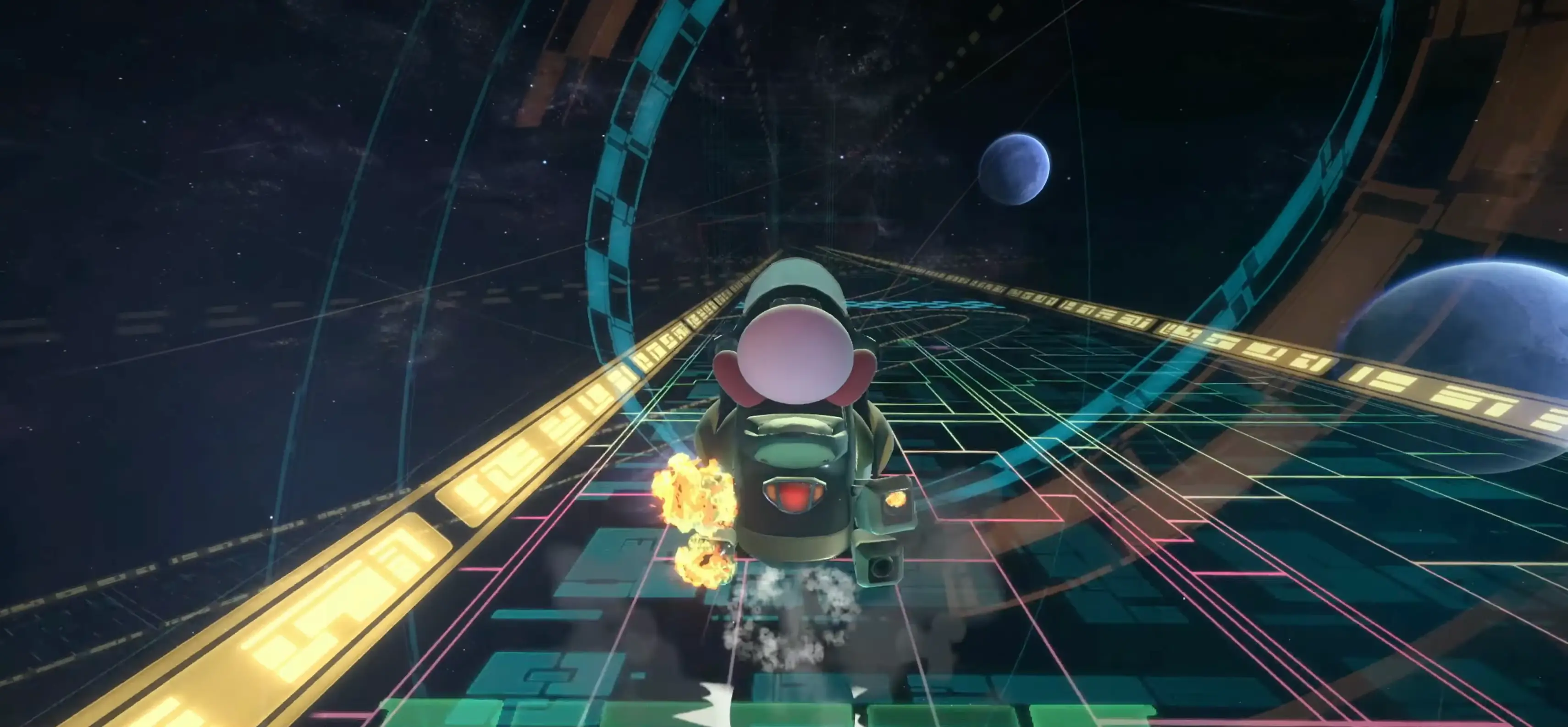
That stationary moment is very useful in the mini-games portion of proceedings, where you might need to make a u-turn to double back and grab an item you missed. It’s the little details like that which are the difference between a great round and a terrible one, which isn’t a bad thing if you’re willing to put the hours in to work out its more bizarre foibles.
Kirby Air Riders might not have the appearance of one, but it’s absolutely one of the most intense experiences on the console on a round by round basis. Occasionally, to its detriment, there’s so much going on that you’d be hard pressed to play two similar rounds if you sat there all day. That lack of control over your own fate might be jarring to some, but you absolutely can mitigate the random nonsense by simply playing consistently and knowing what everything does.
Analysing all of that feels a little bit beyond the scope of what the game is actually trying to be though. This isn’t a game of fine margins and careful balance, where the competitive will often outweigh the casual. Instead, it’s all about having as much zany fun as possible in as short a time as you can, and at that, it does its job exceptionally well.
It would be nice for there to be a little bit more in the game that tells you how things work as they’re going along. Don’t be surprised if the first few weeks leave you filled with confusion as you wonder how you lost yet again. Get past that, and it really feels like Sakurai et Al. are onto yet another winner, in a game that should serve as one of the real hits on the still relatively new console, for years to come.