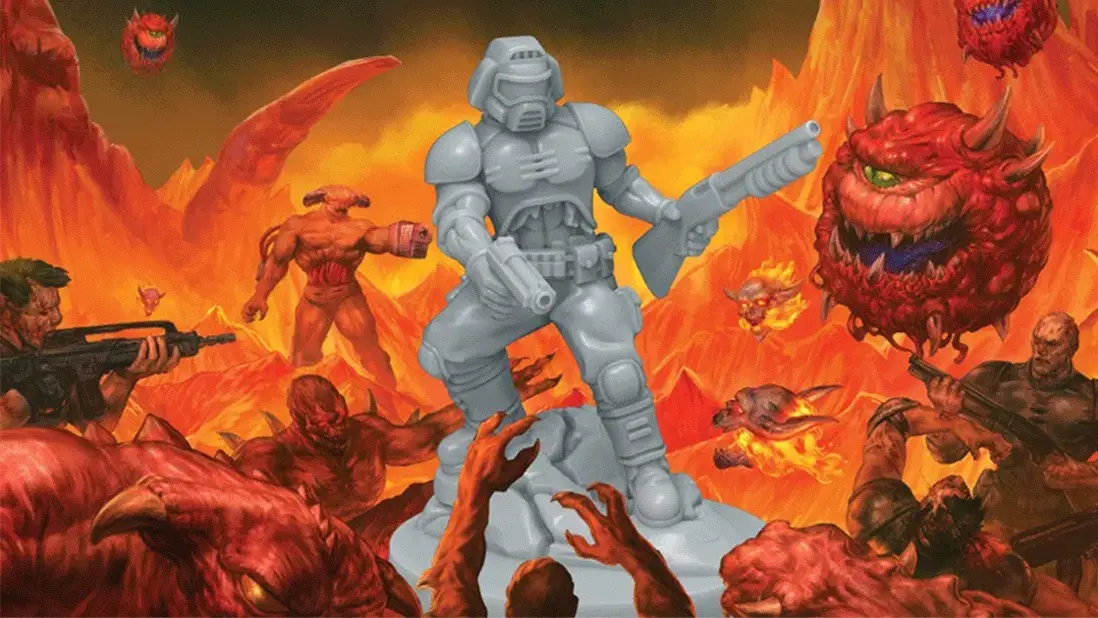
DOOM's Latest Release Is a Hellishly Frantic and Faithful Adaptation


DOOM: Arena Board Game is the perfect adaptation of its fast-paced, high-octane video game source material, and this is a tabletop experience that fans shouldn't miss.
Before we proceed, as per its Kickstarter campaign, there are two versions of DOOM: Arena Board Game, one inspired by the original 1993 title and the other inspired by the most recent DOOM: The Dark Ages. For my review, I was sent a prototype version of the 1993 offering. Being a prototype, it was missing two out of the three arenas, as well as cards and other bits and bobs, but that didn’t hinder the fun.
Family board game night with my 14-year-old son probably began the same way as such an event does for all of us when we’re trying to play a new board game. We read the instructions, attempted to play, read them again, and eventually began for real. DOOM: Arena Board Game’s instructions are much simpler than most tabletop games I’ve played, but it’s a traditional right of passage to struggle at first with new board games, regardless. DOOM: Arena Board Game is a co-op experience for two to four players. One team assumes control of the Slayer, and the other the Demonic Hordes. I was the Slayer, and my son was the Demonic Hordes.
Slayer vs Demons!
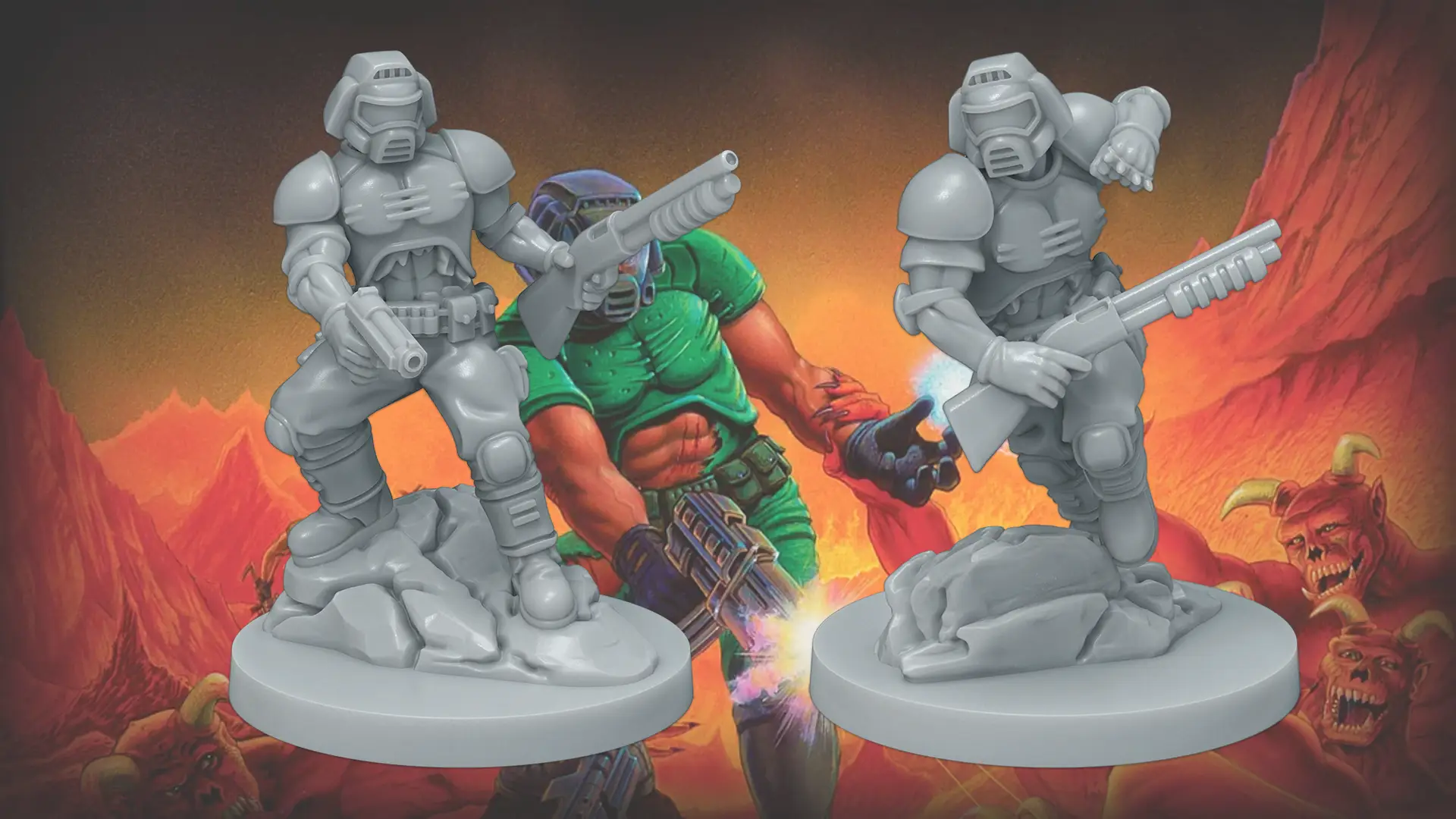
There are two versions of the Slayer to choose from. One that has a pistol and a shotgun, and the other just a shotgun. They both have a different radius of attack, as do all the Demonic Hordes. However, the Slayer with just the shotgun has a slight health and speed (the number of moves per turn) boost. I chose the Slayer with two weapons.
Advert
DOOM: Arena Board Game takes place over three stages. Each stage presents a new board/arena. After each round, both sets of players have the option to make some much-needed upgrades for the next round. The Slayer can add new weapons, such as a chainsaw, rocket launcher, BFG and so forth, or boost aspects like health and damage.
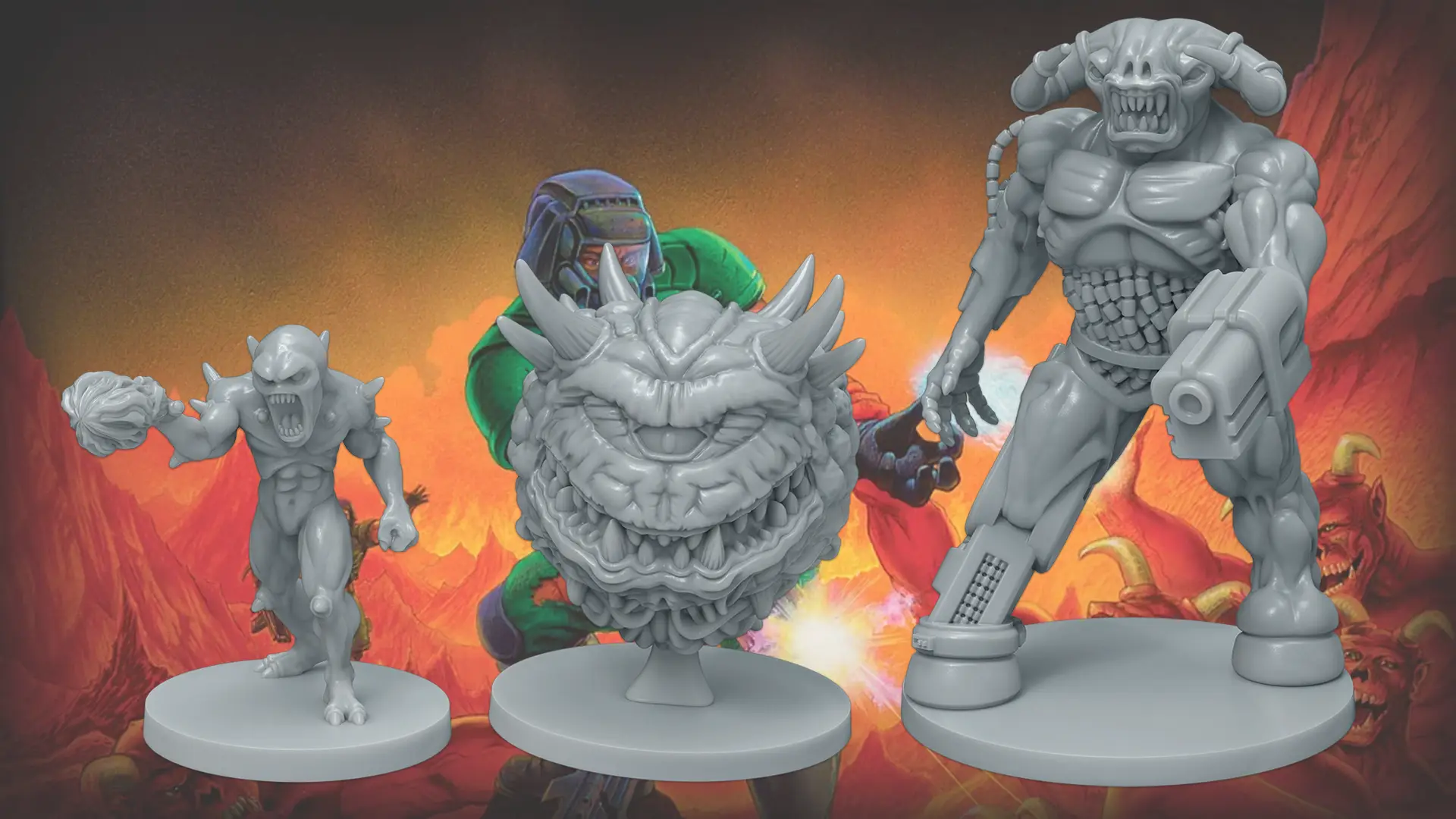
The Demonic Hordes player will have the standard grunt types for round one, such as Zombieman, Shotgun Dude, an Imp and Lost Soul. When the second round begins, the Hordes player can then choose to use Pinky or Cacodemon, each with more powerful attacks and radius. Then, in the final round, the menacing Cyberdemon can be summoned. The Cyberdemon inflicts huge damage with a good roll of the dice, and it’s in the best interest of the Slayer to stay clear of it as much as possible.
The Slayer has two moves per turn, while the Demonic Hordes player has two moves per three demons. A downed demon will also respawn with each turn. That may sound unbalanced, but make no mistake, the abilities of the Slayer more than make up for that, as fans of the video game series will be very familiar with. Each round that we played was a close finish; in some cases, it literally came down to a sudden death of dice rolls.
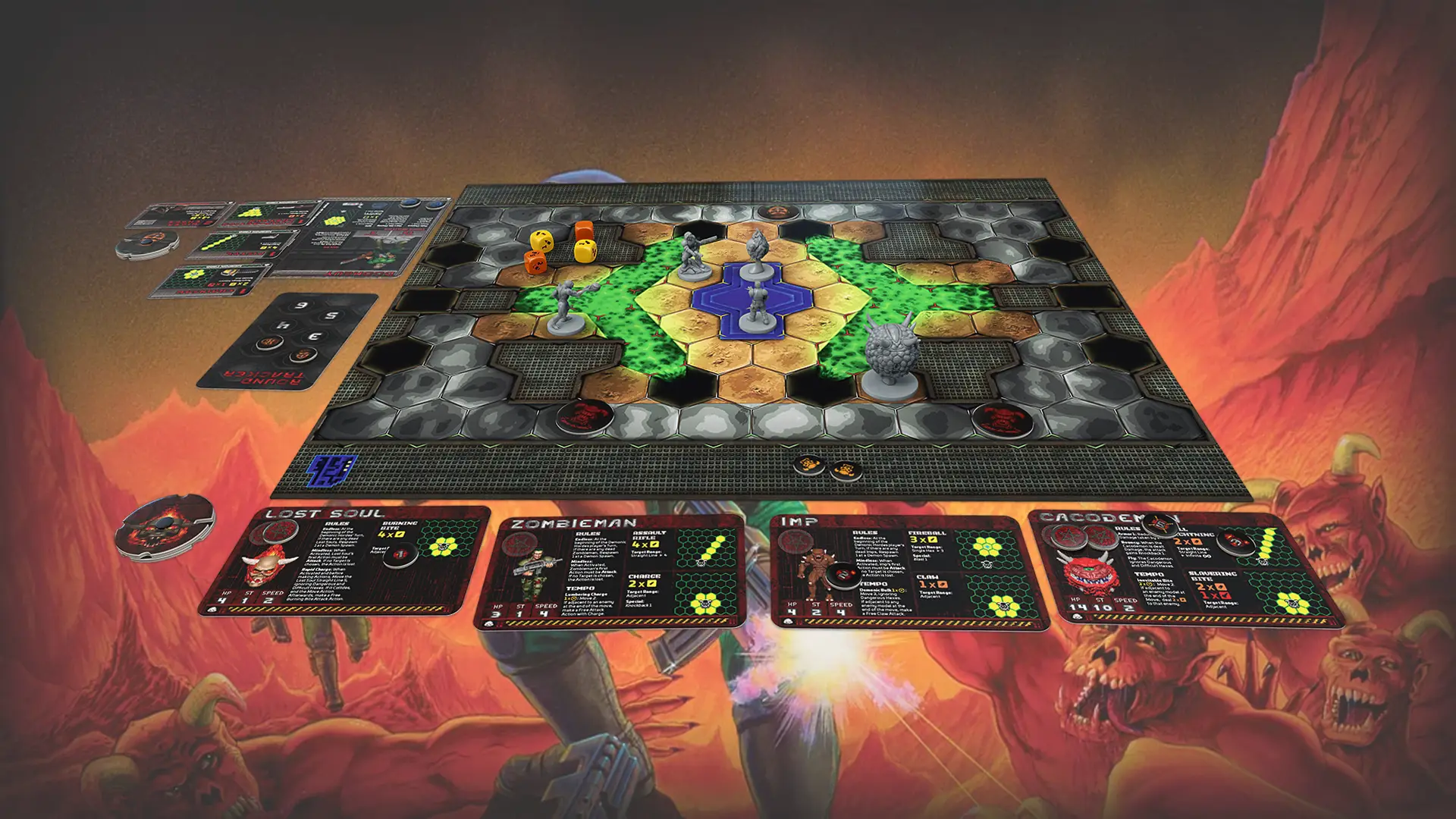
The move limit for each character is already determined, but it's up to you how many moves you utilise on the hexagonal board. For example, it wasn't always in the best interest to use all six moves of my Slayer, because I may find myself walking straight into danger, or if I wanted to use the rocket launcher, its blast radius wouldn't have any impact for the first three hex shapes, making my dice roll pointless.
What’s more, with the widespread use of a shotgun, I had to think about where I wanted to position myself in front of a batch of demons, to ensure that I got the most out of my one-shot per move. The power of each weapon/attack varies for the Slayer and Demonic Hordes, with its impact being determined by your dice roll.
In some unfortunate cases, your roll may inflict no damage whatsoever, potentially turning the tide of a battle. To help counter the seemingly overwhelming odds, the Slayer will regenerate a point of health with each hex move. Otherwise, there’s very little chance that the Slayer would win any battle, which would result in a very unbalanced experience.
The health regen mechanic also encourages both players to be on the go. The Slayer wants to maintain health, and the Demonic Hordes work to keep it as low as possible. However, with the Demonic Hordes player eager to overwhelm the Slayer, they’ll need to be wary of the non-friendly fire, which can inflict damage on themselves. If all players survive by the end of the round, the player with the most health remaining wins, claiming a blue, yellow and red keycard, respectively, signifying the win to move onto the next arena.
The instructions say that all five rounds should take about 30 to 60 minutes to complete. With our excessive checking of the manual and some improvisation, my son and I took about an hour and a half to finish all three rounds, so the estimate seems about right. I expect matches to flow more quickly once all the rules become ingrained.
All in all, our time with DOOM: Arena Board Game was an absolute blast from start to finish, and reminded us why we love our family board game nights (when we find time). As with most tabletop board games, it will take a while to get used to the rules, but once you get flowing, it’s easy to appreciate how much of a faithful adaptation this is to its video game counterpart. Plus, it has some rather snazzy mini-figures too. If you love DOOM, there’s a good chance you’ll love this game.
A prototype review sample was provided by Modiphius Entertainment.
Topics: Doom, Bethesda, Board Games, Reviews, Features