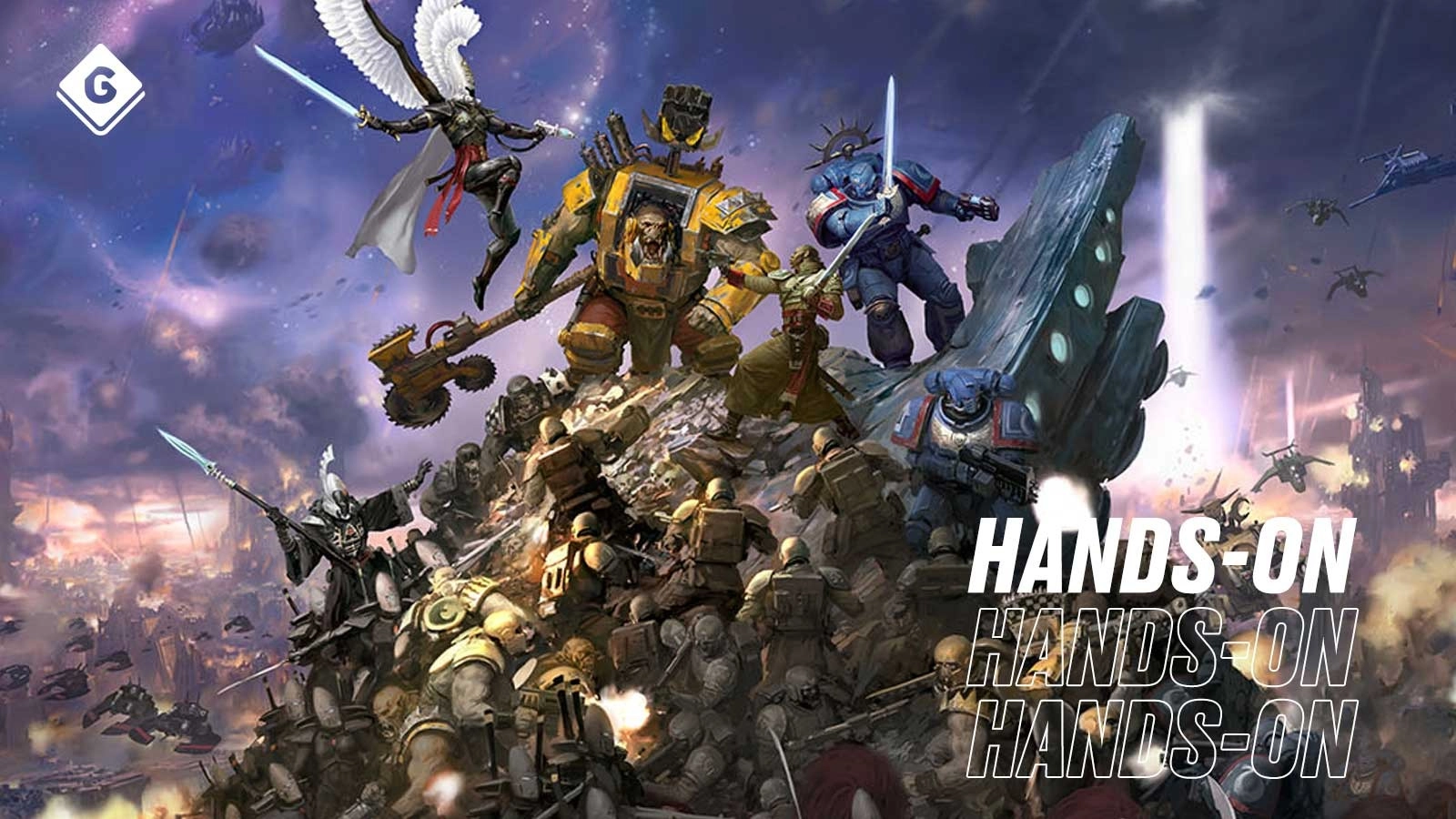
Total War: Warhammer 40,000 is shaping up to be a definitive tabletop simulator


Over the past few years, I’ve discovered just how much I love Warhammer 40k. My history with the tabletop game is long and arduous, though it was only with the release of Warhammer 40,000: Space Marine 2 that it really sunk its grimdark talons in me.
I’m now four armies deep into the hobby - Blood Angels, World Eaters, Orks, and Grey Knights - and while I’m happy to stop there, I can’t confirm I won’t be tempted by another in the far-flung future.
In that time, however, I’ve desperately wanted a video game that makes me feel like I’m playing the tabletop, and Total War: Warhammer 40,000 has finally done that.
During my hands-on time at Gamescom 2026, I got merely a small taste of what’s going to be a very large game.
Advert
There were three operations, and I played with customisable space marines for all of them. I was blown away with how easy it was to get my lads looking exactly like my own Blood Angel models back home, and I’m excited to push the depth of customisation further in the full release.
The build I played was on a PC, and despite being a console-enjoyer, I know better than anyone that a mouse and keyboard is the ideal way to play a real-time strategy game.
Navigating the map, selecting my units, activating their special abilities and generally organising my army was quick and intuitive. I’m eager to try playing with a controller for comparison, but I doubt it’ll feel as good as it did during my hands-on.
READ NEXT: Ben Starr is a mermaid in upcoming SEGA Dreamcast-inspired fishing murder mystery
The closest thing to the real-life Warhammer 40k game I've ever played
The battles themselves felt phenomenal, but something I particularly appreciated was the balancing. For example, in a standard game of Warhammer 40k, one unit of Assault Intercessors is composed of five space marines. They’re basic infantry, cheap and reliable. However, Orks are a horde army, meaning they overwhelm with numbers. A standard unit of Boyz boasts 10 Orks. Despite being outnumbered, however, the Assault Intercessors stand a better chance of winning a one-on-one confrontation, both in the game and in the lore.
Total War: Warhammer 40,000 reflects this extremely well, as while I was a little nervous watching the green tide descend upon my men, I quickly realised the space marines weren’t just well-equipped to fend off their attackers, they relished the opportunity.
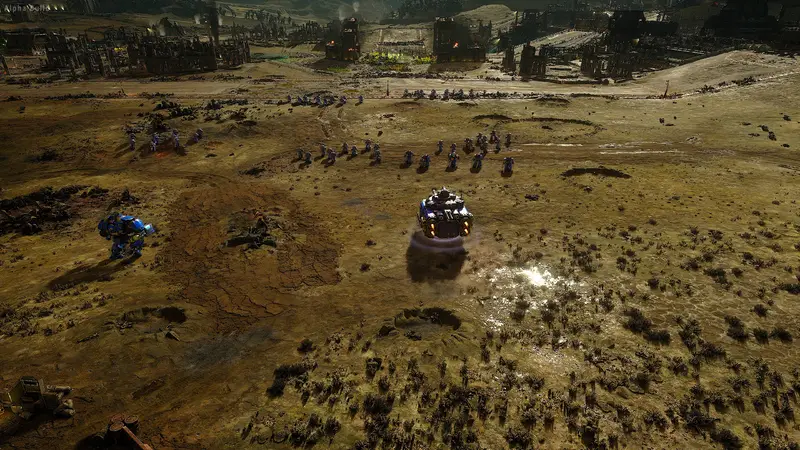
Zooming in for a closer look revealed the full extent of the carnage. Flesh and metal mangled together with flashes of bolter fire, sparks sliding off chainswords, and various limbs flying through the air.
It was a remarkable sight seeing these armies clash on such a scale, and I was often so mesmerised by the glorious melee that I’d forget about the bigger picture.
While the spectacle is half the fun, the other half is getting tactical. While Total War: Warhammer 40,000 felt like an authentic sandbox of an IP I adore, it’s not as simple as smashing two action figures together.
Unit choice and army positioning is essential for victory so I was pleased to see the freedom given to the player over how they’d like their army to function.
I could set up my men in defensive positions where they’d automatically find cover. I’d order tanks to hold down bridges so my enemy was forced to go around, and a desperate Deep Strike of teleporting Terminators behind my enemy's backline would split their focus just enough for my frontline to have some time to breath.
Total War: Warhammer 40,000 was incredibly impressive yet my demo was just the tip of the spear. With a wealth of content at launch and expansions further down the line, it’s a game I’ll be spending a lot of time with, and I know Warhammer 40k fans are going to love it just as much as I did.
READ NEXT: Warlock: Dungeons & Dragons looks like the Witcher 3 Yennefer spin-off we always wanted