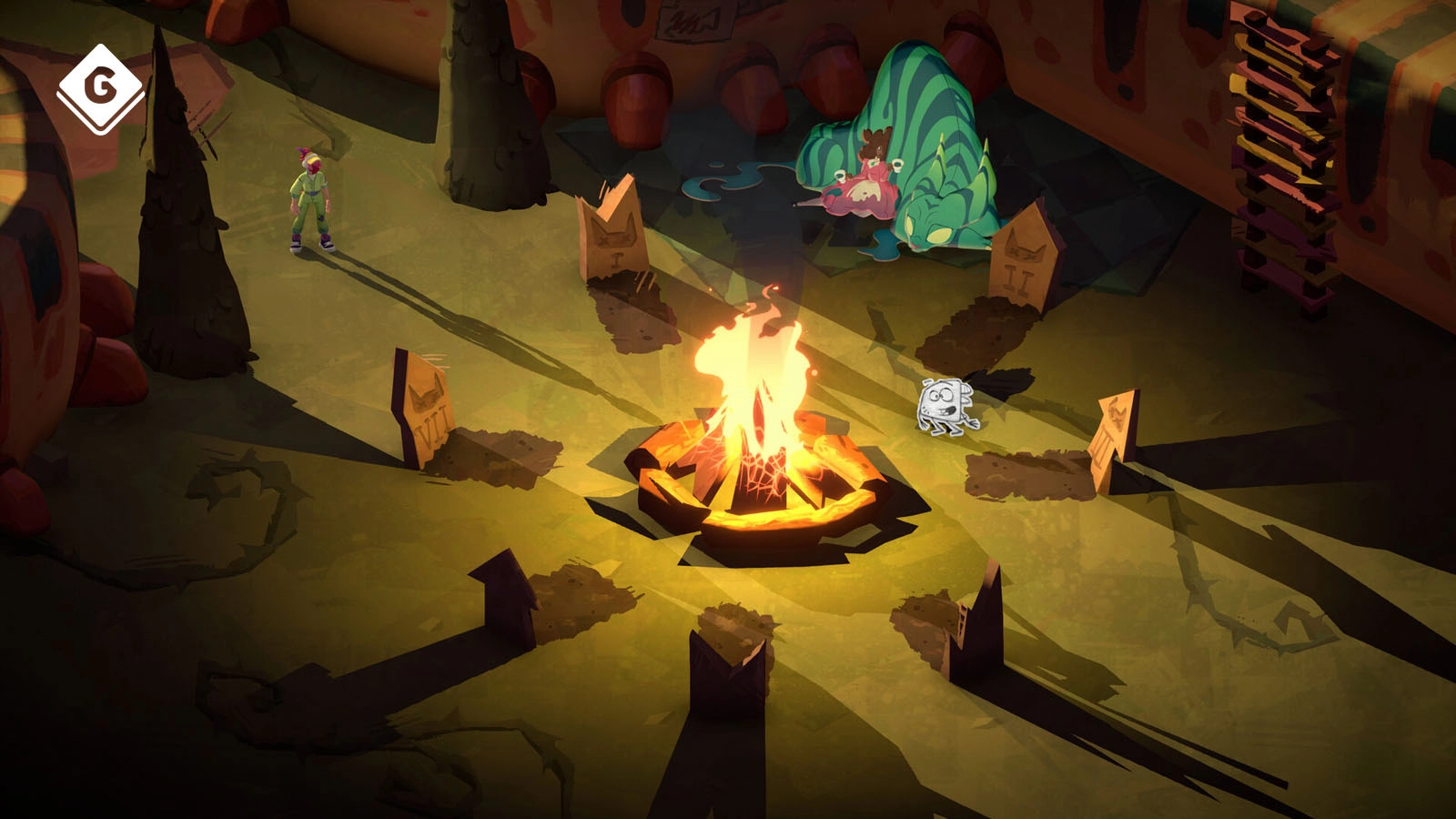
Murals is a charming action game that could give Hades 2 a run for its money


Murals begins with you waking up in a twisted fairy tale castle, with no memory of how you got there.
As The Hero, you team up with a sentient sketch named Loaf who informs you that not only do you not have a way out, but a bunch of hostile creatures called The Distorted are also wreaking havoc.
Based on various fairy tales such as Rapunzel, Sleeping Beauty, and Rumpelstiltskin, Murals plays a lot like Hades, in which you traverse around a series of rooms that are each themed around these fables.
Despite Dlala’s experience with its previous game, Disney Illusion Island, serving as a springboard for these fairy tales to come to life, these are not themed after the Disney versions of these tales. Instead, you’re getting brand new designs, each with their own unique visual style.
Advert
Creative director Aj Grand-Scrutton from Dlala Studios talked me through the game as a hands-off demo was played for me at Gamescom, detailing some facts about Murals’ development and explaining many of the features.
The demo that I saw was based on The Little Mermaid, in which the Hero ventures through a water-soaked mural to rescue the titular mermaid who has become terrorised by the Distorted.
Unlike the similarities to Hades, though, the game isn’t a roguelike, nor does it feature traditional roguelike elements such as losing items after failing a run.
Instead, it’s intended that you build up a large inventory which you can use over the course of your playthrough, gradually getting stronger through this progression. This equipment can also be swapped out to suit a playstyle which you enjoy using the most, with multiple ways of tackling each level available to you.
Read More: Tides of Annihilation recaptures the Bayonetta magic with cool action
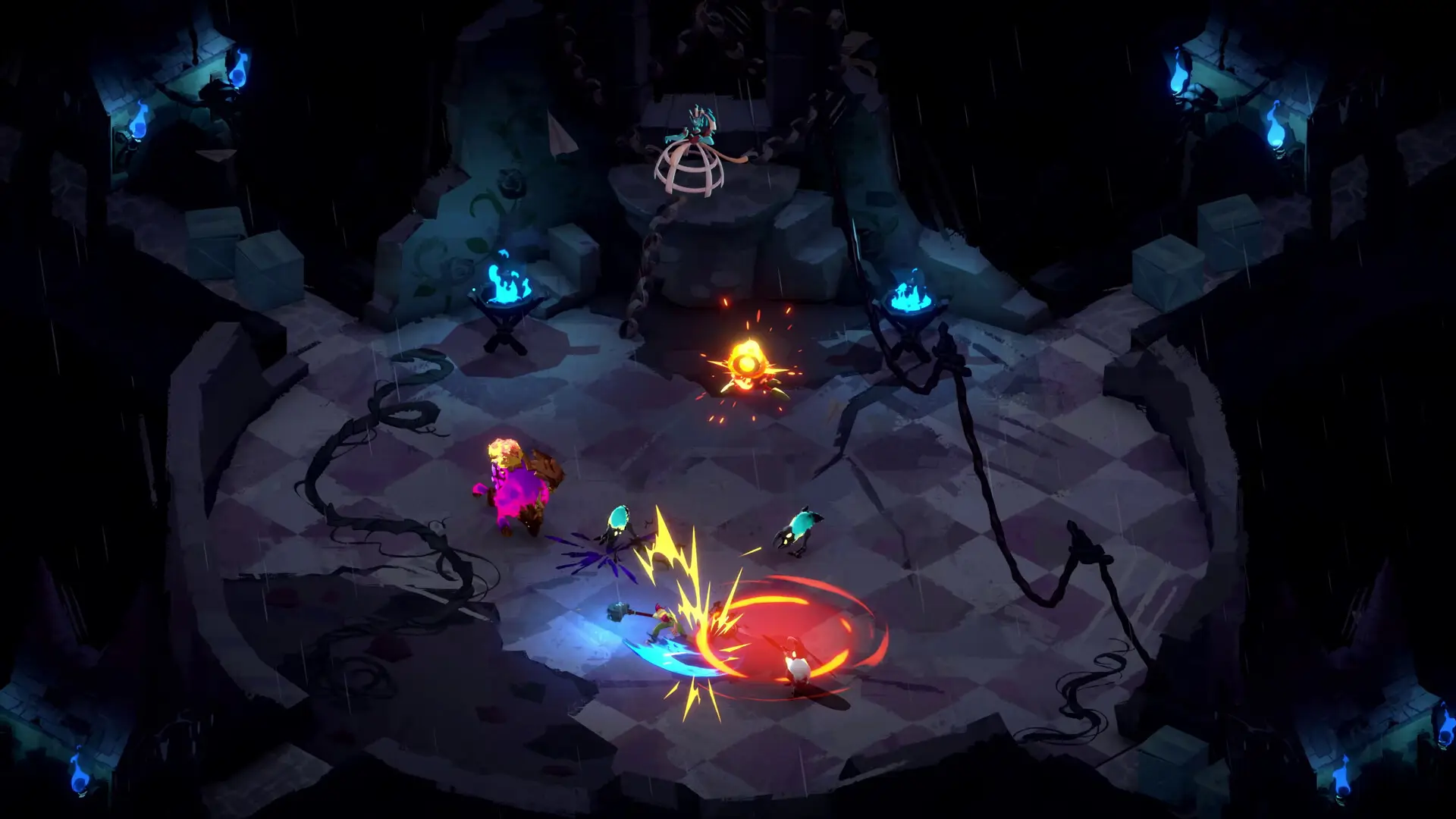
Murals adopts a design philosophy similar to Doom in the way enemies are used
In designing the enemies of Murals, Grand-Scrutton says that Dlala adopted a philosophy similar to Doom, in which enemies only really have one style of attack.
It creates situations where you can predict enemy attacks with relative ease, with the real challenge coming in how you can handle this when there are multiple enemies on screen at once.
As a big fan of Bob Mortimer, Grand-Scrutton says it was a personal highlight for him to get the comedian to voice the character Magic Dave, a feat he says he “couldn’t quite believe” at the time.
He also reveals that the character was originally called Magic Bob and was actually based on Mortimer himself, until the casting necessitated a few changes in order to not be too on the nose.
What particularly stands out to me are the unique designs of each character and enemy in the game, with each mural sporting a slightly different style to accommodate the theme the game is going for. Some have an elegant, painterly design, while others adopt a darker tone to fit with their corresponding fairy tale.
What I really love is the design of Loaf, who exists outside of the murals found in-game. He’s presented as a rough sketch, as if someone’s scribbled him down in a notepad. Grand-Scrutton cites SpongeBob SquarePants’ ‘Doodlebob’ as a core inspiration for this design, though he also says that Loaf is “less of an arsehole” as a result.
20 minutes probably isn’t enough time to appreciate everything that Murals has going for it, and without seeing some of the other fairy tales that Dlala is including in the game, I’ll definitely remain curious as to how the developer intends to switch up the visual tone of the narrative as it develops.
Still, with Murals expected to launch next year, I’m sure I and many others will be showing up to see how the final game turns out.
Topics: Indie Games, Hades, Preview, Features